

Audio By Carbonatix
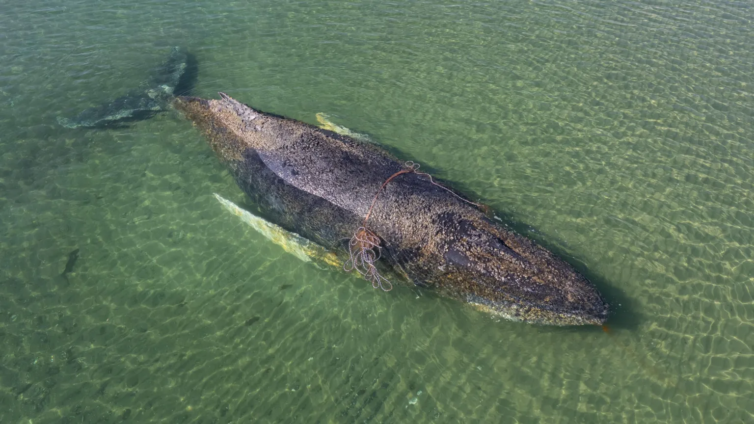
A humpback whale rescued after beaching itself in Germany has been found dead near a Danish island.
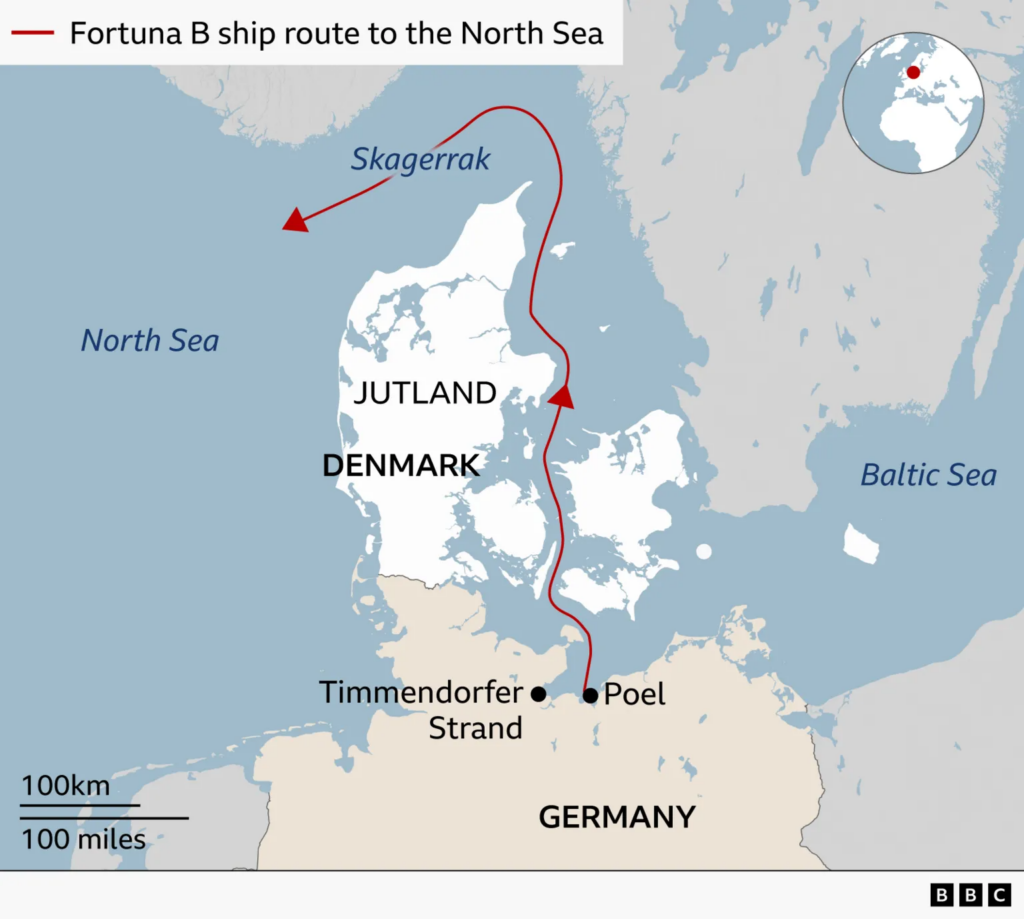
The whale was first spotted stuck on a sandbank on 23 March, off the island of Poel on Germany's Baltic coast.
It swam free in early May after a water-filled barge carried it into the North Sea.
The operation was privately funded by two German entrepreneurs and spurred intense public debate, with critics suggesting it would only cause the animal distress.
A whale carcass was reportedly spotted on Thursday off the Danish island of Anholt, located between Denmark and Sweden.
Authorities were not immediately able to confirm it was the same whale. In a statement the Danish Environmental Protection Agency said conditions on Saturday made it possible for the whale's identity to be verified, and its tracking device retrieved.
The agency told AFP "there are no concrete plans to remove the whale from the area or to perform a necropsy, and it is not currently considered to pose a problem in the area".
But it stressed that people should not approach the whale because it might carry diseases that can be transmitted to humans.
There may also be a risk of explosion, it added, because of large volumes of internal gas caused by decomposition.
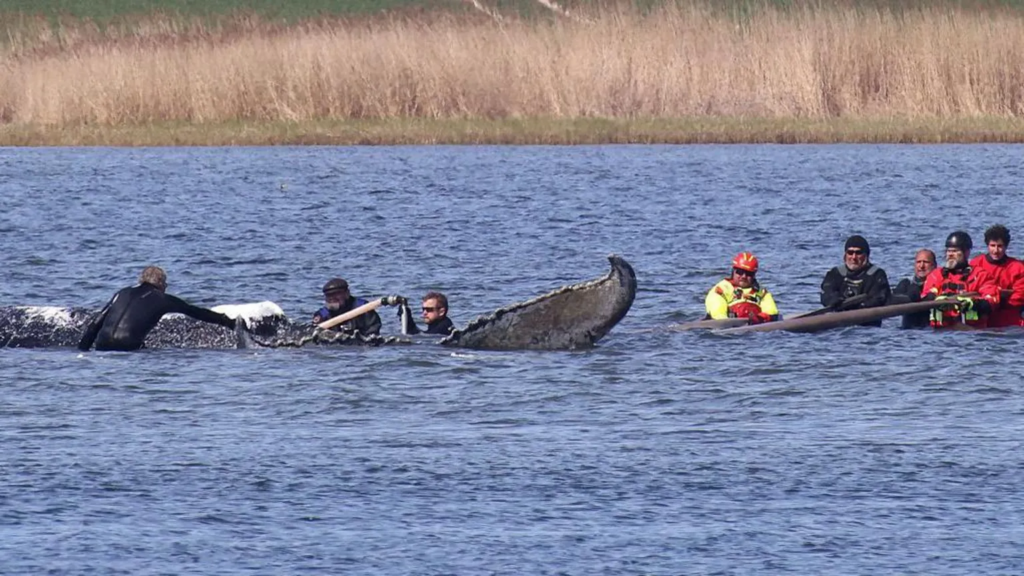
The whale, nicknamed "Timmy" or "Hope" by rescuers and German media, became stranded on Timmendorfer Beach in Lübeck Bay on 23 March.
At first it freed itself but became stuck again several times.
German authorities attempted a number of rescues before announcing they were giving up.
Entrepreneurs Karin Walter-Mommert and Walter Gunz later funded a private rescue, fitting the whale with a tracking device and coaxing it onto a water-filled transport ship called Fortuna B.
Till Backhaus, the environment minister in the northern state of Mecklenburg-Vorpommern, hailed the operation as a success and an "example for Germany of what can be done".
But wildlife groups have been sceptical about the whale's future after its release into the North Sea.
The German Oceanographic Museum warned that the whale was at risk of drowning because it was so weak.
Whale and Dolphin Conservation was especially downbeat, warning that the whale had no long-term chance of survival and had suffered skin damage because of the lack of salinity in the waters along Germany's Baltic Sea coast.
Latest Stories
-
Ghana Medical Trust Fund has exceeded expectations in first year – Health Minister
3 minutes -
One-Week Observation for Mrs Janet Gyasi Boakye
16 minutes -
Before the bulldozers arrive: What the state owes workers in the informal economy
16 minutes -
NIA extends Ghana Card registration for children in North East and Upper East
20 minutes -
Volta Team wins NPA 2026 Welfare Week Quiz championship
22 minutes -
Maxwell Klu turns birthday into relief mission for Hohoe flood victims
24 minutes -
NDC congratulates NPP, calls for national interest to rise above party politics
26 minutes -
NPP’s new executives will not alter our 2028 preparations – Tanko-Computer
1 hour -
Tema East MP urges men to take active role in breast cancer awareness
1 hour -
Hawa Koomson vows to bring experience and maturity to NPP women’s wing
1 hour -
Opare Addo cautions NDC against adopting NPP’s aggressive politics
2 hours -
NPP has 35 months to prepare for 2028 after early reorganisation – Political strategist
2 hours -
All six passengers presumed dead after plane went missing off US coast
2 hours -
Teachers’ promotion arrears to be paid by Oct. 30 – Education Minister
2 hours -
Stop talking too much on stage – Kafui Dey warns MCs
2 hours