

Audio By Carbonatix
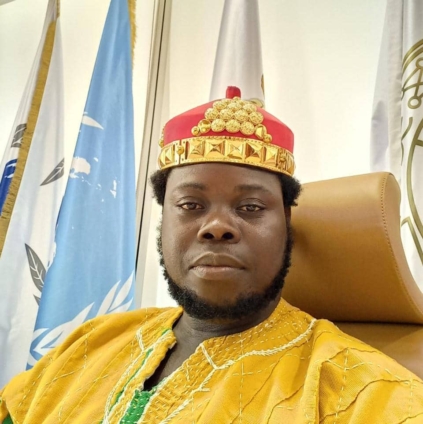
King Oyanka, Chairman of the World Human Rights Council for West Africa and Chief of Oblieman in the Ga West Municipality of the Greater Accra Region, has sounded a dire warning about the state of human rights in Ghana, describing abuses as beyond repair.
He has urged stakeholders to take immediate and decisive measures to address the escalating problem.
Speaking out passionately, King Oyanka highlighted the severe mistreatment of suspects by police officers and other security agencies, calling it a significant violation of human rights standards. "The way police officers and security agencies treat suspects is nothing to write home about," he stated.
"Sometimes, you will see police officers violating human rights laws and abusing innocent citizens and suspects. Stakeholders who always talk about human rights must come under one umbrella to condemn such actions."
King Oyanka’s remarks bring to light the growing concern over the conduct of law enforcement in Ghana. Incidents of police brutality and the mistreatment of suspects have been on the rise, drawing sharp criticism from both local and international human rights organizations.
These abuses often include physical violence, unlawful detention, and intimidation, severely undermining the fundamental rights and freedoms of individuals.
The Overlord called for a unified response from all stakeholders involved in human rights advocacy. He emphasized the need for collective condemnation and action against these abuses.
"Stakeholders must unite to address these issues. We cannot continue to turn a blind eye to the violations occurring daily," he insisted.
Additionally, King Oyanka urged Ghanaians to adhere to the laws of the country to avoid confrontations with law enforcement.
He stressed that while it is imperative for security personnel to respect human rights, citizens also have a duty to comply with legal statutes and cooperate with authorities.
"Ghanaians must also respect the laws of the land. This is a two-way street where both the authorities and the citizens play their part," he added.
King Oyanka’s concerns come at a time when Ghana's human rights record is under intense scrutiny.
Recent incidents have sparked public outcry and protests, with demands for justice and reform echoing across the nation. International organizations like Amnesty International and Human Rights Watch have also highlighted the troubling state of human rights in Ghana.
Government officials have, on some occasions, acknowledged the need for reforms and have promised to address the concerns raised.
However, progress has been slow, and many citizens remain skeptical about the government's commitment to meaningful change.
The call for reforms includes better training for police officers on human rights, stricter enforcement of laws against police misconduct, and the establishment of independent bodies to investigate allegations of abuse.
Transparency and accountability in the security sector are seen as critical steps towards improving the situation.
Civil society organizations play a crucial role in advocating for human rights in Ghana. These groups have been instrumental in bringing abuses to light and pushing for necessary reforms.
However, they often face significant challenges, including limited resources, political pressure, and threats against activists. Despite these obstacles, their efforts are vital in the fight for justice and the protection of human rights.
King Oyanka’s call to action is a poignant reminder of the collective responsibility required to protect human rights.
Ensuring respect for human rights necessitates the concerted efforts of the government, security agencies, civil society, and the general public. It is essential for maintaining social justice and peace in Ghana.
In conclusion, King Oyanka's alarming statement about the irreparable state of human rights abuse in Ghana underscores a critical issue that demands urgent attention.
The mistreatment of suspects by police and security agencies is a grave concern that must be addressed through coordinated efforts by all stakeholders.
By adhering to laws and promoting a culture of respect for human rights, Ghana can move towards a more just and equitable society.
King Oyanka’s urgent appeal calls for immediate and decisive action to tackle human rights abuses, ensuring that the fundamental rights of all Ghanaians are respected and upheld.
Latest Stories
-
Tyson Fury dominates Makhmudov, calls out Joshua next
6 minutes -
I have supported highway authority financially to fix roads in my constituency – A Plus
1 hour -
US, Iran fail to reach peace agreement after marathon talks in Pakistan
2 hours -
ECG kicks off Phase Two of transformer upgrades at Lashibi; brief outages expected
2 hours -
Port crises loom as 11,000 drivers threaten four-day strike
3 hours -
A source of excellence across generations – Vice President Opoku-Agyemang lauds Mfantsipim
4 hours -
(Photos) Mfantsipim School launches historic 150th anniversary
4 hours -
Knights and Ladies of Marshall group backs Catholic Bishops’ stance on anti-LGBTQ+
5 hours -
Bright Simons writes: All the Filla in the Ibrahim Mahama/E&P – Gold Fields Saga
6 hours -
Monetise Idiocy In Ghana
6 hours -
The Ghanaian prophet and the mysterious death of his scottish wife Charmain Speirs
6 hours -
Nearly 400 sentenced in Nigeria for links to militant Islamists
7 hours -
Ghana’s recovery supported by gold strength despite global oil price pressures – Standard Bank Research
7 hours -
Methodist Church hails Mfantsipim@150; calls for “fresh consecration” to excellence
7 hours -
‘Excellence is our inheritance’ – Nana Sam Brew-Butler hails Mfantsipim’s 150-year reign in leadership
7 hours