

Audio By Carbonatix
A new HIV prevention drug will be made available at a lower cost in over 100 low-income countries within two years — a move expected to give millions access to the breakthrough treatment and potentially bring the world closer to ending the HIV/Aids epidemic.
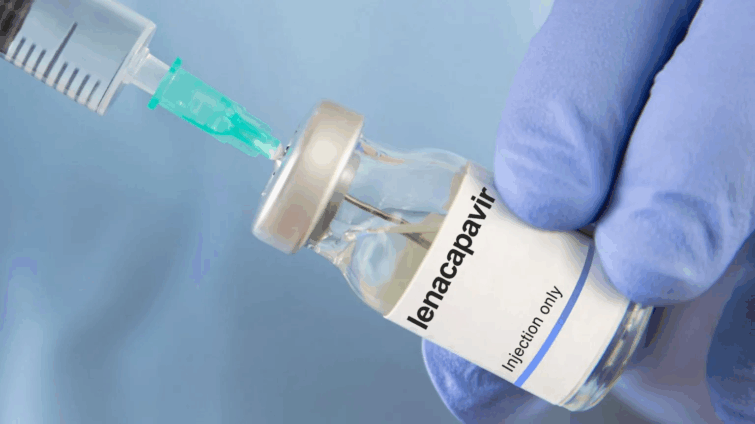
The drug, called Lenacapavir and administered by injection, is due to be rolled out as early as the end of this year, for $28,000 (£20,000) per person annually.
But Wednesday's announcement promises to slash that price to just $40 — around 0.1% of the original cost. The lower-cost version will be rolled out in 2027 across 120 low- and middle-income countries.
Scientists say the drug stops the virus from replicating inside cells.
The agreement announced on Wednesday was reached between the Clinton Health Access Initiative in partnership with the Gates Foundation and other groups, including the South African research institute, Wits RHI.
"For many low- and middle-income countries, affordable access to HIV prevention is not a luxury, it is a necessity," Professor Saiqa Mullick from Wits RHI told the BBC.
She added that Lenacapavir had "the potential to transform prevention, especially for young people and underserved communities who struggle with frequent clinic visits.
"The real work begins now, partnering with communities and governments to build demand, secure commitments, and prepare systems so countries are ready for rapid introduction and scale."
Lenacapavir has delivered impressive trial results and, in July, it received official backing from the World Health Organization for HIV prevention.
The injection is taken twice a year and provides six months of protection against HIV infection at a time.
Experts say long-acting injectables like Lenacapavir could help reduce new infections in populations that are most vulnerable, including adolescent girls and young women, LGBT people, sex workers, and those who use drugs.
It is hoped it will replace the current form of HIV preventative drug, know as PrEP, or pre-exposure prophylaxis, which is taken orally and also costs $40 per person each year.
The pills are taken daily, which can be difficult for patients to consume, and can carry stigma in certain societies. The daily dose also makes it harder to access consistently. According to the Gates Foundation, only 18% of those who could benefit from PrEP currently have access.
Lenacapavir has already been approved by the US Food and Drug Administration and the European Commission this year.
Last June, the US drug company Gilead announced that a trial of its HIV drug Lenacapavir had a 100% success rate.
The new, generic version is still pending regulatory approval, but it is hoped it will be available within 18 months.
One study says that increasing access to the injection to just 4% of the population could prevent up to 20% of new HIV infections.
The drug can be used to protect people from catching the virus, but also to treat those who have it, according to scientists.
The announcement comes amid a turbulent year for global health, particularly the fight against HIV and Aids, following swingeing cuts by the US government's foreign aid programme, USAID, under the Trump administration.
According to UNAIDS, more than 40 million people are currently living with HIV.
Despite huge strides made to reduce global HIV rates and AIDS-related deaths since 2000, about 1.3 million people still contracted HIV last year, and more than 600,000 people died from AIDS-related illnesses.
South Africa remains the country with the highest number of HIV cases, with almost eight million people living with the virus. It will be one of the countries to access the new, cheaper drug.
South Africa's Department of Health told the BBC that it "supports any efforts to make life-saving treatment like Lenacapavir available and accessible at an affordable rate to all countries, including low and middle-income countries, as and when they need it".
Latest Stories
-
Russia launches largest attack on Ukraine energy infrastructure since spring
3 seconds -
GHABA launches first national Hair and Beauty Festival to promote skills and enterprise development
6 seconds -
ICU urges GHABA members to transform hairdressing skills into sustainable enterprises
14 minutes -
Ghana eyes stronger trade ties as Australia hosts multicultural trade and investment forum
23 minutes -
Margaret-Marie Krakue
26 minutes -
Ayariga announces plans for live broadcast of MMDAs’ meetings on local radio stations
29 minutes -
Mrs Anna Tackie
31 minutes -
Ghana links Afghan heroin and Brazilian cocaine to global drug markets – Global Organised Crime Index
38 minutes -
NHIA launches nationwide inter-school quiz to deepen students’ knowledge of NHIS
45 minutes -
Political protection could be masking Ghana’s cocaine trade – Global Organised Crime Index
50 minutes -
AFCON 2027Q: ‘We have to dissolve the GFA’ – Effia MP after Black Stars lose to Gambia
52 minutes -
NPP announces voting schedule and ID requirements for October 3 national elections
54 minutes -
Lupus can mimic HIV symptoms and damage kidneys if untreated – KNUST expert
57 minutes -
Focus on Sickle Cell Foundation seeks to introduce sickle cell education through comics in Ghanaian schools
1 hour -
NPP rewrites the campaign playbok as opposition reality shapes National Executive contest
1 hour