

Audio By Carbonatix
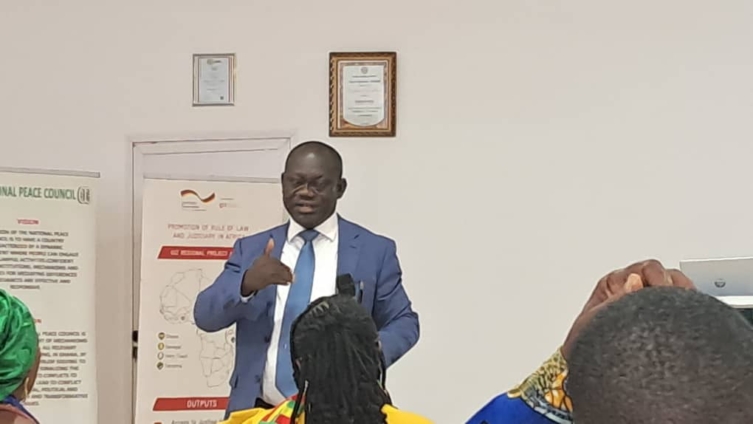
Private legal practitioner and lead facilitator for an Alternative Dispute Resolution (ADR) training for members of the Volta and Oti Regional Peace Councils, Esq. Alex Nartey, has emphasised that the Council’s strength lies in discreet engagement rather than issuing public condemnations when addressing sensitive conduct.
Speaking at the three-day workshop, organised by the Volta Regional Peace Council with support from GIZ, Esq. Nartey explained that measured and diplomatic approaches in political discourse are essential to safeguarding Ghana’s democracy.
“The Peace Council’s role is not to shame people publicly but to engage them privately, reason with them, and help them see the impact of their words or actions,” he said. “When individuals are approached in this manner, many reflect, acknowledge their excesses, and make positive changes.”
He further noted that partisan politics does not harm democracy unless it suppresses the rights of other political parties to operate freely. According to him, a vibrant democracy is one where multiple parties — beyond the NDC and NPP — contribute to the exchange of ideas for the benefit of all Ghanaians.
Esq. Nartey also highlighted the Peace Council’s most pressing needs: logistics and skilled human resources capable of applying interest-based approaches to manage crises. He stressed that much of the Council’s effectiveness is achieved behind the scenes, where dialogue and mediation yield more lasting results than public statements.
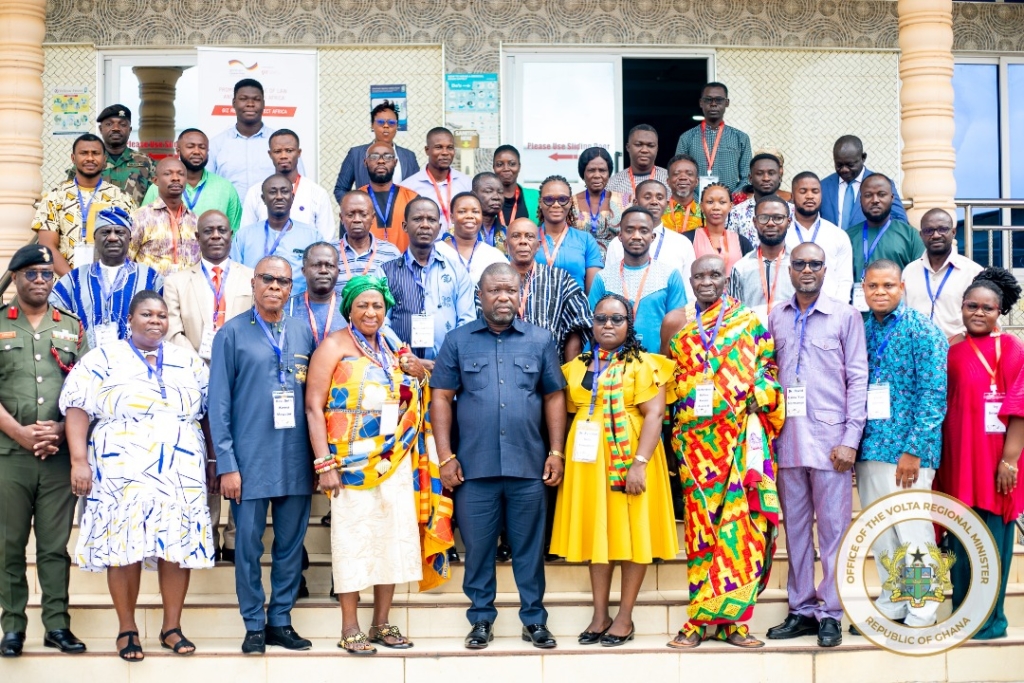
On the opening day of the training, participants were introduced to the legislative framework governing the Peace Council, its role as a neutral third party in conflict resolution, guidelines on hate speech and indecent expressions, as well as theories and principles of conflict.
Participants expressed enthusiasm about the training, pledging to use the knowledge acquired to promote peace, foster understanding, and make a meaningful difference in their communities.
The training also included practical ADR simulations and advanced conflict management techniques aimed at strengthening the Councils’ capacity to resolve disputes effectively.
Latest Stories
-
Asos hackers took more personal details than first revealed, BBC finds
3 hours -
Fort Hood shooter’s execution by firing squad will be livestreamed, Pentagon says
3 hours -
Chrysler Building to get its crown restored after being sold
3 hours -
Infantino re-election boost as Concacaf chief will not stand
3 hours -
Everton’s Sherif fined for breaching betting rules
3 hours -
Suspended fine for Xhaka over Covid-19 certificate
4 hours -
Businessman dragged to court over GH¢480,000 fraud
4 hours -
Pregnant woman and husband found dead in a room at Anloga-Kportorgboe
4 hours -
Man, 87, jailed 20 years for defiling nine-year-old girl at Ofankor
4 hours -
Maresca says ‘feeling is fantastic’ among Man City squad
4 hours -
Sam George warns FBI Director against taking sole credit for Ghana cybercrime operation
4 hours -
Foreign capital no passport to Ghana’s informal retail market – GIPA CEO
5 hours -
E&P model should be seen as a blueprint for building local mining giants – GIPA Boss
5 hours -
Govt’s decision to reduce nurse training long overdue – GRNMA
5 hours -
Ghana needs emergency health fund to respond swiftly to outbreaks – SEND Ghana
5 hours