

Audio By Carbonatix
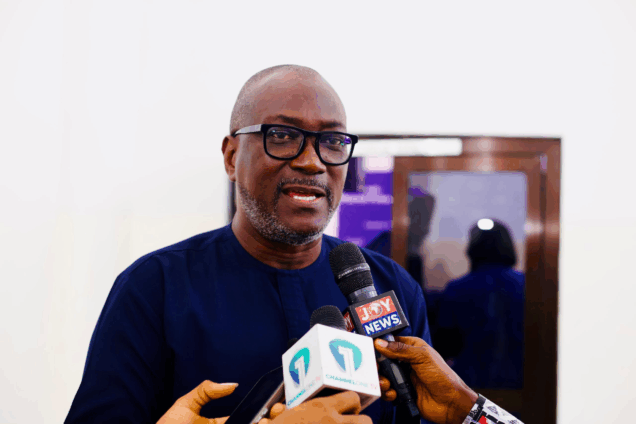
Chairman of the Constitution Review Committee, Prof Henry Kwasi Prempeh, says fears about young presidents are misplaced and should not stand in the way of democratic choice.
Speaking on Joy News, Prof Prempeh said Ghana’s own constitutional history shows that age limits have never been fixed or sacrosanct.
“The age issue is interesting. You look at our system demographically, we’ve had 35 years before in the 1960 Constitution, it was 35 years,” he said.
He pointed to parliamentary systems as the most useful comparison. “The most interesting comparison actually is with parliamentary systems,” he said.
According to him, those systems allow young people to exercise executive power once they meet basic parliamentary requirements.
“In parliamentary systems, anybody who can become an MP can become the Prime Minister,” he said.
Prof Prempeh recalled Ghana’s experience under the 1969 Constitution. “In 1969, the age was 21,” he said.
He noted that this allowed young leaders to hold high office. “President Kufuor was Deputy Foreign Minister at 20-something years,” he said.
He added that even though leaders were often older, the constitutional threshold was low. “Busia was above that age, but all he needed to be at that time was 21,” he said.
According to Prof Prempeh, Ghana has already lived under systems where very young people could exercise executive authority.
“We’ve had systems where effective executive power has been exercised by people who only had to be 21,” he said.
He stressed that lowering age barriers is about inclusion, not outcomes. “All we’re saying is that if you have a population that is largely youthful, you have to at least, even if it’s symbolic, signal that they are important,” he said.
Prof Prempeh rejected claims that this would automatically produce very young presidents. “It doesn’t mean that we are going to elect a 30-year-old to be president,” he said.
He said leadership choices would still depend on political parties and voters. “It depends if the party finds that this is the person we want to elect,” he said.
He also left room for independents. “Or if an independent candidate pops up at 30 who has accomplished and Ghanaians have trusted that person, why not?” he asked.
Prof Prempeh said democracy already has safeguards. “It takes at least, there’s a filter. There’s the election filter,” he said.
Ultimately, he said, the decision must rest with voters. “The citizens will make that decision,” Prof Prempeh said.
Latest Stories
-
Tarkwa court jails labourer for three years over GH¢123,000 theft
30 minutes -
GAEC must retain nuclear scientists for Ghana’s nuclear ambitions – Minister
1 hour -
Man reportedly mistaken for game and shot by hunter dead in forest
1 hour -
19-year-old mason jailed 15 years for defiling seven-year-old pupil
1 hour -
Ghana’s banking sector assets rise 20.47% to GH¢500.2bn – BoG Governor
1 hour -
22 injured as Sprinter bus overturns at Sege after tyre burst
1 hour -
UN housing expert urges Ghana to strengthen Rent Control Department amid housing affordability concerns
1 hour -
Delta-BCI partnership reaches 166,000 people with breast cancer education
2 hours -
Power restoration fault suspected in Kumasi Central Market fire
7 hours -
The 7-foot giant of Ngleshie Amanfro: Seven-foot Ghanaian Ephraim Saawa dreams of joining the national basketball team
7 hours -
Government promises support for Kumasi Central Market fire victims
7 hours -
Vibes The Movie: Big Ghun’s Ghanaian film earns five nominations at 2026 REFFA
8 hours -
‘I’m a fulfilled man’—Justice Korbieh on missing out on Supreme Court despite two nominations
8 hours -
MamaCare CEO warns unresolved conflicts among health workers could undermine maternal and neonatal care
8 hours -
Health professionals urged to translate medical knowledge into practice to save mothers
8 hours