

Audio By Carbonatix
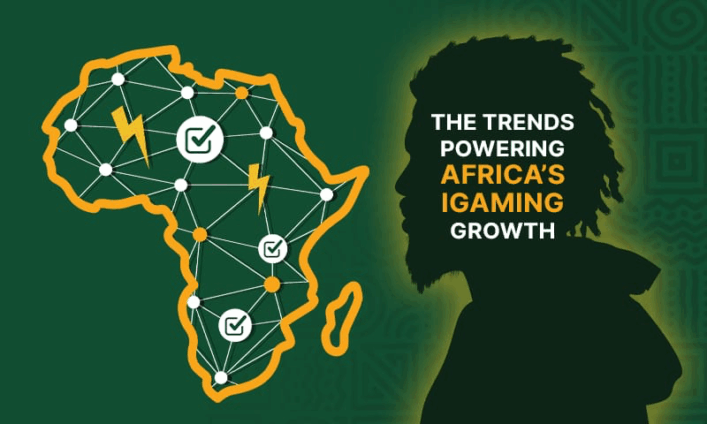
The African iGaming market has entered a phase of maturity: today, it is not budgets that win, but strategy, expertise, and trust. While just a few years ago scale and aggressive market presence were the key growth drivers, now success depends on a deep understanding of the local context.
Aggressive PR campaigns are gradually becoming a thing of the past, giving way to regional expertise. Regulators have become more attentive, and players have become more selective, with these changes directly affecting the effectiveness of communications and product decisions.
This shift is especially evident in operators that build their strategies around the needs and expectations of local players from the outset. AfroPari exemplifies this approach by shaping its product around the market identities of African GEOs instead of generic, universal models.
Mobility and regional approach as growth drivers
The digitalisation boom in the region has set a new development vector for the online entertainment market. People expect to be able to play on the go and access local payment methods in Africa. Desktop-oriented solutions and poorly optimised websites with overloaded interfaces lead to user drop-off early in product interactions.
In this environment, a mobile-first approach is no longer a competitive advantage but a basic standard for any iGaming product. Mobile-first ensures intuitive navigation, stable performance on smartphones, and low device memory requirements – all critically important factors for many African markets.
At the same time, user experience is not limited to the interface alone: the payment component also plays a key role. People often perceive international payment services as complex and overly formalised, while regional solutions are associated with convenience and predictability. For iGaming platforms in Africa, support for local mobile money systems (such as Orange Money, M-Pesa, or MoMo) and crypto wallets is no longer a benefit, but a basic market requirement.
Football, middle class, and regulation
iGaming is increasingly becoming a part of the digital leisure activities of a growing middle class and continues to evolve, including rising interest in gaming formats among this audience. Football is at the centre of user attention: not only international tournaments, but also national leagues that drive consistent engagement.
Regulators have also played a significant role in the market’s maturation. Stronger regulation has made it less chaotic, creating a favourable environment for more sophisticated marketing strategies and the development of long-term iGaming partnerships.
As a result, iGaming is gradually integrating into the region’s everyday digital culture rather than remaining a niche form of online entertainment.
Numerous markets within one region
Behind the broad macro indicators lie dozens of distinct local contexts.
- Nigeria: A highly competitive market with strong user mobility, where players easily test multiple platforms simultaneously and quickly switch between brands when offers or user experience change. Fragmented regulation and complex compliance make resilience and a clear strategy key success factors.
- Ghana: A more predictable and balanced market, where an established culture of football betting and a centralised regulatory model create conditions for consistent, long-term growth. Recent regulatory changes, including the removal of the tax on winnings, have further increased the market’s attractiveness for operators focused on stability rather than aggressive scaling.
- Kenya: A market driven by trust and everyday mobile habits, where iGaming is embedded in users’ social and payment routines. Unlike Nigeria and Ghana, community and brand reputation play a greater role here, and audience retention is more important than rapid scaling.
- Tanzania: An example of an operations-driven market with a low-stakes/high-volume model, where efficiency is determined by platform stability, payout speed, and simplicity of the user journey.
- Côte d’Ivoire: A market characterised by steady, trust-based growth, where players are less inclined to switch platforms frequently but are highly sensitive to brand reliability. Clear regulatory frameworks make it well-suited for operators focused on long-term presence.
- Burkina Faso: A relatively new African market where betting activity and player interest are growing, but legal frameworks are still evolving. This environment requires a cautious, strategic approach.
How to find the most effective operating model in Africa
Deep localisation in iGaming and the development of long-term partnerships are becoming a logical response to the new reality of the African iGaming market. Africa remains a region with high potential and pronounced fragmentation, where sustainable results are achieved through long-term, data-driven strategies that account for local specifics.
In this context, AfroPari demonstrates how a regional focus translates into concrete operational decisions: a localised product, presence across dozens of African countries, support for more than 200 payment methods, and close attention to player feedback form the foundation for scalable, tailored engagement with diverse audiences while maintaining a unified strategic framework.
This level of market immersion naturally extends to the partnership model as well. Partners become a source of applied expertise and an integral part of the brand’s ecosystem, enabling the product to evolve in step with market dynamics and remain relevant over time. This approach is particularly valuable in markets where brand trust, payout speed, and alignment with player expectations directly impact retention. As a result, partners receive not just an offer, but a long-term monetisation tool aligned with the real dynamics of the African iGaming market.
Latest Stories
-
Turning invitations into arrests is making citizens reluctant to assist police – Twumasi Ankrah
14 minutes -
The Traffitech-GH SMS spot-fine system: The good, the sad, and the funny – Bright Simons writes
25 minutes -
Hawa Koomson pledges experienced and mature leadership of NPP women’s wing
2 hours -
Young woman found dead at Kasoa Peace Town
2 hours -
Playback: The Law examined lawful arrest in Ghana
3 hours -
Mahama urges African governments to treat healthcare as an investment, not budget cost
3 hours -
Bawumia congratulates John Boadu and new NPP executives, pledges support ahead of 2028
3 hours -
Aksa Energy delegation pays courtesy call on GRA Commissioner-General
3 hours -
‘No talent should be left out’ – Bawumia pledges inclusive NPP campaign for 2028
3 hours -
Prof. Mike Oquaye recounts how he blocked the Special Prosecutor’s attempt to arrest Bawku Central MP
3 hours -
Make health sovereignty a priority for Africa – Mahama
4 hours -
Dorimon Naa, Wa West DCE lead massive clean-up exercise; threaten sanctions against recalcitrant residents
4 hours -
Photos from Adom FM Y2K Jam
4 hours -
Praye Tiatia steals the show at Adom FM Y2K Jam [Watch]
4 hours -
Boakye Agyarko congratulates John Boadu, pledges support for NPP leadership
4 hours