

Audio By Carbonatix
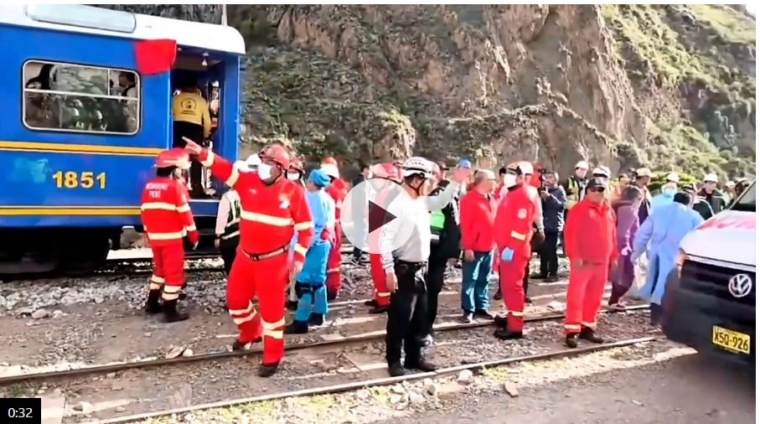
A train driver has died and at least 40 people have been injured in a head-on rail collision near Peru's most popular tourist attraction, Machu Picchu.
Two trains collided on the single track leading to the ancient Inca town on Tuesday, according to a statement from the local government.
It said that 20 ambulances had attended the scene and that injured people had been transferred to medical facilities in the nearby city of Cusco.
The US embassy in Peru said that US citizens were injured in the crash, while the UK Foreign Office said it was "supporting a number of British nationals involved".

Local media outlet Peru21 reports that "hundreds" of tourists remain at the scene awaiting evacuation, which has been "hampered" by difficult terrain around the crash site.
At least 20 of the injured are in a serious condition, a health official told the Reuters news agency.
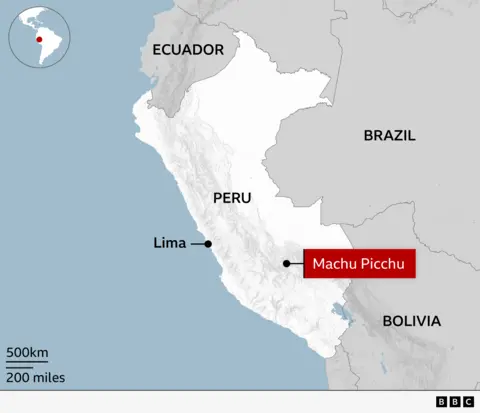
The collision occurred on the track linking Ollantaytambo Station and Aguas Calientes, the closest town to Machu Picchu. The journey between the two stations usually takes around 90 minutes.
The two trains involved in the accident were operated by PeruRail and Inca Rail respectively.
"We deeply regret what has happened," PeruRail said in a statement, adding that its staff had "immediately" provided first aid to the train driver, the train conductor and the passengers involved in the incident.
The cause of the accident has not yet been made clear.
The crash comes amid an ongoing dispute between providers of transport to the UNESCO World Heritage Site, with local communities unhappy with what they say is an insufficiently open bidding process.
The trains and buses that take tourists to the ancient town have steep ticket prices and can be highly lucrative due to their limited accessibility.
Built in the Peruvian Andes in the 15th Century, the Incan city of Machu Picchu is one of the Seven Modern Wonders of the World.
Visitors can take a series of trains and buses to reach the site, or hike along the Inca trail with a registered tour operator.
In 2011, officials implemented a daily cap on visitors to protect and preserve the site, but concerns remain about overtourism.
Latest Stories
-
Ghana seeks long-term mining investments that benefit local communities – Armah-Kofi Buah
2 minutes -
Ghana’s Ambassador to China, Kojo Bonsu, presents credentials to Nepalese President
15 minutes -
Fairtrade Africa’s Cocoa Hubs Project strengthens rural service centres in cocoa-growing communities
20 minutes -
SEC cautions investors against fraudulent investment schemes
22 minutes -
Land Ministry urges rCOMSDEP operators to reserve earnings for land reclamation
25 minutes -
Commercial drivers give authorities one week to clear traders from lorry terminals, bus stops
30 minutes -
Nana B denies claims that Kojo Bamba was his driver and bodyguard
57 minutes -
Engage Now Africa to construct a 10-unit classroom block for struggling Navrongo Vocational Training Centre
1 hour -
One digital financial breach could expose linked accounts to fraud – Financial Crimes Manager
1 hour -
Ghana Russia Centre signs ICT cooperation agreement with Moscow University
1 hour -
The powerhouses of the village: Honouring Ghana’s rural women on International Rural Women’s Day
1 hour -
Vincent Assafuah petitions CHRAJ to investigate alleged irregularities in 2026 World Cup visa arrangements
1 hour -
12-year-old boy found dead in muddy pit at Opeikuma
1 hour -
GHS begins Yellow Fever vaccination campaign in three Upper West districts
1 hour -
Organised Labour pushes for higher 2027 base pay despite slowing inflation
1 hour