

Audio By Carbonatix
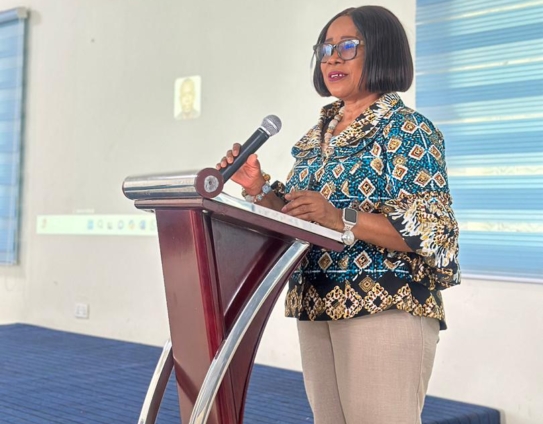
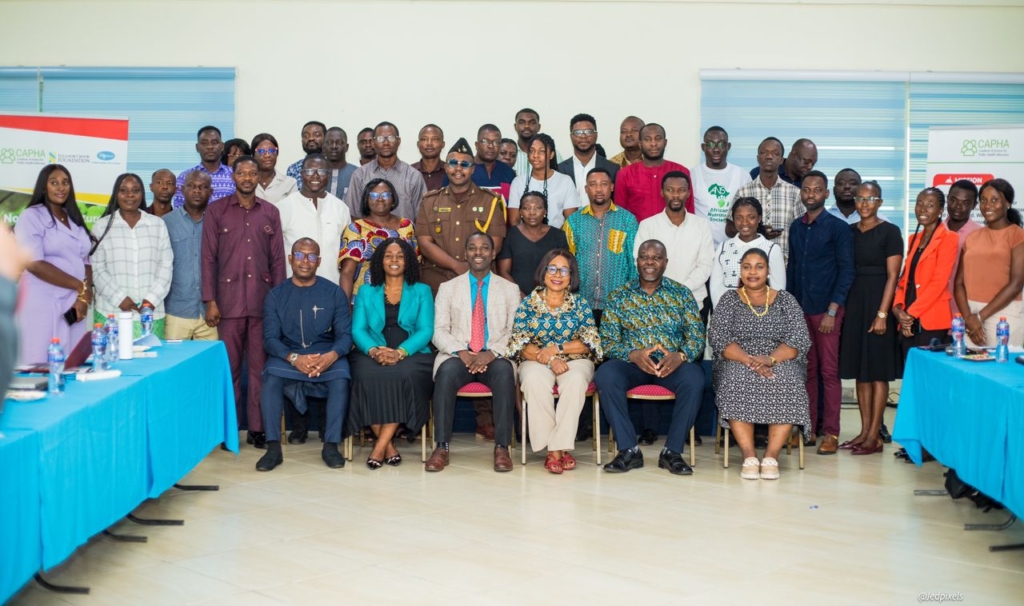
Malnutrition in Ghana has reached crisis levels and must be treated as a national emergency, not merely a health issue. This was the clarion call made by Dr Charity Binka, Executive Director of Women, Media and Change (WOMEC), at a high-impact capacity-building workshop for Civil Society Organisations (CSOs) and media practitioners held at the Erata Hotel in Accra, on Tuesday, May 27.
The workshop, organised by the Coalition of Actors for Public Health Advocacy (CAPHA) in collaboration with WOMEC, brought together media professionals, health advocates and civil society leaders to spotlight maternal and child nutrition, and to galvanise efforts toward sustainable solutions.
Addressing the participants, Dr Binka lamented the persistent under nutrition among Ghanaian children and the limited access to adequate maternal nutrition, despite the country's agricultural and human resource potential.
“We are gathered here today to confront a silent crisis — one that affects our children, our communities, and the future of our nation. That crisis is malnutrition,” she said. “Eighteen percent of children under five suffer from stunting, and seven percent from wasting. These are not just statistics. They are real children, real families, and real futures being lost.”
Dr Binka noted that Ghana’s struggle with malnutrition is not due to scarcity of food but rooted in systemic gaps — including access, education, service delivery, and a lack of political prioritisation.
“Ghana should not be battling malnutrition,” she asserted. “We have fertile lands, capable farmers, national nutrition policies, and committed professionals. What we lack is a coordinated and well-funded national effort to close the nutrition gap.”
WOMEC, in partnership with CAPHA and with support from the Eleanor Crook Foundation — a global leader in nutrition advocacy — has launched a national advocacy campaign under the project “Nourish Ghana: Advocating for Increased Leadership to Combat Malnutrition.”
Dr Binka highlighted the wide-reaching implications of poor nutrition, saying it hampers health, education outcomes, and national productivity. “Malnutrition weakens our workforce, increases healthcare costs, and reduces school performance,” she stated. “It robs children of their potential even before they get a chance to grow.”
In her call to action, Dr Binka urged the government to treat nutrition as a cross-sector development priority, budgeting for it at national, regional, and district levels. “The government must make nutrition a budgeted, cross-sector priority. This is not just about saving lives — it’s about unlocking Ghana’s full potential,” she emphasised.
She also called for renewed focus on promoting exclusive breastfeeding, safe complementary feeding, and the use of local foods prepared under hygienic conditions to improve child and maternal nutrition.
Significantly, Dr Binka underscored the strategic role of the media in transforming the narrative around nutrition in Ghana. “The media has the platform and the power to shape public opinion,” she said. “We must place malnutrition at the top of the national development agenda. Let us make nutrition part of everyday conversations — in our homes, our markets, and our communities.”
Over the next year, WOMEC and CAPHA plan to engage key stakeholders — including parliamentarians, nutrition champions, and development partners — while launching nationwide media campaigns to amplify the advocacy.
Dr Binka ended her address with a strong rallying cry: “Let us envision and create a Ghana where no mother must watch her child grow weak from hunger, where every child can grow up strong, and where nutrition is recognised not as a privilege but a fundamental right.”
Dr Binka also used the opportunity to appeal to the government to commit more financial resources to tackle maternal and child malnutrition.
She particularly expressed concern about how there appears to be a lack of accountability and transparency in terms of monies released towards nutrition initiatives, and demanded clarity and openness in how such funds are used to boost the fight against malnutrition.
The workshop marked a pivotal step in building momentum for sustained advocacy, action and accountability in tackling Ghana’s nutrition challenges head-on.
Latest Stories
-
KGL U17 Colts 2026: Western beat Prempeh Elite Academy to set up final final with Greater Accra Region
5 minutes -
Late Solanke strike salvages 10-man Spurs draw at Man United
15 minutes -
Gender Ministry to monitor welfare of Nana Akua Addo’s children amid domestic violence case
21 minutes -
Benedict Okyere Yeboah: Ghana’s football problem goes beyond sacking a coach
31 minutes -
GPL 2026/27: Darkwah Wiafe’s winner sees All Blacks beat Kotoko
37 minutes -
ITF World Tour : Patel Wins Boys’ Singles Final at J100 Accra
49 minutes -
Ghana must pursue BRICS partnership if it brings economic benefits – Kpebu
52 minutes -
Success and Wright Claims J100 Accra Girls’ Doubles Championship
53 minutes -
ITF J100: America’s Wright wins J100 Accra Girls’ Singles Title
59 minutes -
Expedition hopes to find aviator Amelia Earhart’s plane on remote island
1 hour -
US seeks changes to rejected $109m health compact with Ghana – Mahama
2 hours -
Nine dead in mass shooting at Pennsylvania home
2 hours -
‘Time for Ukraine to get new president,’ says Trump after Zelensky condemns diesel deal
2 hours -
Hincapie injury adds to Arsenal issues after Guimaraes rescue act
2 hours -
Henderson scores twice as Chelsea thumb Bournemouth
2 hours