

Audio By Carbonatix
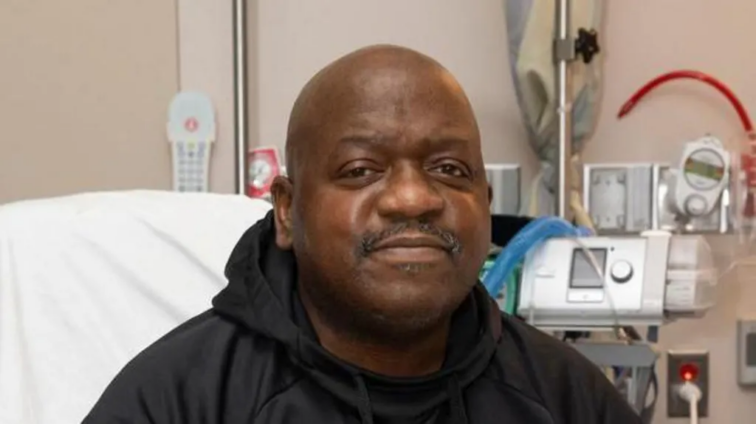
The first man to receive a genetically modified pig kidney transplant has died two months after the operation, the hospital which carried out the procedure has said.
Richard "Rick" Slayman, 62, was suffering from end-stage kidney disease before undergoing the operation in March.
Massachusetts General Hospital (MGH) said on Sunday there was no indication his death was a result of the transplant.
Transplants of other organs from genetically modified pigs have failed in the past, but the operation on Mr Slayman was hailed as a historic milestone.
In addition to kidney disease, Mr Slayman also suffered from Type 2 diabetes and hypertension. In 2018, he had a human kidney transplant, but it began to fail after five years.
Following his pig kidney transplant on 16 March, his doctors confirmed he no longer needed dialysis after the new organ was said to be functioning well.
"Mr Slayman will forever be seen as a beacon of hope to countless transplant patients worldwide and we are deeply grateful for his trust and willingness to advance the field of xenotransplantation," MGH said in a statement.
Xenotransplantation is the transplanting of living cells, tissues or organs from one species to another.
MGH said it was "deeply saddened" at his sudden death and offered condolences to his family.
Mr Slayman's relatives said his story was an inspiration.
"Rick said that one of the reasons he underwent this procedure was to provide hope for the thousands of people who need a transplant to survive," they said.
"Rick accomplished that goal and his hope and optimism will endure forever.
"To us, Rick was a kind-hearted man with a quick-witted sense of humour who was fiercely dedicated to his family, friends, and co-workers," they added.
While Mr Slayman received the first pig kidney to be transplanted into a human, it is not the first pig organ to be used in a transplant procedure.
Two other patients have received pig heart transplants, but those procedures were unsuccessful as the recipients died a few weeks later.
In one case, there were signs the patient's immune system had rejected the organ, which is a common risk in transplants.
Latest Stories
-
Conflicts among care providers linked to maternal, neonatal deaths – Expert
44 minutes -
GIS marks 10th TIME conference, champions improved teaching practices
52 minutes -
BRICS Or Balance? What Ghana’s bid really means
1 hour -
GPRTU wants full TRAFFITECH-GH implementation to start in 2027
2 hours -
Mahama announces plans to import electric wheelchairs for PWDs
2 hours -
KGL U17 Colts 2026: Western beat Prempeh Elite Academy to set up final final with Greater Accra Region
2 hours -
Late Solanke strike salvages 10-man Spurs draw at Man United
2 hours -
Gender Ministry to monitor welfare of Nana Akua Addo’s children amid domestic violence case
2 hours -
Benedict Okyere Yeboah: Ghana’s football problem goes beyond sacking a coach
2 hours -
GPL 2026/27: Darkwah Wiafe’s winner sees All Blacks beat Kotoko
3 hours -
ITF World Tour : Patel Wins Boys’ Singles Final at J100 Accra
3 hours -
Ghana must pursue BRICS partnership if it brings economic benefits – Kpebu
3 hours -
Success and Wright Claims J100 Accra Girls’ Doubles Championship
3 hours -
ITF J100: America’s Wright wins J100 Accra Girls’ Singles Title
3 hours -
Expedition hopes to find aviator Amelia Earhart’s plane on remote island
3 hours