

Audio By Carbonatix
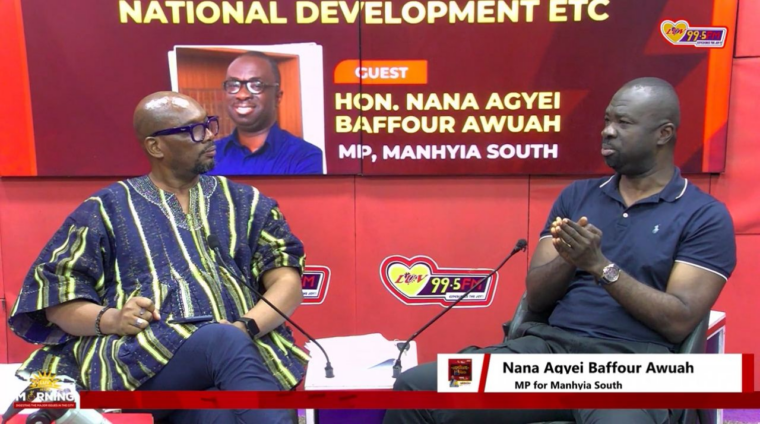
Member of Parliament for Manhyia South, Nana Agyei Baffour Awuah, is alarmed over the rapid and unregulated commercialisation of residential areas within the constituency.
Speaking on Luv FM, the MP warned that well-known residential neighbourhoods, including Ashtown and Alabar, are steadily being converted into commercial hubs, a development he characterised as “proper decadence.”
He described the trend as a reflection of systemic planning failures at the national level.
“It tells you that there is growth in business, but it also tells you that we are not planning as a country. It doesn’t happen anywhere that residential areas would become industrial areas unless there is rezoning. So, in the absence of rezoning, it represents what the country has become,” Mr. Awuah said.
The MP linked the problem to what he described as decades of neglect of the Ashanti Region, noting that the standard of urban management in Kumasi has declined significantly over the years.
He argued that the region’s leaders lack the resources and focus to properly discharge their duties in key districts, adding that broader systemic changes are also undermining governance at both the regional and city levels.
“Too many things are changing that are affecting how we are managing the country, particularly the region and the city of Kumasi,” he said.
Nana Baffour Awuah warned of the long-term consequences of inaction, suggesting that Manhyia South as a constituency could eventually lose its residential character entirely, with the exception of a few communities such as Dichemso, CPC, and Krobo Odumase.
“Ashanti Newtown and other places are becoming markets. I am even scared that over time, Manhyia South as we have come to know it may not exist,” he cautioned.
While acknowledging that the commercial activity signals economic growth, the MP stressed that prosperity without deliberate planning is counterproductive.
“Development is deliberate, you don’t leave it to happen on its own,” he said.
He also criticized the country’s local government and city authorities, accusing them of treating building permits as a revenue-generation tool rather than an instrument for ensuring proper urban development.
“Here, a permit is just a revenue generation mechanism by our city authorities,” he said, calling for a fundamental rethink of how building approvals are granted and enforced.
He urged relevant authorities to act urgently and creatively to address the crisis without placing an undue financial burden on the state.
“The time has come for all of us to now do the hard thinking, to find very creative ways to do things at a very cheaper cost to this country,” he concluded.
Latest Stories
-
A source of excellence across generations – Vice President Opoku-Agyemang lauds Mfantsipim
56 minutes -
(Photos) Mfantsipim School launches historic 150th anniversary
1 hour -
Knights and Ladies of Marshall group backs Catholic Bishops’ stance on anti-LGBTQ+
2 hours -
Bright Simons writes: All the Filla in the Ibrahim Mahama/E&P – Gold Fields Saga
3 hours -
Monetise Idiocy In Ghana
3 hours -
The Ghanaian prophet and the mysterious death of his scottish wife Charmain Speirs
4 hours -
Nearly 400 sentenced in Nigeria for links to militant Islamists
4 hours -
Ghana’s recovery supported by gold strength despite global oil price pressures – Standard Bank Research
4 hours -
Methodist Church hails Mfantsipim@150; calls for “fresh consecration” to excellence
4 hours -
‘Excellence is our inheritance’ – Nana Sam Brew-Butler hails Mfantsipim’s 150-year reign in leadership
4 hours -
Kwaku Azar writes: A-G vs OSP
5 hours -
Mfantsipim–Adisadel rivalry built excellence, not division – Sam Jonah
5 hours -
Vice President launches Mfantsipim’s 150 years of shaping Ghana’s greatest mind
5 hours -
I assure Otumfuo, Mahama will join him to commission KNUST Teaching Hospital by end of this year – Haruna Iddrisu
6 hours -
Barcelona dominate derby to extend La Liga lead
6 hours