

Audio By Carbonatix
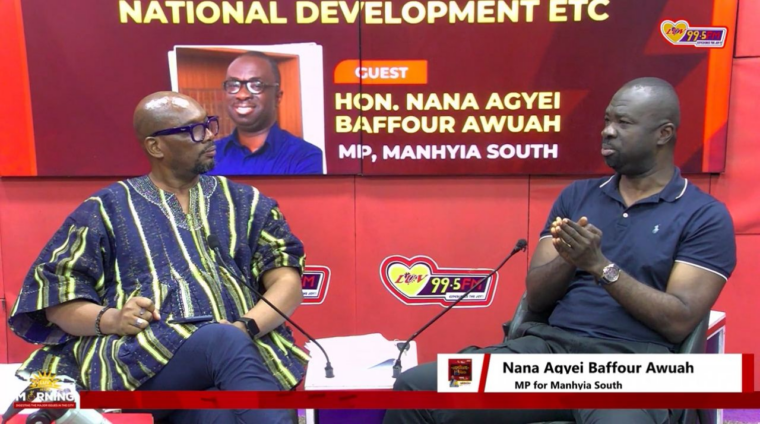
Member of Parliament for Manhyia South, Nana Agyei Baffour Awuah, is alarmed over the rapid and unregulated commercialisation of residential areas within the constituency.
Speaking on Luv FM, the MP warned that well-known residential neighbourhoods, including Ashtown and Alabar, are steadily being converted into commercial hubs, a development he characterised as “proper decadence.”
He described the trend as a reflection of systemic planning failures at the national level.
“It tells you that there is growth in business, but it also tells you that we are not planning as a country. It doesn’t happen anywhere that residential areas would become industrial areas unless there is rezoning. So, in the absence of rezoning, it represents what the country has become,” Mr. Awuah said.
The MP linked the problem to what he described as decades of neglect of the Ashanti Region, noting that the standard of urban management in Kumasi has declined significantly over the years.
He argued that the region’s leaders lack the resources and focus to properly discharge their duties in key districts, adding that broader systemic changes are also undermining governance at both the regional and city levels.
“Too many things are changing that are affecting how we are managing the country, particularly the region and the city of Kumasi,” he said.
Nana Baffour Awuah warned of the long-term consequences of inaction, suggesting that Manhyia South as a constituency could eventually lose its residential character entirely, with the exception of a few communities such as Dichemso, CPC, and Krobo Odumase.
“Ashanti Newtown and other places are becoming markets. I am even scared that over time, Manhyia South as we have come to know it may not exist,” he cautioned.
While acknowledging that the commercial activity signals economic growth, the MP stressed that prosperity without deliberate planning is counterproductive.
“Development is deliberate, you don’t leave it to happen on its own,” he said.
He also criticized the country’s local government and city authorities, accusing them of treating building permits as a revenue-generation tool rather than an instrument for ensuring proper urban development.
“Here, a permit is just a revenue generation mechanism by our city authorities,” he said, calling for a fundamental rethink of how building approvals are granted and enforced.
He urged relevant authorities to act urgently and creatively to address the crisis without placing an undue financial burden on the state.
“The time has come for all of us to now do the hard thinking, to find very creative ways to do things at a very cheaper cost to this country,” he concluded.
Latest Stories
-
GFA and Sports Ministry must not rush Black Stars head coach appointment – Nana Fitz
5 minutes -
Nkrumah Showboy: Chief Moomen’s play to explore Ghana’s first President’s early years
14 minutes -
SEC to develop Social Bond Guidelines; over half of listed firms report on ESG indicators
27 minutes -
Insurance firms have up till January 2027 to incorporate ESG in financial reporting
32 minutes -
High Court throws out Afenyo-Markin’s GH¢15m defamation suit against Sammy Gyamfi
44 minutes -
Rollover cost of T-bills reduced substantially, one-year bill yield drops 19% since December 2024
44 minutes -
Daily Insight for CEOs: Preparing for 2027 Board and Executive Conversations
1 hour -
World Cup Visa Scandal: There is no ‘justification’ to dismiss me – Kofi Adams
1 hour -
2028 Olympic Games qualification ‘really tough’ – Black Queens coach Björkegren
2 hours -
GRFU, GOC Women’s Commission hold breast cancer awareness, expresses gratitude to Sunda International Ghana
2 hours -
COCOBOD raises GH¢3.4bn as Cocoa Capital PLC lists inaugural commercial paper on GFIM
2 hours -
No Party Card, just a Party Microphone! A Ghanaian story of Elections, Referees and Convenient Amnesia
2 hours -
Minority welcomes suspension of teachers’ strike, demands timely payment of promotion arrears
2 hours -
Customary ownership accounts for 80% of land; it complicates land administration – Lands Commission
2 hours -
NRSA to auction vehicles of non-subscribers who fail to pay towing charges within 21 days
2 hours