

Audio By Carbonatix
The Media Foundation for West Africa (MFWA) has urged the Government to take a “decisive action” against technology firms and media houses that allow their platforms to be used to spread misinformation, disinformation and divisive narratives.
It also wants media organisations, political parties, civil society and community-based organisations to empower citizens with knowledge and technological skills to identify fake content as a measure to reducing the spread of half-truths and misrepresentations via some media outlets.
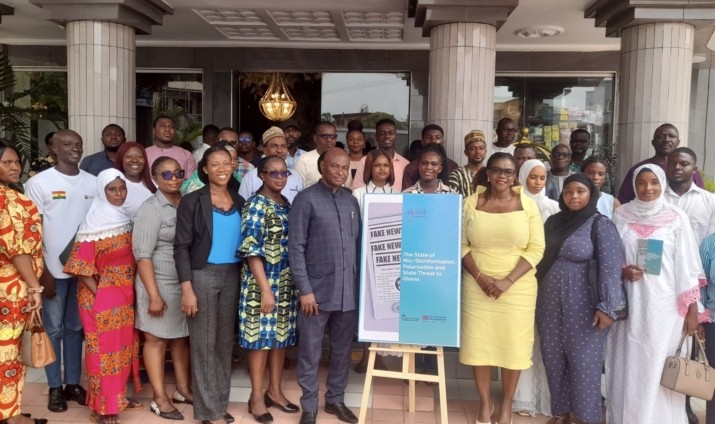
These and other recommendations were made in an MFWA study, which explored the state of misinformation and disinformation, hate speech, and polarised narratives in Ghana.
Launched in Accra on Wednesday, the study established, among other things, that the practice of spreading half-truths and fabrications was rife in Ghana, and was mostly peddled by political actors, media and influencers.
Apart from social media, described as the “basic instrument’’ of misinformation and disinformation, the study noted that mainstream media with political affiliation were “guilty of disseminating hate speech and disinformation with “impunity.”
“…Most of the media houses appear not to be aware or have little or no knowledge of ethical codes guiding their conducts, while owners of these enjoy the unprofessional conduct,” the report stated.
It confirmed that the spread of hate speech, misinformation and disinformation reached its peak during general election in the country.
Some foreign interests relied on the phenomenon to influence decisions, especially in Africa, the researchers noted.
The study grouped misinformation and disinformation into political, religious, economic and scientific categories, indicating that some journalists failed to cross-check information before publication.
“Economic disinformation is becoming common in Ghana because of attempts to go cashless. Religious disinformation fuels existing tensions…Political disinformation is the currency in Ghana particularly during elections,” it noted.
The Foundation, therefore, called for community outreach and sensitisation on harmful effects of misinformation and disinformation.
It also emphasised the establishment of fact-checking desks in newsrooms to ensure fact-based reporting and help deal with the issue.
“All key actors including political parties peace institutions, regulators, media organisation CSOs and religious bodies should intensify their role in carrying out educational and socialisation programmes, particularly targeting the youth who are most vulnerable…” it noted.
MFWA encouraged entities to form networks against mis/disinformation, polarisations, hate speech “both in-country and at the regional level.”
“Technological firms, and social media platforms such as Facebook, X. TikTok, WhatsApp, and other platforms should take measures to flag mis/disinformation, hate speech, and polarising narratives before it gets to the public,” it said.
“Tech firms should be regulated just as it is currently happening in the Global North. Likewise, media content should be regulated and sanctioned regimes introduced and implemented.”
Ms Kathleen Addy, the Chairperson of the National Commission for Civic Education (NCCE) noted that algorithms on social media prioritised engagement over accuracy, amplifying falsehoods and making it difficult for people to distinguish between truth and lies.
AI-generated content and deepfakes could be used to manipulate public opinion, she said, and emphasised balance between free speech and the responsibility of governments, tech companies, and civil society to curb the spread of misinformation.
Mr Hooman Nouruzi, the Head of the Political and Governance Team, British High Commission, highlighted the UK Government’s dedication to strengthening governance and democracy in Ghana, stressing the importance of tackling misinformation and disinformation.
“Safeguarding against the risk of mis-disinformation is key to further deepening Ghana’s democracy. It is, therefore, important to ensure that all possible efforts are combined to prevent the interference of other states through misinformation and disinformation,” he stated.
He highlighted the role of an independent and credible media in fostering public trust and urged journalists, social media influencers, and political actors to be agents of change.
Latest Stories
-
Woman injures three people in third Poland school knife attack in a week
41 seconds -
Ghana should join BRICS as partner, not member – NPP Bono East Regional Secretary
2 minutes -
Ghana High Commission warns nationals in South Africa over protests in Johannesburg, Durban
2 minutes -
Mahama praises Roads Minister for keeping Big Push contractors on their toes
7 minutes -
World Cup Visa Scandal: ‘My client has not collected money for visas’ – Ampofo Ankrah’s lawyer
19 minutes -
US immigration officials defend ICE agents who shot man in same car as child
28 minutes -
Commentator Katie Zacharia picked as new White House press secretary
32 minutes -
Drone strike by Sudan paramilitary kills 41 near Ethiopian border, rights group says
38 minutes -
King warns malicious online actors are evolving tactics
45 minutes -
Several injured as Saudi capital airport reportedly hit again
48 minutes -
Christa Pike discharged from hospital and returned to prison, her lawyers say
50 minutes -
Ghana’s BRICS move requires clear strategy to manage risks – Godfred Bokpin
3 hours -
Pay teachers realistic income – Duncan Amoah to gov’t
3 hours -
Bechem to become chicken capital of Ghana – Mahama projects
3 hours -
Mentapulse Africa’s Health and Labour Summit calls for better working conditions to retain skilled professionals
3 hours