

Audio By Carbonatix
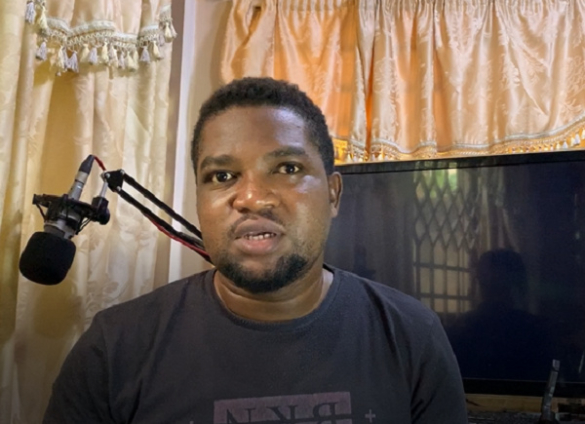
Renowned sound engineer, Wei Ye Oteng, says musicians in Ghana do not pay sound engineers what they deserve for their hard work.
This according to him is part of the reasons the Ghanaian music sound is not well-appreciated on the international scale, due to substandard sound output.
Speaking on Daybreak Hitz with Andy Dosty on Hitz 103.9 FM, he said: “Most of the musicians in this country do not pay the engineers well.”
As part of the reasons for some artistes’ reluctance in hiring professional sound engineers for proper tuning of their sound, he stated that the rates they [producers] charge is above what the artistes are willing to pay.
“You can't walk up to these people and expect to pay GHS 500 or GHS 1000 and expect him to mic things - uh turn on some pre-amps, produce the entire thing to suit the standard,” Wei Ye Oteng said.
”So sometimes, the charges that our artistes in this country would want to pay for that quality, oh my God, it's so absurd... it's sad,” he added.
The CEO of DrumLyne Audio Facility believes that some Ghanaian musicians are more interested in becoming famous and splurging, neglecting the importance of putting it back into the high-quality production of their songs.
The producer also observed that some of the musicians develop the habit of undervaluing the sound engineers they started music with, as they [musicians] get more popular, and eventually abandon them for not-so-good audio engineers, hence the diminishing quality in their songs.
Highlighting the two West African countries that are often juxtaposed when it comes to music, Oteng stated that Nigerian musicians and producers are ahead of Ghana when it comes to final output in sound – mixing and mastering, before they are put out for public consumption.
Per the sound engineer, better sound quality by Nigerian producers is made apparent because their musicians invest properly into the production of their songs—and pay the sound engineers adequately.
Conversely, award-winning music producer, Mix Master Garzy, says that the production of the “international standard” quality of Nigerian music is no different from that of the Ghanaian - if not at the same level, Ghanaians should be leading the practice.
“Nigeria has a bigger market – that doesn’t mean they do it better than us,” Garzy averred. “When it comes to the best or quality, I think we all have the same – or at times, they have to learn from us,” he continued.
Latest Stories
-
Over 38,000 commercial, 150,000 residential customers unbilled – Ghana Water MD
21 minutes -
Several injured as Sprinter bus collides with ‘trotro’ at Odorkor
21 minutes -
Ghana records progress on reparatory justice agenda – Ablakwa
38 minutes -
Mahama commissions Christian Tetteh Yohuno Ward Complex at Police Hospital
53 minutes -
Vice President calls for wider access to Ghana’s political party histories
53 minutes -
Republic Bank JoyNews Habitat Fair to connect prospective homeowners with exhibitors in Ho from October 16 to 18
1 hour -
Obaasima Summit: ‘AI is not a spiritual attack’ — Rev. Dr. Ofori-Boateng urges young women to embrace technology
1 hour -
GHS to distribute 80,000 pairs of locally-made protective footwear to health workers
1 hour -
GoldBod boosts local jobs as 90% of gold undergoes refining in Ghana – Sammy Gyamfi
1 hour -
The search for the politically unblemished: Are we asking the impossible of public appointees?
1 hour -
Ghana seeks climate finance access for debt-restructuring countries
2 hours -
Afenyo-Markin urges stronger media scrutiny of public institutions
2 hours -
GoldBod recovers GH¢38.7m in legacy PMMC debts, targets remaining arrears
2 hours -
62 out of every 100 commercial meters inspected missing from Ghana Water database – MD
2 hours -
GoldBod gets BoG authorisation to sell forex, Sammy Gyamfi tells PAC
2 hours