

Audio By Carbonatix
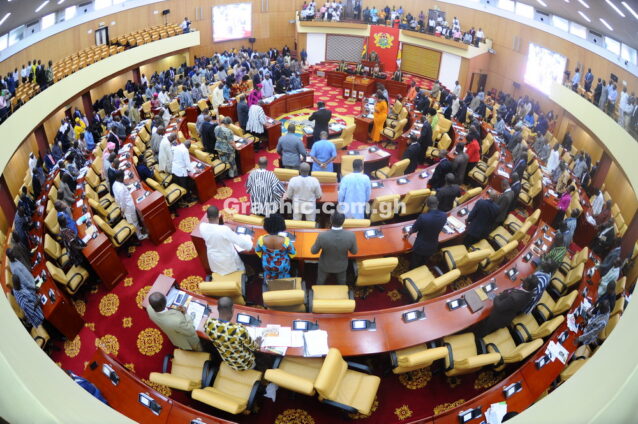
Parliament has approved the Excise Bill, 2026, removing excise duty on locally manufactured fruit juices as part of a broader tax reform package aimed at making the products more affordable, encouraging healthier consumer choices and strengthening Ghana's agro-processing sector.
The legislation also establishes a comprehensive legal framework for the assessment and collection of excise duty on selected imported and locally manufactured excisable goods, while retaining the mandatory use of Excise Tax Stamps on excisable products to improve compliance and revenue administration.
Presenting the Bill in Parliament on Tuesday, Deputy Minister for Finance, Thomas Nyarko Ampem, explained that the new law introduces an incentive-based excise regime for beer and other beverages, with tax rates linked to the proportion of locally sourced raw materials used in production.
“The other thing we are seeking to do is to introduce a sliding scale for use of raw materials so that we can encourage the use of local raw materials in the manufacture of beer and other drinks so that the more raw materials you source locally to produce, the rate of excise duty goes down,” he said.
He said the policy was designed to stimulate demand for locally produced agricultural commodities while reducing manufacturers' dependence on imported inputs.
Mr Ampem further announced that locally manufactured fruit juices would no longer attract excise duty, describing the measure as one that would benefit both consumers and domestic processors.
“We are removing taxes on juices, local juices that are produced here, and so our Blue Skies, our Akumfi juice factory, will all be zero-rated, and that will bring the prices low, and it will encourage us to shift from the consumption of alcohol to fruit juices because we want to promote good health,” he stated.
The government expects the tax exemption to improve the competitiveness of Ghanaian fruit juice manufacturers, expand market demand for products made from locally cultivated fruits and strengthen value chains linking farmers to processors.
The sliding-scale excise regime is also intended to encourage manufacturers to increase local content by rewarding companies that source a greater proportion of their production inputs from within Ghana.
The Excise Bill, 2026, forms part of the government's wider fiscal reform agenda, which seeks to promote industrialisation, support value addition, create jobs and enhance the competitiveness of local industries while using tax policy to encourage healthier lifestyle choices.
Industry observers say the reforms could provide a significant boost to Ghana's fruit processing sector by creating new markets for locally grown fruits, supporting rural livelihoods and reducing post-harvest losses, while advancing the government's agenda of building resilient domestic manufacturing value chains.
Latest Stories
-
KNUST, GMTF explore AI partnership to transform healthcare delivery
4 minutes -
MTTD records 9,000 preventable crashes, over 900 deaths in eight months
9 minutes -
UN Secretary-General expresses optimism about future, pledges support for Mahama, AU
14 minutes -
Ghana’s desalination lesson: A water project must work on paper and at the tap
29 minutes -
Bawumia calls for paradigm shift in Ghana’s healthcare policies after GMA engagement
35 minutes -
77 aspirants pick NDC nomination forms in Sunyani West
39 minutes -
Mahama holds talks with China Vice President Han Zheng in New York
44 minutes -
Patriotic Intellectuals-TTU endorses John Boadu for NPP National Chairman
47 minutes -
Mahama links Accra Reset to Africa’s push for health sovereignty
53 minutes -
Mahama outlines thinking behind the Accra Reset
58 minutes -
GNFS responds to two separate fire incidents in Greater Accra
1 hour -
Teachers in Sekondi -Takoradi join in nationwide strike
1 hour -
New York Times executive fatally shot allegedly by elderly in-laws
2 hours -
Teacher Payment Crisis: GES races to protect academic calendar
3 hours -
US prosecutors reopen case of alleged gang rape at Cornell University
3 hours