

Audio By Carbonatix
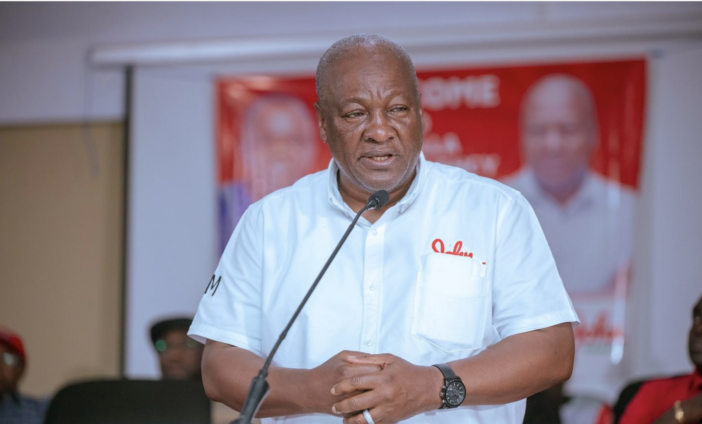
Former President John Dramani Mahama has once again highlighted his commitment to transforming Ghana’s economy with an innovative and ambitious 24-Hour Economy Policy.
“This game-changing initiative, outlined under the next National Democratic Congress (NDC) government, seeks to revitalize key sectors and create a robust economic framework capable of driving sustainable growth”.
He said at the heart of the policy was a deliberate strategy to stimulate economic activity by enabling businesses and public institutions to operate around the clock in three eight-hour shifts.
“This 24-hour operational model is designed to increase employment, productivity, production, and revenue, while enhancing access to public services”.
In a recent address, Mahama emphasized the transformative potential of this policy. “The 24-Hour Economy is more than just a policy; it’s a catalyst for industrialization, export promotion, and job creation. It’s about building an economy that works for everyone, every hour of the day,” he said.
The 24-Hour Economy focuses on key sectors such as agro-processing, manufacturing, pharmaceuticals, construction, financial services, and more.
Strategic investments in infrastructure, energy, and security will provide the foundation for businesses to thrive. Public institutions with high customer traffic, such as ports, customs, and the DVLA, will also operate around the clock to enhance efficiency.
He said to ensure seamless implementation, an Accelerated Export Development Authority (AEDA), chaired by the President, would oversee export promotion efforts under this strategy.
“Additionally, a new Employment Act will be enacted in consultation with organized labor and stakeholders to complement existing labor laws and regulate the 24-hour economy effectively.
Mahama’s 24-Hour Economy Policy is underpinned by a comprehensive support package for businesses. Participating enterprises will benefit from tax incentives, financing support through the Ghana Exim Bank, and cheaper electricity rates based on a Time-of-Use tariff system.
The government will also promote the “Made in Ghana Agenda” by prioritizing local goods, thereby stimulating domestic demand and fostering a sense of national pride.
The policy also addresses workers’ welfare by promoting good work ethics and ensuring efficient eight-hour shifts across public and private sectors.
Mahama’s vision prioritizes sustainable, decent-paying jobs that empower individuals and strengthen families.
“The Policy reflects his forward-thinking approach to governance and economic development. By focusing on import substitution, export promotion, and industrialization, he seeks to position Ghana as a competitive player in the global economy.”
Latest Stories
-
New York Times executive fatally shot allegedly by elderly in-laws
23 minutes -
Teacher Payment Crisis: GES races to protect academic calendar
32 minutes -
US prosecutors reopen case of alleged gang rape at Cornell University
49 minutes -
Journalist to be crowned king in Uganda after bitter succession dispute
59 minutes -
OpenAI scraps rollout of new model over safety concerns
1 hour -
Nigerian attempts to break world record by dancing non-stop for seven days
1 hour -
GES urges government agencies to end blame game over teacher payments
3 hours -
GES sets Oct. 5 deadline to resolve teachers’ payment dispute
3 hours -
GES working around the clock to get teachers back to class, says Daniel Fenyi
4 hours -
French PM warns against escalation of school protests after 164 arrested
4 hours -
UK tries to stop Trump’s diesel export ban
4 hours -
Late Olise goal gives France win over Belgium
4 hours -
Mancini enjoys first win since return as Italy boss
5 hours -
Interest payments to average a high 20% of government revenue over next 4 years
5 hours -
Anthropic warns AI may pose ‘existential risks to humanity’ in IPO filing
5 hours