

Audio By Carbonatix
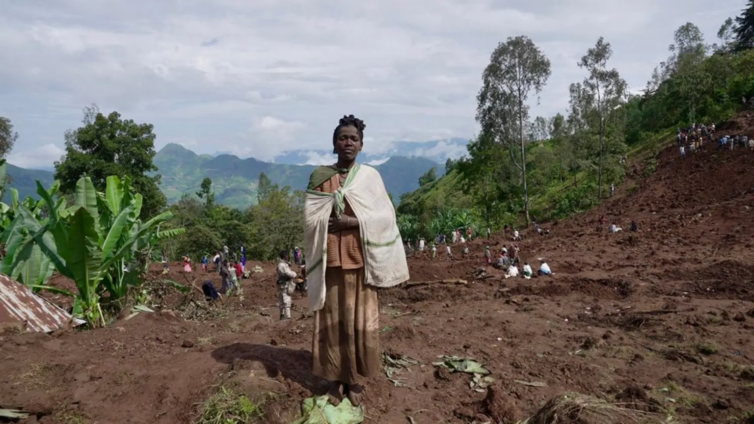
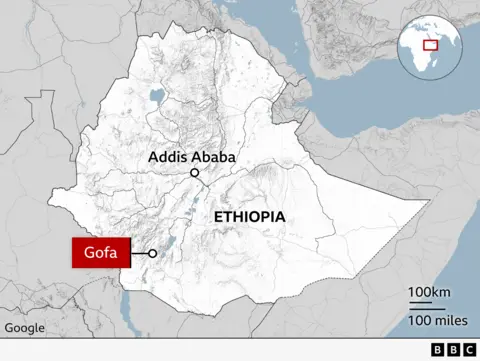
Meselesh Gosaye, a mother of six, was in her hilltop home in southern Ethiopia’s Gofa district caring for her children when she heard the landslide that left many trapped in the mud.
“There were sounds of people screaming and we rushed down the hill,” she said struggling to contain her tears as she remembered what happened on Sunday.
The locality of Kencho Satcha Gozdi, where Ms Meselech lives, has a number of small villages scattered across the hilly landscape which are at risk of floods and landslides.
The string of settlements are characterised by mud-walled, tin-roofed houses, some on or near the top of the lush slopes. Other villages - including the one buried by the landslide - are clustered at the foot of the hills.
Heavy rains had preceded Sunday’s disaster making the area’s narrow and slippery footpaths dangerous.
But Ms Meselech, her husband and some of her children did not hesitate to race towards the site of the accident.
“When we reached there, we saw the earth [had swallowed] the houses,” she told the BBC.
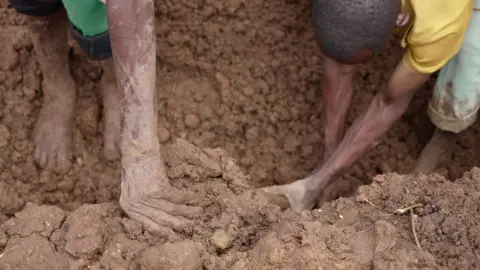
They joined a throng of villagers who similarly had arrived upon hearing the news and instinctively started digging through the dirt and mud, many of them just with their hands, hoping to rescue those buried underneath.
In the following hours many others came. But they had limited success - a few people were pulled out alive, many more remained trapped.
“It was a sad day,” Ms Meselech said.
Seeing that a lot more manpower and effort were required, officials from the locality began mobilising help.
The next day, at an emergency meeting, they told every able-bodied adult, and older children, to get any farming tools - such as shovels, axes and hoes - they could get their hands on and work in unison.
The site was inaccessible to vehicles with more heavy-duty lifting equipment.
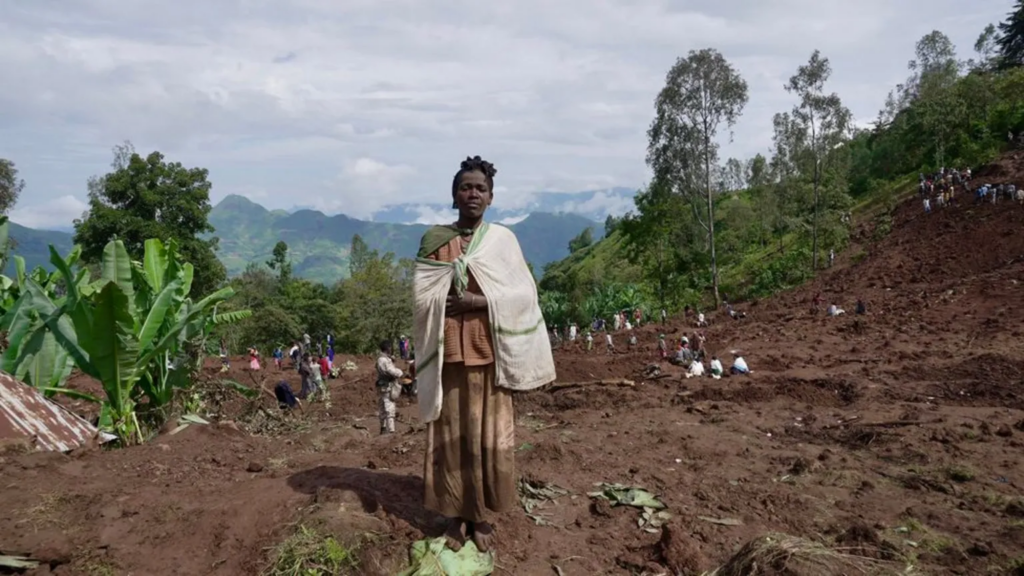
Ms Meselech’s husband and her two eldest sons - aged 15 and 12 - immediately joined the search-and-rescue efforts. Meanwhile she returned home from the meeting to breastfeed her toddler and cook for her other children.
Then she went back downhill to offer help. But what awaited her was a different - and more tragic - scene. There had been a second landslide burying most of those involved in the rescue mission.
Unable to control her emotions, she hastened to the land that engulfed her husband and her children. But someone stopped her reminding her it was still dangerous.
“They said I still had kids at home and I had to survive for them.”
In the following hours, news of the double tragedy was heard across the villages and towns close by.
Hundreds came to help.
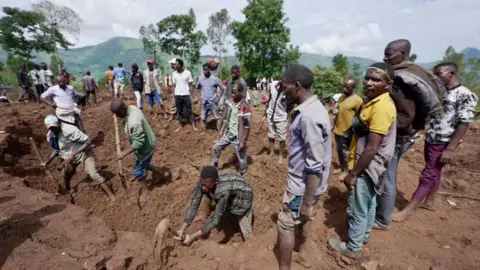
Families were scrambling looking for their missing loved ones. Some - including the head of the locality who was mobilising residents after the first landslide - were quickly confirmed dead.
At one point Ms Meselech “saw diggers pulling someone’s body out. I thought it was my husband. I started helping,” she said.
“I thought he was alive. But he had died. He was still holding on to the axe he had when he went to help [those buried in the first landslide].
"His face was unrecognisable. To be sure, I checked his chest pocket because I knew he kept his ID card there. It was him. I screamed.”
When her husband’s body - along with other recovered corpses - was being moved to somewhere safe Ms Meselech could not go along as her two sons were still missing.
“I was torn between going and remaining behind.”
Later the body of her 12-year-old son was recovered. Her 15-year-old had not been found at the time she spoke to the BBC on Thursday.
“How I [suffered] giving birth to my children, raising them, educating them. It’s so sad for me,” she said as grief overwhelmed her.
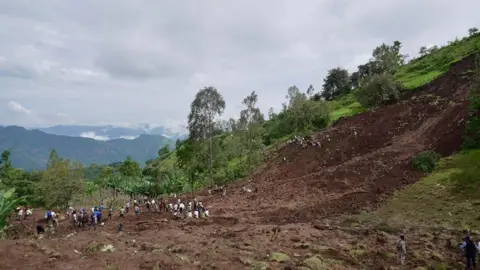
But Ms Meselech is not alone in her grief. Death has knocked on the doors of many of the families here.
Some 257 people are confirmed to have died in the two landslides. An estimate by the UN says that number could reach 500 as more mud is dug up in the coming days.
Serawit Yohannes, who has his father and half-brother still missing, told the BBC that because most people have loved ones missing or confirmed dead “not even relatives are helping us dig” as they themselves have “two or three family members they have to look for”.
According to the UN, 15,000 people will have to be relocated from these hills to avoid future disasters. That will require a lot of effort and money.
But closure for Ms Meselech will only leave when her son is found.
It will take a long time before the community starts to heal.
Latest Stories
-
Girls must have equal place in Ghana’s digital future – Vice President
6 minutes -
High Court issues EOCO warrant to arrest Manhyia South MP Baffour Awuah
11 minutes -
Ghana at the heart of global PR excellence
19 minutes -
Ghana Institute of Architects clarifies position on ARC-ASG dispute amid ongoing case
20 minutes -
NDC supporters storm Fomena constituency office over alleged disqualification of chairman aspirant
23 minutes -
NPA CEO assures tanker drivers of action on welfare concerns
24 minutes -
Karpowership seeks contract extension as Ghana’s power demand grows
26 minutes -
Gender Ministry inaugurates committee to drive early childhood development
28 minutes -
Four Schools, One Crown: Prempeh, Corpus Christi, Mfantsipim and St Augustine’s battle for NIQ trophy
29 minutes -
HIV status cannot be used to deny employment under Ghana law – Ghana AIDS Commission
30 minutes -
Buffer Stock calls for expansion of national storage capacity as it falls below 50,000 metric tonnes
31 minutes -
Central Regional Minister urges use of religious platforms to change environmental, sanitation practices
53 minutes -
Henry Kweku Banning
54 minutes -
Execution of US murderer Christa Pike halted an hour before it was due to happen
56 minutes -
GoldBod generates US$1.87bn in FX in September, exceeds monthly target
59 minutes