

Audio By Carbonatix
Nestle has issued a global recall of some baby formula products over concerns they contain a toxin which can cause food poisoning.
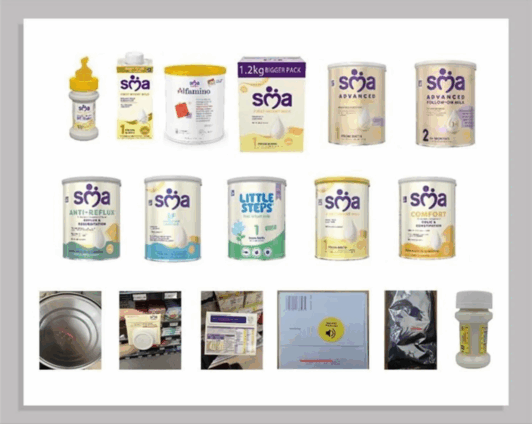
The food and drink giant said that specific batches of its SMA infant formula and follow-on formula were not safe to feed babies.
The batches were sold worldwide, Nestle said, and they may contain cereulide, which can trigger nausea and vomiting when consumed.
The company said there had been no confirmed reports of illness associated with the products, but was recalling them "out of an abundance of caution".
"The safety and well-being of babies is our absolute priority," Nestlé said. "We sincerely apologise for any concern or inconvenience caused to parents, caregivers, and customers."
The company confirmed to the BBC that the recall was global. Affected products were sold in several European countries, including France, Germany, Austria, Denmark, Italy and Sweden.
It stressed that all other Nestle products and batches of the same products that have not been recalled are safe to consume.
Nestle promised refunds for customers and said the problem was caused by an ingredient provided by one of its suppliers.
Nestle France said it was carrying out a "preventive and voluntary recall" of certain batches of its Guigoz and Nidal infant formulas.
In Germany, the formula products are called Beba and Alfamino.
Batch numbers of the affected products in the UK can be found on Nestle's UK website or through food.gov.uk.
Customers are advised to look for the corresponding code on the base of the tin or box for powdered formulas or on the base of the outer box and on the side or top of the container for ready-to-feed formulas.
Cereulide is a toxin produced by some strains of the Bacillus cereus bacteria that can cause food poisoning symptoms, which can be quick to develop and include vomiting and stomach cramps.
It is unlikely to be deactivated or destroyed by cooking, using boiling water or when making the infant milk, the Food Standards Agency (FSA) warned.
The FSA's head of incidents, Jane Rawling, said parents, guardians and caregivers should not feed infants or young children the affected products.
She added: "I want to reassure parents, guardians and caregivers that we are taking urgent action, helping to ensure all of the affected product is removed from sale as a precaution.
"If you have fed this product to a baby and have any concerns about potential health impact, you should seek advice from healthcare professionals by contacting your GP or calling NHS 111."
Latest Stories
-
Chairman and fellow patriots – Irene Ponu-Brenyah writes to NPP
6 minutes -
Nothing Disappears: What Jamestown Beach reveals about Ghana’s styrofoam ban
8 minutes -
Court delays former NAFCO CEO trial to resolve access to seized gadgets
13 minutes -
Joy FM to offer free LPMs to Super Morning Show advertisers on Oct. 9 to mark Customer Service Week
17 minutes -
Sri Lanka’s ex-first lady arrested over alleged misuse of children’s hospital donations
24 minutes -
La Traditional Council kicks against redevelopment of La Pleasure Beach without consultation
26 minutes -
Some basic schools have just 2 or 3 teachers despite needing 9 – Right To Play
31 minutes -
Mahama to cut sod for SSNIT-funded Accra Convention Centre
32 minutes -
FAO calls for stronger REDD+ systems to unlock climate finance
33 minutes -
Illegal mining pushes Birim River turbidity to 50,000 NTU – Abuakwa South MP
33 minutes -
Bawumia’s opponent in 2028 will face nearly two decades of experience and preparation – Gabby Otchere-Darko
36 minutes -
Community 25 water shortage temporary, GWL assures residents
37 minutes -
‘Standing with teachers means supporting them in classrooms’ – NTC Registrar
40 minutes -
FAO urges innovation, technology to strengthen Ghana’s food security
40 minutes -
Haruna Iddrisu vows to resolve teachers’ strike within days
41 minutes