

Audio By Carbonatix
New Haven Garments is betting on its newly launched apparel brand, Cinnamon, to drive growth beyond Ghana and establish a foothold across Sub-Saharan Africa, as the manufacturer seeks to reduce its dependence on export contracts and build a consumer-facing fashion business.
The company says the brand will target regional markets over the next five to 10 years, positioning itself as an affordable clothing label for a broad range of consumers.
"The Sub-Saharan African market is the focus," said Chief Executive Officer Afua Gyekyewaa Prempeh.
"Cinnamon signals a new phase of growth, not only for the brand itself but for New Haven as a manufacturing company," she said in an interview on the sidelines of the launch of the new brand, Cinnamon.

The strategy marks a significant shift for New Haven, which has traditionally operated as a business-to-business manufacturer, producing uniforms and garments for corporate clients, institutions and export markets.
Ms Prempeh said the launch of Cinnamon is helping the company create a more stable and diversified revenue base at a time when global trade disruptions are forcing manufacturers to rethink their growth models.
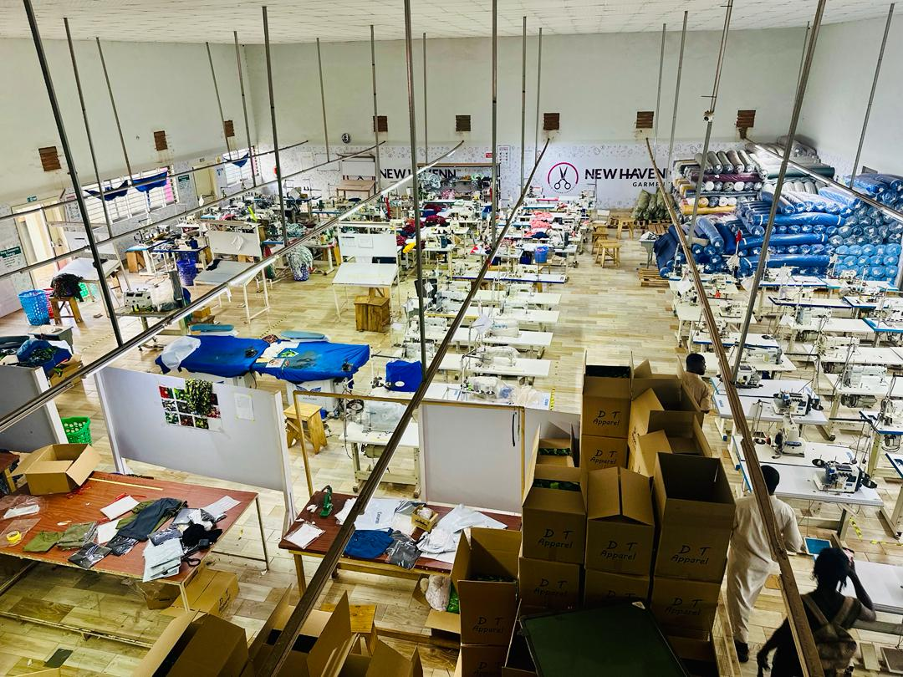
For years, New Haven's fortunes were tied largely to export orders and bulk contracts. Periods of weak demand often resulted in underutilised factory capacity. Cinnamon, she said, is changing that dynamic by creating consistent domestic demand and putting pressure on producers to increase production.
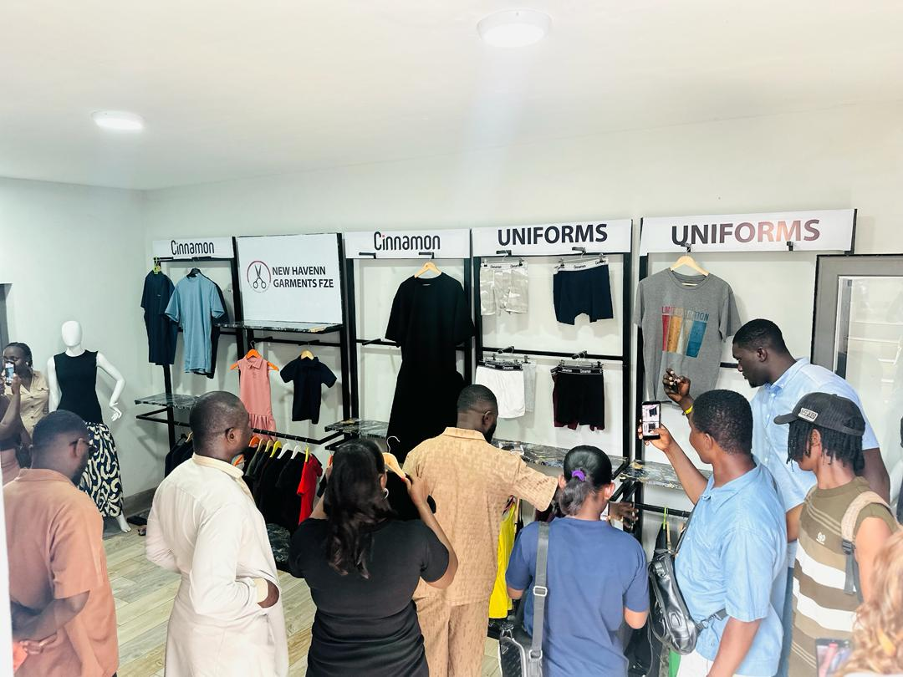
"Cinnamon is selling more than New Haven can currently produce. The brand is pushing us to expand capacity, employ more people and grow faster," she said.
The company plans to expand its product range from basic apparel such as underwear, singlets, and boxer shorts to dresses, skirts, tops, shawls, and other everyday clothing aimed at working professionals, students, and informal-sector workers.
Within the next three to five years, New Haven wants Cinnamon to become a household name in Ghana before accelerating its regional expansion.
The brand's origins date back to 2021, when it was first conceived as "Charlie Basics".

The concept evolved into Cinnamon in 2023 and gained urgency following disruptions to international trade flows and shifting tariff policies in key export markets.
According to Ms Prempeh, recent global trade uncertainties exposed the risks of relying solely on export-led growth.
"Our strategy had largely been built around securing international orders. Recent developments showed us that a single-track growth model can quickly become vulnerable. Cinnamon allows us to drive our own growth and shape our own future," she said.
Unlike New Haven, which operates primarily as a manufacturing business, Cinnamon is designed as a consumer brand. The company believes the two businesses are complementary rather than competing.
"The bigger Cinnamon becomes, the bigger New Haven becomes because New Haven manufactures the products that Cinnamon sells," Ms Prempeh explained.
The company is also targeting Ghana's growing network of small-scale fashion retailers, online sellers and boutique operators, offering locally manufactured alternatives to imported clothing.
The move comes as policymakers across Africa push for greater industrialisation, local value addition and import substitution. Ghana's textile and garment sector, once one of the country's largest employers, has struggled for decades against competition from imported clothing and second-hand apparel.
Industry analysts say successful local brands such as Cinnamon could help revive domestic manufacturing by creating stronger linkages between design, production and retail.
Beyond job creation, the fashion industry has increasingly been recognised as an economic growth sector capable of supporting industrial development, boosting exports and creating opportunities for young entrepreneurs, designers and artisans.
For New Haven, the opportunity extends beyond Ghana.
While fashion preferences vary across the region, Ms Prempeh believes demand for everyday essentials such as T-shirts, underwear and casual wear provides a scalable market across West Africa and the broader Sub-Saharan region.
"Regardless of culture or country, people still need the basics. That gives us confidence that there is a regional market for what we are building," she said.
If successful, Cinnamon could provide a blueprint for how African manufacturers move beyond contract production to build homegrown consumer brands capable of competing across the continent.
Latest Stories
-
He entered at eight. He is now 16: Ghana’s children growing up in prayer camps
2 hours -
‘Development must not always begin from Accra’ — Anwelle Foundation launched in Jirapa
2 hours -
PKO trio eye victories at Odwira Festival
4 hours -
346 Ghana Navy recruits pass out after 26 weeks of intensive training
4 hours -
Newsfile to discuss EOCO-MP arrest, drug trafficking, speech arrests and $235m water debt
5 hours -
JoyNews gets results as listeners raise GH¢40,000 to help 17-year-old student with cerebral palsy attend SHS
5 hours -
Vice President calls for stronger local pharmaceutical production to reduce medicine imports
6 hours -
The brewing tension at KNUST; Beware the Ides of October….
6 hours -
Health Ministry moves to integrate traditional medicine into mainstream healthcare
6 hours -
550 pupils in Kintampo South get educational lifeline as ‘Seeds of Hope’ reaches farming communities
7 hours -
Opoku Mensah urges Christian Council, House of Chiefs to speak up on democratic freedoms
7 hours -
Teacher unions’ strike: Minority demands immediate payment of teacher arrears, 20% deprived area allowance
7 hours -
The Accra-Kumasi Expressway: Building it right
7 hours -
Beyond gold exports: Building value and economic resilience from Ghana’s gold
7 hours -
2027 AFCONQ: Ghana under pressure as Gambia beat Somalia 2-1
8 hours