

Audio By Carbonatix
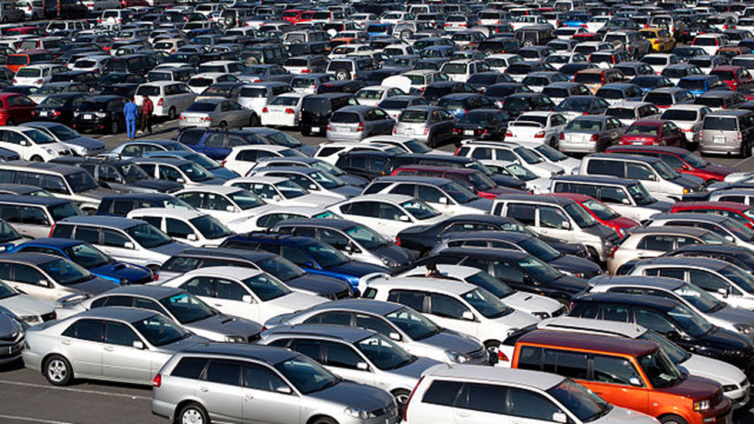
A new UN report has confirmed that millions of used vehicles exported into developing countries are of poor quality, contributing significantly to air pollution, and hindering efforts to mitigate the effects of climate change.
The report attributed the high rate of road traffic accidents in Africa and Asia to the large fleets of the overage vehicles that were allowed into the continent from countries including Europe, the United States and Japan.
The New Report, which was produced by the UN Environment Programme (UNEP), showed that between 2015 and 2018, 14 million used light-duty vehicles made up of cars, vans and minibuses, were exported worldwide, with about 80 per cent of them going to low- and middle-income countries, and more than half of them going to Africa alone.
The document titled: "Used Vehicles and the Environment - A Global Overview of Used Light-Duty Vehicles: Flow, Scale and Regulation," was the first-ever report of the kind, and called for action to fill the current policy vacuum with the adoption of harmonised minimum quality standards, ensuring that used vehicles contributed to cleaner, safer fleets in importing countries.
Executive Director of UNEP, Ms Inger Andersen, through a virtual press briefing on Monday, explained that the fast-growing global used vehicle fleet, was a major contributor to air pollution and climate change and that over the world, the transport sector was responsible for nearly a quarter of energy-related global greenhouse gas emissions.
She said specifically, vehicle emissions were a significant source of the fine particulate matter (PM2.5) and nitrogen oxides (NOx) were major causes of urban air pollution, adding "cleaning up the global vehicle fleet is a priority to meet global and local air quality and climate targets.”
She insisted that "developed countries must stop exporting vehicles that failed environment and safety inspections and were no longer considered roadworthy in their own countries while importing countries should introduce stronger quality standards.”
Ms Andersen said the report, which was based on an in-depth analysis of 146 countries, found out that some two-thirds of the developing nations had ‘weak’ or ‘very weak’ policies to regulate the import of used vehicles.
However, those that had implemented measures to govern the import of used vehicles, notably age and emissions standards, had access to high-quality used vehicles, including hybrid and electric cars, at affordable prices, she said,
The Report found out that African countries imported the largest number of used vehicles (40 per cent) in the period studied, followed by countries in Eastern Europe (24 per cent), Asia-Pacific (15 per cent), the Middle East (12 per cent) and Latin America (nine per cent), she said.
The Netherlands Minister for the Environment, Mr Stientje Van Veldhoven, indicated that the Netherlands was one of the countries exporting used vehicles through its ports and said a recent review found out that most of the vehicles did not have a valid roadworthiness certificate at the time of export.
He said most vehicles were also between 16 and 20 years old, and fell below EURO4 European Union vehicles emission standards, citing for instance the average age of used vehicles exported to the Gambia was close to 19 years old, while a quarter of used vehicles exported to Nigeria were almost 20 years old.
Mr Veldhoven said the results showed that urgent action needed to be taken to improve the quality of used vehicles exported from Europe, but indicated that The Netherlands could not address the issue alone.
He, therefore, called for a coordinated European approach, and a close cooperation between European and African governments, to ensure that the European Union only exported vehicles that were fit for purpose, and compliant with standards set by importing countries.
Ghana’s Minister for Environment, Science, Technology and Innovation, Prof. Kwabena Frimpong-Boateng, confirmed that the impact of old polluting vehicles was clear, as cited by the Air quality data in Accra, saying transport was the main source of air pollution in the country's cities.
He said UNEP, with the support of the UN Road Safety Trust Fund and others, were part of a new initiative supporting the introduction of minimum used vehicles standards.
The Minister said the initiative’s first focus would be countries on the African continent, some, which had already put in place minimum quality standards such as in Morocco, Algeria, Côte d'Ivoire, Ghana and Mauritius, with many more showing interest in joining the initiative.
Prof. Frimpong-Boateng said it was the reason why Ghana was prioritising cleaner fuels and vehicle standards, as well as electric bus opportunities, saying the country was the first in the West Africa region to shift to low sulphur fuels and in October 2020, had imposed a 10-year age limit for used vehicle imports.
He also explained that in September 2020, the Economic Community of West African States (ECOWAS) set cleaner fuels and vehicle standards from January 2021, while its members also encouraged the introduction of age limits for used vehicles.
Latest Stories
-
A source of excellence across generations – Vice President Opoku-Agyemang lauds Mfantsipim
6 minutes -
(Photos) Mfantsipim School launches historic 150th anniversary
30 minutes -
Knights and Ladies of Marshall group backs Catholic Bishops’ stance on anti-LGBTQ+
1 hour -
Bright Simons writes: All the Filla in the Ibrahim Mahama/E&P – Gold Fields Saga
2 hours -
Monetise Idiocy In Ghana
2 hours -
The Ghanaian prophet and the mysterious death of his scottish wife Charmain Speirs
3 hours -
Nearly 400 sentenced in Nigeria for links to militant Islamists
3 hours -
Ghana’s recovery supported by gold strength despite global oil price pressures – Standard Bank Research
3 hours -
Methodist Church hails Mfantsipim@150; calls for “fresh consecration” to excellence
4 hours -
‘Excellence is our inheritance’ – Nana Sam Brew-Butler hails Mfantsipim’s 150-year reign in leadership
4 hours -
Kwaku Azar writes: A-G vs OSP
4 hours -
Mfantsipim–Adisadel rivalry built excellence, not division – Sam Jonah
4 hours -
Vice President launches Mfantsipim’s 150 years of shaping Ghana’s greatest mind
4 hours -
I assure Otumfuo, Mahama will join him to commission KNUST Teaching Hospital by end of this year – Haruna Iddrisu
5 hours -
Barcelona dominate derby to extend La Liga lead
5 hours