

Audio By Carbonatix
The Poultry Farmers Association of Ghana has warned that the government’s Nkoko Nkitinkiti programme could fail to achieve its goal of reducing chicken imports if major implementation challenges are not addressed.
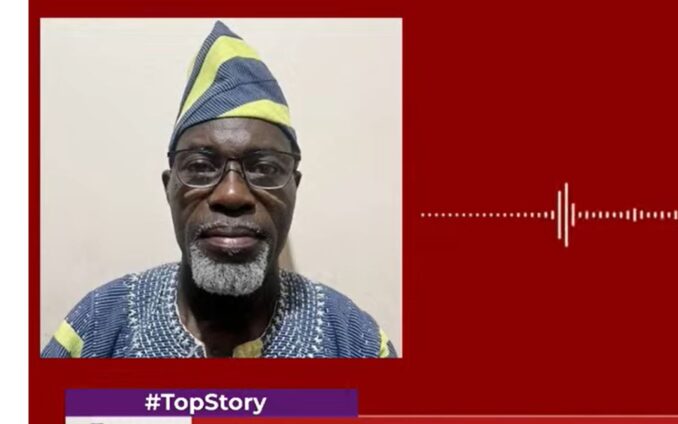
Speaking in an interview on Joy FM's Top Story on Thursday, July 9, the President of the Association, George Dassah, said although poultry farmers initially welcomed the initiative as a potentially transformative intervention for the sector, developments on the ground suggest the programme may fall short of its objectives unless the Ministry of Food and Agriculture reviews its approach.
His comments come in response to claims by the Agric Minister, Eric Opoku, that increased production under the programme has contributed to a reduction in poultry prices.
Mr Dassah said falling prices are not necessarily a sign of growth or improved productivity but rather a reflection of weak demand and the inability of commercial farmers to find buyers for their birds.
“In actual fact, as we speak, the issue has to do with marketing. We are producing, but we, the commercial farmers, are actually not getting a market for what we produce. And because we are unable to sell, if you want to actually sell, you have to reduce your prices,” he said.
Mr Dassah said the programme was originally seen as a promising step toward reviving local poultry production and gradually cutting Ghana’s dependence on imported chicken.
However, he argued that poor implementation, weak market linkages and gaps in public education are undermining that ambition.
According to him, some households that received birds under the first phase of the programme reportedly consumed them instead of raising them for production and reinvestment — a development he believes points to a lack of proper orientation for beneficiaries.
“We heard that some of the farmers also consumed their birds. We thought that in the first place, maybe there wasn’t enough orientation or basic education for these people,” he said.
Mr Dassah also questioned the assumption that every household would be interested in poultry rearing, warning that such an approach could weaken the impact of the programme.
“We also lost sight of the fact that not all households have the passion for rearing birds. So if we think every Ghanaian household has the passion for rearing birds, we will be mistaken,” he stated.
He explained that the intended goal of the initiative was for beneficiaries to reinvest proceeds from the birds into further production, helping to grow the local poultry sector over time and reduce importation.
“From the look of things, the way things are going from our side, we are not seeing how we are going to achieve the objective of reducing importation,” he warned.
Mr Dassah disclosed that the Poultry Farmers Association plans to engage the Ministry of Food and Agriculture with proposals ahead of the next phase of the programme, which the minister has indicated will focus on commercial farmers.
He said it is important for government to correct the shortcomings identified in the first phase before rolling out the second phase.
“If that second phase is to take place, there are certain mistakes made in the first one that we should not repeat. Otherwise, we are going to defeat the whole purpose of this all-important policy,” he said.
The Nkoko Nkitinkiti initiative is one of the government’s flagship agricultural interventions aimed at revitalising Ghana’s poultry industry, increasing local production, creating investment opportunities and reducing the country’s reliance on imported chicken and other poultry products.
Latest Stories
-
Who is the ‘hero’ Indian pilot who was stabbed on Israel-bound flight?
2 minutes -
NPP External Branches demand 90-day roadmap for ROPAA implementation
3 minutes -
No sustainable digital economy without trust, cybersecurity – CSA
5 minutes -
SSNIT increases stake in Société Générale Ghana to 24.36%
8 minutes -
Ghana-Colombia port deal sparks fresh cocaine trafficking security concerns
9 minutes -
EOCO moves to search Baffour Awuah’s office, residence after interrogation
15 minutes -
GoldBod, Kyrgyzstan discuss partnerships in gold and critical minerals
17 minutes -
SMEs can use vehicles, movable assets as collateral under Borrowers and Lenders Act
17 minutes -
Two dead in Canada after vehicle hits pedestrians taking part in First Nations event
20 minutes -
Cornell case highlights ‘draining’ maze for victims to report campus sex assaults
21 minutes -
Minority demands immediate suspension of Ghana-Colombia maritime deal over cocaine concerns
21 minutes -
Konadu Irrigation Project reaches 96% completion, set for commissioning in one month
21 minutes -
Joyce Bawah Mogtari calls for sustained investment in Ghana’s legal profession
25 minutes -
Close salary gap between lower bench and superior court judges—JUSAG
26 minutes -
Police arrest three over GH¢100,000 ransom demand in Yendi kidnapping case
30 minutes