

Audio By Carbonatix
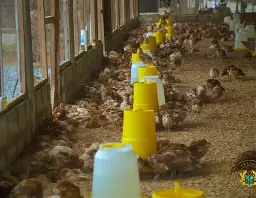
Finance Minister Dr Cassiel Ato Forson has defended the government's Nkoko Nkitinkiti poultry initiative, insisting the programme remains successful despite reports that some beneficiaries have consumed the chickens they received instead of raising them for income generation.
Speaking on JoyNews' PM Express on Thursday, July 23, Dr Forson said isolated cases of beneficiaries eating the birds should not be used to discredit what he described as an "excellent initiative" that is improving livelihoods across the country.
His comments come after public debate over remarks by the Minister of Food and Agriculture, Eric Opoku, who disclosed that some beneficiaries had sent him photographs showing they had cooked and eaten the chickens distributed under the programme.
Addressing the controversy, Dr Forson said the reports had been taken out of context.
"I took it quite literally. The fact that one person or two have sent a picture to the minister to say that they have consumed the chickens does not mean everybody else has consumed them," he said.
"I think it is something we need to clarify. The programme is an excellent initiative, and we should not bring it down simply because somebody has sent a picture to a minister to say that he or she has consumed what was given."
The Finance Minister noted that not every beneficiary could be expected to have the entrepreneurial mindset required to build a poultry business from the birds they received.
"Clearly, you don't expect that all the beneficiaries of the programme are business-minded and that they would want to keep the chickens, breed them, sell them, restock, and grow the business," he explained.
"Some may not be business-minded, but I believe the vast majority of the people will be. Therefore, it would be wrong on our part to use that statement from the minister to judge the entire programme," he added.
Dr Forson said he had personally witnessed the programme's impact within his own constituency, where several beneficiaries were using the initiative to improve their economic circumstances.
"I have people even within my constituency who happen to be beneficiaries of this programme, and I can confirm on your show that it is working well for them," he said. "The people benefiting from the Nkoko Nkitinkiti programme are using it to improve their livelihoods, and it is working well for them."
While acknowledging that some participants may not use the birds for their intended purpose, Dr Forson argued that no government intervention could realistically achieve a perfect success rate.
"You won't get everybody to have that kind of mentality. If you have a programme with a success rate of even 70 percent, then obviously you can say the programme has been quite successful," he said.
"I have not seen a programme that is 100 percent successful. There are times when you may lose 10 or 20 percent, but as time goes on, people learn, they appreciate the purpose of the initiative, and the programme improves."
The Finance Minister also sought to clarify the agriculture minister's earlier remarks, stressing that they had been misinterpreted by sections of the public.
"Most people have heard discussions about the fact that some of the chickens have been consumed. The minister never said that all the chickens had been consumed," he stated.
"He said some people had sent pictures to him. I don't think all the beneficiaries have the minister's telephone number to send him such information. It was likely people he knew or those who had access to him."
Reiterating his confidence in the initiative, Dr Forson maintained that evidence from communities, including his own constituency, demonstrated that the programme was delivering its intended benefits.
"As I've said to you, I can attest to the fact that the programme has been a success in my own backyard," he added.
The Nkoko Nkitinkiti programme forms part of the government's broader efforts to support household incomes, promote poultry production, and strengthen local food security by providing beneficiaries with chickens to rear as a sustainable source of income.
Latest Stories
-
Fiscal policy implementation poses downside risk to inflation – BoG
19 minutes -
Organised Labour should seek fair adjustment, not excessive pay rise – Labour consultant
23 minutes -
BoG maintains medium-term inflation target of 8 ± 2%
30 minutes -
Sammi Awuku urges NPP Germany to unite ahead of 2028 elections
1 hour -
The Inconvenient Truth: We cannot pray for the cure while protecting the disease
2 hours -
MTN Ghana trains civil society organisations on artificial intelligence
2 hours -
GoldBod FX framework aims to make dollar supply predictable – Acheampong
3 hours -
How does a Ghanaian team make it to the BAL?
3 hours -
Ghana’s investment climate presents opportunities for industrial growth and job creation.
3 hours -
‘I paid thousands to a company for jobs that never came’
3 hours -
SSNIT intensifies informal sector enrolment drive with Techiman float
4 hours -
Ghana seeks long-term mining investments that benefit local communities – Armah-Kofi Buah
4 hours -
GHATOF demands compensation for 85 businesses affected by La Pleasure Beach demolition
4 hours -
Bono Regional Minister calls for investor education to drive economic growth
4 hours -
Ghana’s Ambassador to China, Kojo Bonsu, presents credentials to Nepalese President
4 hours