

Audio By Carbonatix
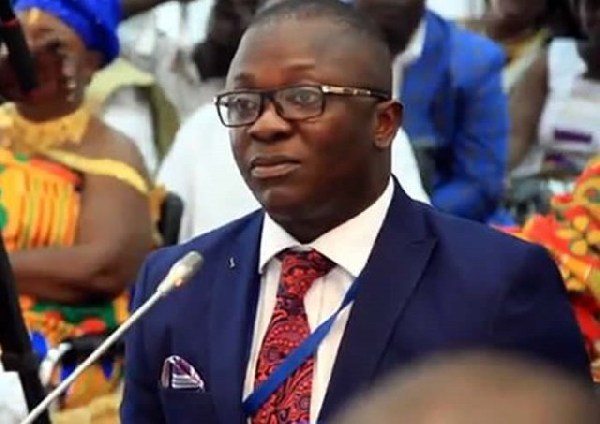
The Minister of Food and Agriculture, Bryan Acheampong, remains confident that Ghana will not face a famine despite the ongoing drought affecting Northern Ghana.
The northern region has been hit hard, with over two months of no rainfall, stunted crop growth, and growing fears among farmers about a poor harvest and potential food insecurity.
However, in an interview with Channel One TV, Mr Acheampong dismissed these concerns, assuring the public that the situation will not escalate into a food shortage crisis.
“I don’t think there will be a 1982 [1983] event, I don’t think that there will be famine, I don’t think that there will be food shortages, none of that," Acheampong stated.
"I think maybe at the time that it happened, we didn’t have the predictive tools or the intelligence to be able to deal with the situation.
"Some of which at the time were compounded by drought and fires which ravaged almost the whole country. We don’t have that situation on our hands now and we’re not going to get there."
The 1983 famine in Ghana was one of the country's worst food crises, caused by a prolonged drought that began in 1981 and widespread bushfires that destroyed up to 35% of the nation's food supply by 1983.
Mr Acheampong highlighted that the government has already put measures in place to avoid potential food scarcity.
According to him, any impact from the current drought on food markets will likely be felt towards the end of September and October, but the government is taking proactive steps to manage the situation.
"All the things that we are talking about, except for the damage to the crops that has happened now, in terms of the impact on the markets, will be more at the end of September and October, and we are putting in steps now to deal with it," he assured.
Acheampong also noted that farmers still have reserves of grains to sustain them, stressing the importance of having a robust support system to address any food-related challenges that may arise.
“By now, even if the crops were doing well, they wouldn’t have harvested it. So, with all the stock of grains the farmers were living on, they still had something to live on until the next harvest in September.
"And so we are saying that we need to have all the systems and support in place in the country by the 20th to the end of September, to take us through. So that is what we’re planning against,” he explained.
He concluded by affirming his confidence that Ghana will not see a repeat of the 1982-1983 famine, which was characterised by severe drought and widespread bushfires that devastated the country's food production.
Latest Stories
-
Sahara Group urges journalists to look beyond fuel prices in energy reporting
6 minutes -
Today’s front pages: Friday, October 16, 2026
10 minutes -
Ashanti Region: ECG urges customer cooperation with franchise officers
15 minutes -
Ghana’s research fund faces a test of turning funding promises into scientific breakthroughs
27 minutes -
Dîner en Blanc Accra returns on December 28 for second edition
30 minutes -
20% digital tax: Government hiding behind technicalities to cheat Ghanaians – Dr Boako
1 hour -
David Selassie Anthony declares bid for NDC Deputy National Organiser
2 hours -
Amin Adam proposes 13 measures to strengthen Ghana’s debt transparency and market confidence
2 hours -
Mahama announces $2bn annual investment to accelerate industrialisation
2 hours -
Amin Adam urges monthly disclosure of Sinking Fund as Ghana prepares for DDEP repayments
3 hours -
Stronger banks will fuel business growth and jobs – ADB MD
3 hours -
Galamsey: ‘Rivers that fed our grandparents now run the colour of chocolate milk’ – Sam Jonah
3 hours -
We have been scammed by NDC, government is only doing PR – Abanga Fuseini
3 hours -
Republic Bank–JoyNews Habitat Fair opens in Ho today
3 hours -
Dr Boako challenges government over new digital tax
3 hours