

Audio By Carbonatix
Public debate in Ghana has a habit of folding everything into the same envelope. Once two disputes involve a school rule and a religious practice, they are instantly treated as twins.
But the Achimota–Rastafarian case and the Wesley Girls religious-accommodation case are, in truth, about as similar as a locked door and a furnished room. Both are made of wood, yes, but they do entirely different things.
To appreciate the difference is to understand something subtle but vital about constitutional law: the same right can raise utterly different problems depending on where it is squeezed, by whom, and for what purpose.
Achimota:
Achimota School’s refusal to admit Tyrone Marhguy because of his dreadlocks was not a textured constitutional dilemma. It was a constitutional emergency in need of immediate repair.
The school insisted its grooming policy was neutral. Courts everywhere have heard such claims and smile politely before reading the fine print. A rule that burdens only the child whose faith requires the banned style is not neutral; it is simply discrimination dressed up in tidy language. One may call the dress formal, but the dance is the same.
More importantly, Achimota is a state school. It does not exist to project an identity. It exists to provide a public service. It cannot demand cultural conformity as an entrance fee. Its ethos is civic, not religious, not cultural, and not mission-based.
Once the state says a child cannot attend a public school unless he abandons a religious practice, the matter is practically self-deciding. The Constitution does not require delicate interpretation. It requires correction.
There was no competing value for the Court to weigh. The case was clean, direct, and almost mathematical:
Public school + religious exclusion = constitutional violation.
That is why the judgment landed with such authority. It was not balancing. It was enforcing the obvious.
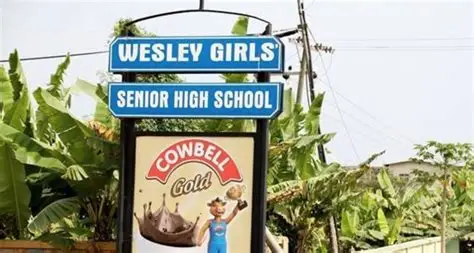
Wesley Girls:
The Wesley Girls dispute, however, refuses to behave like a simple case. It is layered, complicated, and, depending on your angle of view, profoundly uncomfortable.
Here, the student is not denied admission. The gate opens. She enters. The question emerges later, inside, where rules govern prayer, fasting, dress, and chapel.
The school is not an ordinary state institution. It is a mission-founded school with a proud Methodist ethos, the kind of ethos that shapes everything from morning routines to uniform philosophy. Yet it is also heavily supported and regulated by the state, part of the national placement machine, and vital to the public education ecosystem.
Legally speaking, Wesley Girls is neither fish nor fowl. It is not a private enclave free to operate entirely on its own terms. But it is not a blank public slate either. It is a publicly supported cultural institution, an entity performing a public function while carrying a religious personality. In constitutional theory, that hybrid status is where difficult questions hide. And those questions are not small.
The Real Issue:
Unlike Achimota, whose rule kept Tyrone out, Wesley Girls' faces a more penetrating question:
How far may a publicly supported institution insist that students participate in a religious world they do not believe in?
This is not simply about hijabs or fasting schedules. These are expressions of faith, yes, but the deeper tension concerns compelled participation in worship, being required to sing hymns one does not believe in, sit in a chapel while prayers are recited, or abandon religious duties entirely.
This is not a “minor school rule.”
This is conscience.
If Achimota shuts the door on identity, Wesley Girls risk dissolving identity from within. Both actions wound dignity, but in different ways. Courts take the internal wound just as seriously as the external one.
Achimota’s Clean Lines, Wesley Girls’ Constitutional Maze
The Achimota court needed only one question:
Was the child denied access because of his religion?
Yes. Case closed.
The Wesley Girls case demands at least five:
1. Is the school’s religious ethos compatible with its public obligations?
2. Can the state outsource part of its educational function to a religious institution without importing constitutional duties into that institution?
3. Does compelling participation in Christian worship violate freedom of conscience?
4. Can minority religious practices be limited for administrative convenience?
5. How much accommodation is reasonable before discipline and unity collapse?
These are not rhetorical questions. They cut to the core of how mission schools and the state are meant to coexist.
Why the Cases Cannot Be Analogised
The public conversation often tries to treat the two cases as comparable. They are not. One addressed a violation; the other confronts a structure. One demanded enforcement; the other demands interpretation. One was a closed question; the other is an open chapter.
The Achimota case answered the question of who may enter a school.
The Wesley Girls case will answer the question of who a school is allowed to be.
That is a constitutional difference of profound consequence.
When the Supreme Court finally rules on Wesley Girls, it will not merely decide whether hijabs or fasting schedules are permissible. It will define the boundaries of religious identity in Ghana’s publicly supported mission schools. It will signal whether the Constitution views these schools as neutral public platforms, religious communities with limits, or something entirely new.
The Marhguy case settled a breach.
The Wesley Girls case will define a philosophy.
And that is why pairing the two is a category error. The first taught us that no child may be stopped at the gate because of their faith. The second will teach us whether a child’s faith may be reshaped once they step inside.
Latest Stories
-
Ghana Faces Sierra Leone Moment as Prosecutorial Powers come under strain
3 minutes -
Don’t consume fish or seafood from Tema Shipyard until further notice – FDA warns
8 minutes -
Why volunteering might be Africa’s most underrated career accelerator
14 minutes -
ActionAid Ghana raises concern over gender gaps in Feed Ghana Programme
16 minutes -
Windstorm wreaks havoc in Gushegu, displacing nearly 2,000 residents and damaging schools
19 minutes -
Friends of Bridget Bonnie Marks her 35th birthday with donation to Kasseh Model Health Centre
1 hour -
From Ekumfi Kokodo to the Pulpit Stage: Essi Donkor’s gospel journey takes shape
1 hour -
Landfilling waste management creates no value, it’s an economic waste
2 hours -
Photos: Speaker Bagbin Commissions MPs constituency office under parliamentary decentralisation programme
2 hours -
Black Stars technical advisor Winfried Schäfer sacked as GFA shakes up backroom staff
2 hours -
Wenchi water project almost complete, critical to gov’t agenda – GWL MD
2 hours -
Anti-LGBTQ+ bill not part of government’s legislative agenda – Inusah Fuseini
2 hours -
Anti-LGBTQ Bill: Forget the rumour mongers, I’m a man of action, and will pass the bill – Speaker
3 hours -
Women and children among those killed in Sudanese army shelling of wedding celebration
3 hours -
President Mahama is not sincere with Ghanaians on LGBTQ bill matter – Hassan Tampuli
3 hours