

Audio By Carbonatix
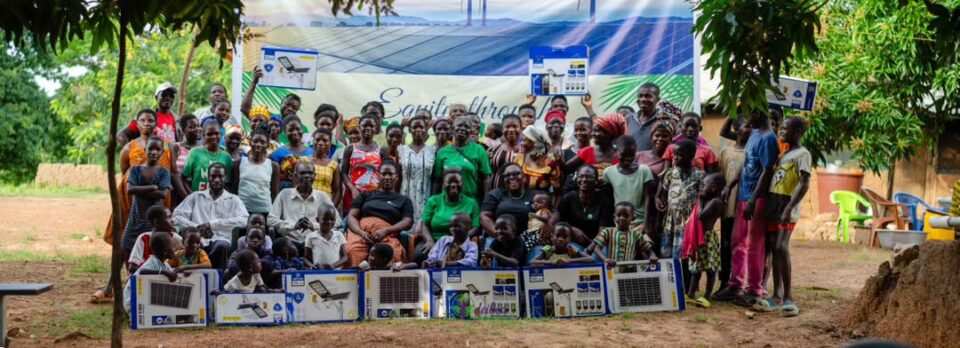
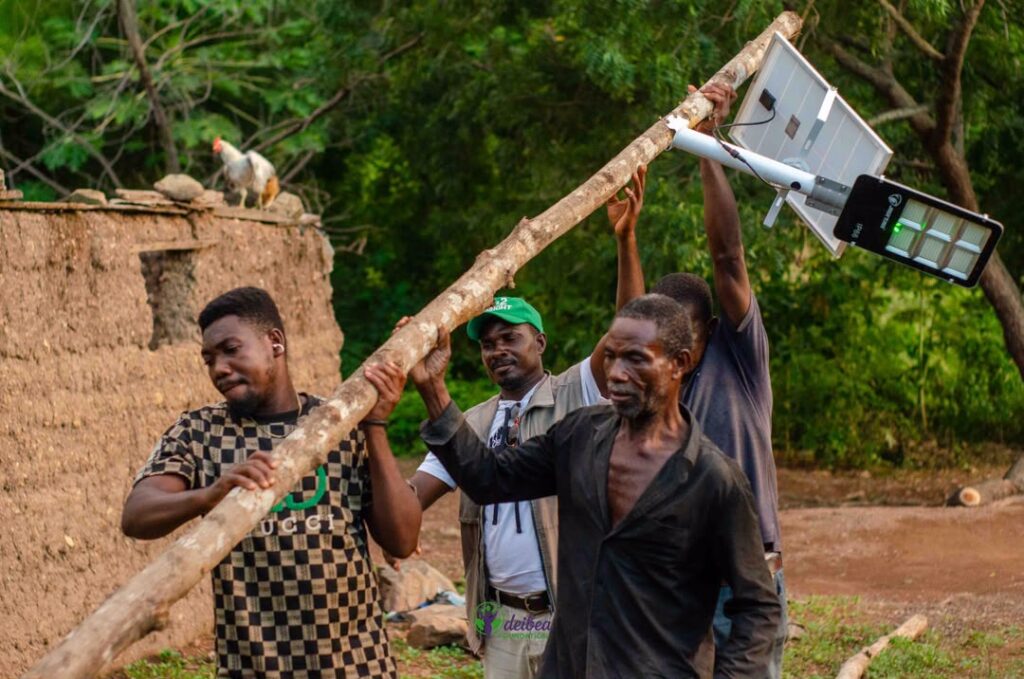
The Odeibea Foundation has taken another significant step toward addressing rural energy deficiency in Ghana with the installation of solar streetlights in the communities of Akpato and Worwonyo in the South Dayi District of the Volta Region.
The installation forms part of the Foundation’s ongoing Energy Equity Project which seeks to expand access to clean, reliable, and affordable energy solutions in underserved and off-grid communities across Ghana.
The newly installed solar streetlights are positioned along key routes and community gathering points and individual households, providing much needed lighting at night.
For residents, the intervention is expected to contribute to safer movement at night, support local economic activity, and create a more secure environment for communities that have historically faced limited access to reliable electricity and public lighting.
For communities such as Akpato and Worwonyo, access to sustainable and dependable nighttime lighting extends beyond convenience. It will influence how they move, work, trade, learn, and participate in community life after sunset.
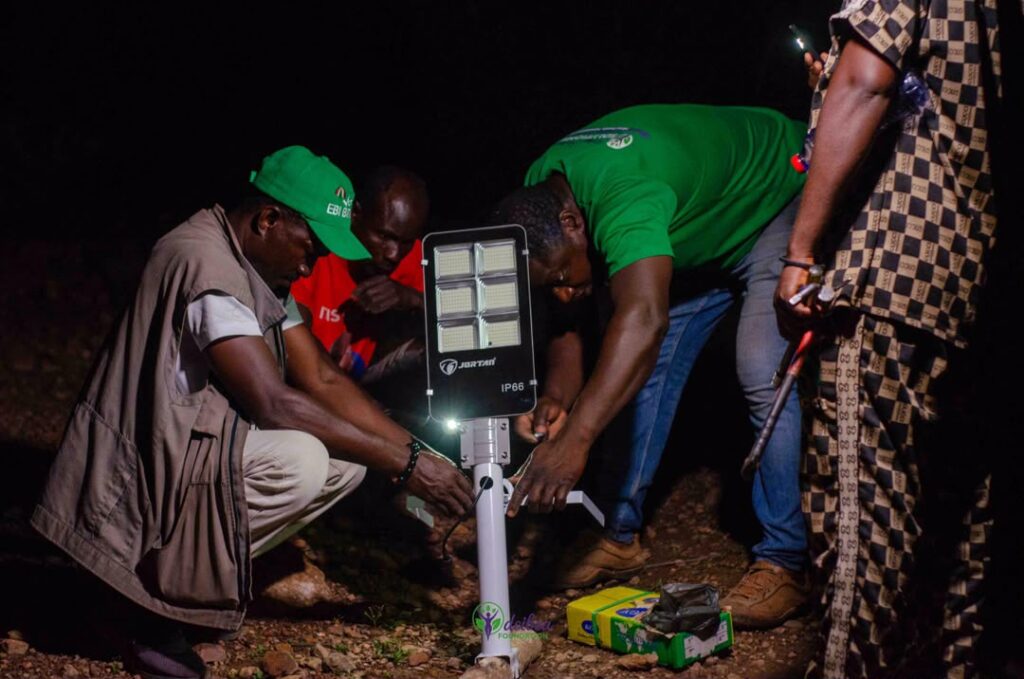
The installation of solar streetlights is therefore an important investment in the communities safety, local economic activity, education, and inclusive development.
Local traders, mostly fisher mongers, can operate with greater confidence into the evening, residents can move more safely through public spaces, and children and young people can access better-lit environments for evening activities and study.
The project also demonstrates the potential of decentralized renewable energy to address practical development challenges in rural communities while contributing to Ghana’s broader transition toward cleaner and more sustainable energy systems.
Recognizing that energy access and economic opportunity are closely connected, the Odeibea Foundation also provided alternative livelihood training for women and girls in Akpato and Worwonyo as part of the intervention through their crafting change project.
Participants received practical skills training in bead making, liquid soap production, and pastry making, equipping them with income-generating skills that can support greater economic independence and household resilience.
The livelihood component reflects the Foundation’s commitment to ensuring that community development extends beyond physical infrastructure.
The opportunities created for women and girls to acquire practical and entrepreneurial skills seeked to strengthen their ability to participate in local economic activity and develop sustainable sources of income.
Mrs. Patricia Odeibea Bekoe Jakalia the executive director emphasized that empowering women and girls is an essential part of building resilient communities and creating a more inclusive pathways for community development.
The intervention in South Dayi builds on the Foundation’s earlier solar streetlight pilot in Twumwaase and Apeboaso in the Ashanti Region.
With the expansion into the Volta Region, the Odeibea Foundation is demonstrating its commitment to taking practical clean-energy solutions to communities where infrastructure gaps continue to affect everyday life.
Rather than relying solely on centralized energy infrastructure, the Energy Equity Project explores how locally appropriate, decentralized renewable-energy solutions can deliver immediate benefits to communities that remain underserved.
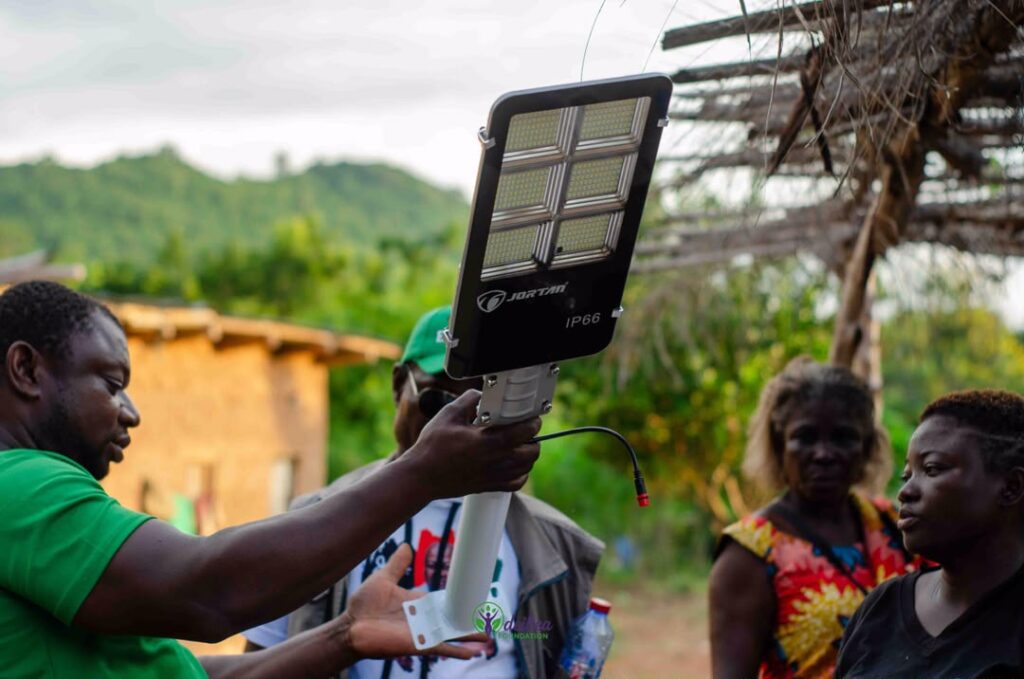
Sustainability is a key component of the Foundation’s approach. Alongside the installation of the solar systems, Odeibea Foundation is working with local leaders and young people to build basic knowledge around the care and maintenance of the infrastructure. This community-centered approach is intended to strengthen local ownership and help ensure that the benefits of the intervention are sustained over the long term.
For the Foundation, energy equity is not simply about providing electricity or lighting. It is about ensuring that people living in rural and underserved communities can also benefit from the social and economic opportunities that access to clean energy makes possible.
As Ghana advances its climate and development priorities, initiatives such as the Energy Equity Project highlight the importance of ensuring that the transition to clean energy is inclusive, community-driven, and responsive to the needs of underserved populations.
Latest Stories
-
Ghana opposes calls to abolish ICC, urges stronger action against crimes against humanity
5 minutes -
Cedi remains under pressure due to Christmas demand; going for GH¢11.90 at forex bureaus
6 minutes -
NDC opens nominations for 2026 regional executive elections on October 6
7 minutes -
Ghanaian nurses to receive higher pay, health insurance and rent allowance under new Saint Kitts and Nevis agreement
15 minutes -
JoyNews’ Emmanuel Adu Gyamfi named ‘Digital Tourism Icon of the Year’ in Ahafo Region
19 minutes -
Hurricane Polo makes landfall on Mexico’s Pacific coast
24 minutes -
US ban on Canadian alcohol and dairy comes into effect as trade war drags on
25 minutes -
GES orders SHS heads to refund unauthorised fees collected from parents
33 minutes -
AFCON 2027Q: ‘We don’t need to cry over spilled milk’ – Damba on Ghana injury concerns
37 minutes -
NDC communicator blames documentation, payroll validation for teachers’ promotion arrears delay
38 minutes -
2026 JoyNews Impact Maker Award winner brings clean water to Yoko Tsume after years of cattle dugout dependence
45 minutes -
Sarkodie commends Mahama for rejecting US health compact
45 minutes -
‘The worst hate speech comes from NDC; enough of lip service, optics politics’ – Afenyo-Markin to Mahama
46 minutes -
Tree Crops Development Authority tightens regulation of tree crop trade, targets $10bn sector
46 minutes -
Ghana’s fiscal deficit to widen to 3.9% a year through 2029 – S&P
47 minutes