

Audio By Carbonatix
The Tree Crops Development Authority (TCDA) has announced a stricter regulatory regime for Ghana’s tree crop sector, warning that buying below statutory floor prices, trading without an operational licence and fronting for foreign entities could lead to arrest and prosecution.
The Authority said it had begun a nationwide decentralised rollout of its regulatory powers under the Tree Crops Development Authority Act, 2019 (Act 1010) and Legislative Instrument (L.I.) 2471.
Speaking at a stakeholder engagement forum in Wa, Chief Executive Officer of the TCDA, Dr Andrews “Andy” Osei Okrah, said the regulatory drive formed part of efforts to transform six key tree crops into a $10 billion annual economic sector.
The six commodities under the Authority’s mandate — cashew, coconut, oil palm, rubber, mango and shea — collectively referred to as “C-CORMS”, represent a global market estimated at more than $230 billion.
Dr Okrah said Ghana currently captures about $750 million annually from the sector, leaving significant room for growth through local processing and value addition.
“The nation we are building has relied heavily on cocoa as its economic backbone. Cocoa has served this country well, but six tree crops have the collective strength to do far more. Our vision is ‘C-CORMS Beyond Cocoa’. We cannot allow the sector to remain a free-for-all space. The law has come into full force, and it will take its course without fear or favour,” Dr Okrah declared.
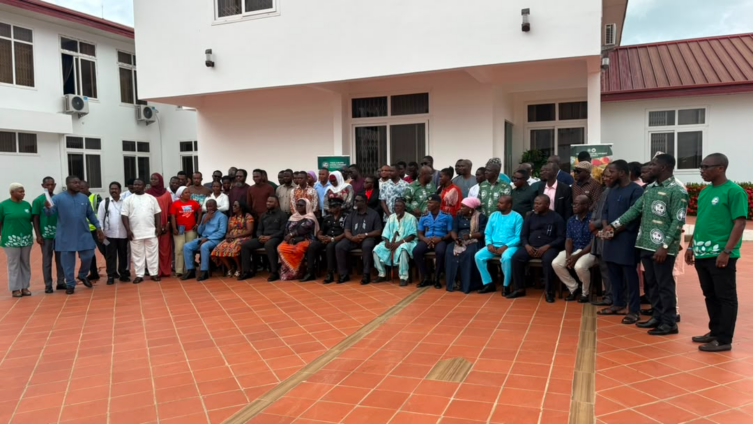
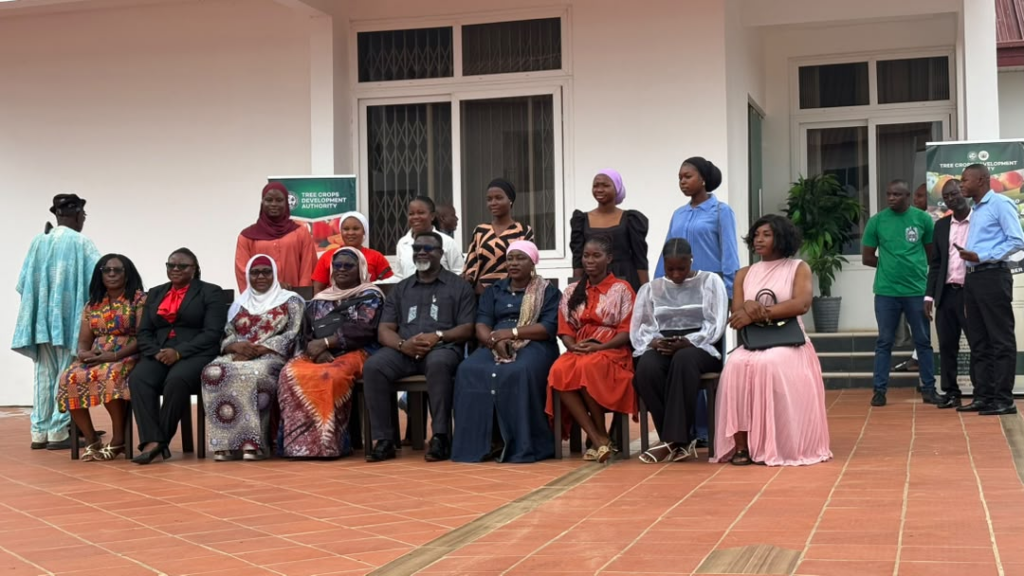
The forum brought together municipal and district directors of agriculture, value chain actors and traditional authorities.

TCDA warns against underpricing
Highlighting the economic importance of the Upper West Region, Dr Okrah said three of the six commodities under the Authority’s mandate — cashew, mango and shea — were widely produced in the region.
He warned buyers against paying farmers below the statutory minimum farm-gate price, saying the TCDA was prepared to intervene to protect producers.
“Nobody has the right to buy below the minimum farm-gate price. If commercial buyers attempt to boycott or cheat our pickers and farmers, TCDA will step in directly to off-take the nuts at the statutory price. Do not rush to sell your nuts wet or beneath the approved rate out of panic,” Dr Okrah assured.
He also warned against the destruction of shea parklands for charcoal production, describing the burning or felling of shea trees as a serious economic offence that could result in prosecution and imprisonment.
Foreign trading and ‘fronting’
Deputy CEO in charge of Operations, Dr Rich Kofi Kofituo, urged local communities and producers to report unauthorised foreign nationals allegedly entering rural communities to buy and aggregate tree crop commodities.
Dr Kofituo said Act 1010 and L.I. 2471 reserved aggregation and local trading for Ghanaian citizens, with the aim of protecting employment opportunities for women and young people.
“You are the primary beneficiaries of this industry. If foreign buyers come into your communities to out-price or bypass you, you have the legal right and backing to alert the authorities. We have deployed over 100 newly recruited Compliance and Enforcement officers, trained in partnership with the Ghana Police Service, across the country. Together with the Police, Immigration Service, and Customs, we will clamp down on illegal operators,” Dr Kofituo emphasised.
He clarified that foreign investors were welcome to establish local processing factories and purchase produce directly to create jobs, but were not permitted to enter rural markets to aggregate raw nuts.
Addressing technical compliance, Emmanuel Affriyie Owusu, Manager at the Office of the CEO, outlined the TCDA’s digital licensing and traceability regime.
He warned Ghanaian citizens against “fronting”, which he described as registering local businesses on behalf of foreign entities to help them avoid applicable foreign exporter licensing fees.
“Fronting is a criminal offence. When caught, you will not be dealt with administratively by TCDA; you will be handed directly to the Police and the judiciary. The law calls it an illegality, and we will not permit it,” Owusu stated.

Digital tracking of produce
Value Chain and Operations Officer Emmanuel Akosah Brempong explained the mandatory Conveyance Certificate System, which requires trucks transporting tree crop produce across districts and borders to carry valid digital conveyance documentation.
He said the system was intended to enforce quality and moisture standards while strengthening traceability within the sector.
Mr Brempong noted that administrative fees, including GH¢1 per bag of raw shea nuts and GH¢1,000 or GH¢500 per truck of shea butter, were statutory logistics levies and should not be deducted from farmers’ minimum farm-gate earnings.
Director of Operations, Dr Kofi Twum Antwi, said the TCDA was also working with the Ghana Immigration Service to audit the visas and work permits of foreign nationals found in produce hubs.
He noted that some foreign nationals were residing in Ghana on visas that explicitly prohibited them from trading in local markets.
Dr Antwi further said the TCDA’s regulatory framework incorporated the Labour Act, 2003 (Act 651), the Children’s Act, 1998 (Act 560), and the Affirmative Action Act, 2024 (Act 1121), with social safeguards aimed at addressing child labour and supporting women’s cooperatives.
Stakeholders welcome regulatory drive
Reacting to the engagement, local stakeholders praised the Authority’s increased presence in the field.
District Director of Agriculture for Bole, Sualey Abukari, said the clarity provided on value addition would help rural producers retain more value from their produce within their districts.
Chief Executive Officer of the Tiyumtaba Shea Cooperative, Hajia Mary Naab, also commended the TCDA for measures aimed at safeguarding domestic supply.
“Last season, our processing facilities nearly ground to a halt because local nuts were becoming scarce. Following TCDA’s interventions, raw nuts returned to the local market, and our women were able to sustain butter production. The PPEs and protective gear distributed by the Authority have also brought safety to our pickers,” Hajia Naab stated.
The TCDA leadership concluded the forum by distributing official gazetted copies of Act 1010 and L.I. 2471 to stakeholders.
The Authority said it would continue to enforce compliance and digital tracking across entry points, checkpoints and export ports involved in the movement of tree crop produce.
Latest Stories
-
4 years on dialysis: 28-year-old nurse appeals for $100,000 to undergo life-saving kidney transplant
6 minutes -
Hohoe flood: About 5,000 affected as NADMO begins emergency relief
7 minutes -
Why must I renew my vehicle’s registration number every 2 years?
9 minutes -
Parliamentary Privilege and the Limits of Personal Liberty: A study on the immunity of members of parliament from arrest in Ghana
10 minutes -
Kwabenya Court denies bail to six accused in alleged 3.9-tonne cocaine shipment
11 minutes -
Ghana opposes calls to abolish ICC, urges stronger action against crimes against humanity
18 minutes -
Cedi remains under pressure due to Christmas demand; going for GH¢11.90 at forex bureaus
20 minutes -
NDC opens nominations for 2026 regional executive elections on October 6
20 minutes -
Ghanaian nurses to receive higher pay, health insurance and rent allowance under new Saint Kitts and Nevis agreement
29 minutes -
JoyNews’ Emmanuel Adu Gyamfi named ‘Digital Tourism Icon of the Year’ in Ahafo Region
33 minutes -
Hurricane Polo makes landfall on Mexico’s Pacific coast
37 minutes -
US ban on Canadian alcohol and dairy comes into effect as trade war drags on
39 minutes -
GES orders SHS heads to refund unauthorised fees collected from parents
47 minutes -
AFCON 2027Q: ‘We don’t need to cry over spilled milk’ – Damba on Ghana injury concerns
51 minutes -
NDC communicator blames documentation, payroll validation for teachers’ promotion arrears delay
52 minutes