

Audio By Carbonatix
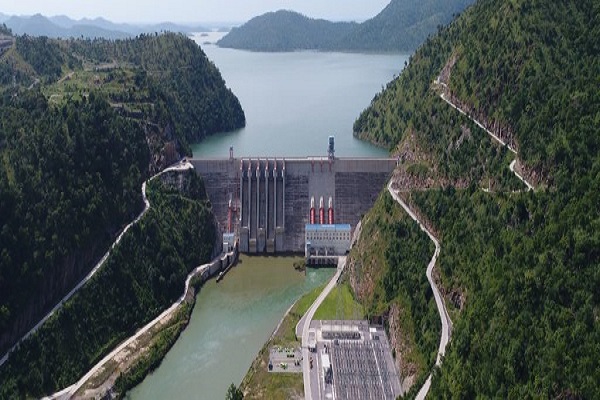
The operation of the Bui Generating Station (BGS) has opened up the Banda District of the Bono Region to investors, thereby stimulating rapid socio-economic growth and development, Emmanuel Akone, the Banda District Chief Executive has said.
He commended the Bui Power Authority, the managers of the BGS for highlighting the economic prospects and attracting more investors into the district.
In an interview with the Ghana News Agency (GNA) on the sidelines of the inauguration of a cashew factory at Bui in the District, Mr Akone said a gold mining company had completed prospecting and would soon commence actual mining in the area.
The BPA collaborated with the Cashew-U Company Limited of China to construct the factory, which will add value to raw cashew products for export, under the government’s One-District-One-Factory (1D1F) initiative.
Mr Akone noted that the construction of the Bui Reservoir and a landing site had improved the fishing business, and thereby enhancing the socio-economic livelihoods of the fisher folks and women fishmongers.
He said economic activities in the area kept flourishing, saying buying and selling had improved, with more women engaged in viable economic activities to better their lives.
On completion, Mr Akone explained the on-going construction of a Sugar Factory at Fawoman in the area would create employment opportunities for the youth in the area.
As part of the BPA’s corporate social responsibility, Mr Akone said infrastructure development had also improved in the district, with the locals easily accessing quality healthcare, and education, saying the road networks in the area were also better now.
Earlier, Mr Samuel Kofi Dzamesi, the Chief Executive Officer of the BPA explained the Authority’s collaboration with the Cashew-U Company Limited entailed the development of a 500-acre cashew plantation and the establishment of a processing plant on a 20-acre land, with the aim of producing 12,000 metric tons of cashew nuts annually.
Additionally, plans are underway to upgrade the facility for cashew nut oil processing in the near future, he stated, saying the factory signified the Authority’s pursuit of industrialization and economic growth within the Bui enclave.
The location of the factory, nestled within the 184,000 hectares of land secured for the Bui Project, showed the Authority’s commitment to maximizing local resources for economic development.
Mr observed the “Bui enclave has long been known for its significant role in cashew farming, with nearly every household actively involved in this agricultural activity”.
During a visit to some of the Bui Dam Resettlement Camps, the Ghana News Agency (GNA) noticed communal facilities such as schools, community centres, boreholes as well as playing grounds, clinic, and health centre at the resettlement townships near Bongase and in Jama.
Access roads and drainage systems had also been completed in the resettlement areas.
Technology has also advanced in the townships as digital satellite dishes that enable residents to access various television channels were seen erected on the roof of a number of households.
Additionally, the establishments of a Community Health-based Planning Services (CHPS) compound each at the two resettlement townships had made it easier for the people to access healthcare and improve their health status.
The construction of the Bui Dam created a reservoir, which is now the source of the economic boom in the environs of the dam.
In an interview, some of the residents around the dam expressed appreciation to the BPA for improving their lives and called on the authorities to do more and create more jobs for the young people in the area.
They said they also needed more assistance to engage in commercial farming and cashew plantation to improve their socio-economic livelihoods.
The Bui hydroelectric project was designed primarily for hydro-power generation. It, however, includes the development of an irrigation scheme for agricultural development and presents an opportunity for enhanced eco-system and fisheries.
It also comprises a resettlement and community support programme.
The project, which was expected to cost about 622 million dollars, was funded with a concessional loan of 263.5 million dollars from China, a buyers credit of 298.5 million dollars from the EXIM Bank of China together with governments contribution of 60 million dollars.
It however experienced a funding shortfall of 168 million dollars, arising primarily from the unanticipated effects of the 2008 global financial upheavals as well as unforeseen essential works.
Latest Stories
-
2026 Women’s Super Cup: FC Savannah beat Epiphany Warriors to win trophy for first time
9 minutes -
AFCON 2027Q: ‘The last time Ghana won was eight games ago’ – Carlos Queiroz
28 minutes -
AFCON 2027Q: Gambia defeat doesn’t make me a loser – Carlos Queiroz
32 minutes -
2027 AFCONQ: Late goals seal 2-0 for Côte d’Ivoire against Somalia
43 minutes -
AFCON 2027Q: My resignation won’t solve Ghana football issues – Queiroz
48 minutes -
Morocco call off Ghana friendly after Black Stars’ AFCON setback
54 minutes -
‘We have to say sorry’ – Queiroz apologises after Ghana’s humiliating defeat to Gambia
1 hour -
New Yorker identified as Yaw Boahene, 57, killed after bag was caught in subway train doors
1 hour -
Former American Idol contestant and pastor found guilty of murdering wife
1 hour -
Trump rules out joint US-China venture to develop AI
2 hours -
‘Beating Ghana did not surprise me’ – Gambia boss
2 hours -
OpenAI agents get rebrand – as ‘dots’ – while safety worries delay new model
2 hours -
US ban on Canadian alcohol and dairy takes effect as trade war drags on
2 hours -
Baffour Awuah’s EOCO case reopens Equity Savings & Loans file as SIC recovery battle emerges
2 hours -
Ghana ranked 5th source of cocaine seized at Antwerp, Belgium in 2025
2 hours