

Audio By Carbonatix
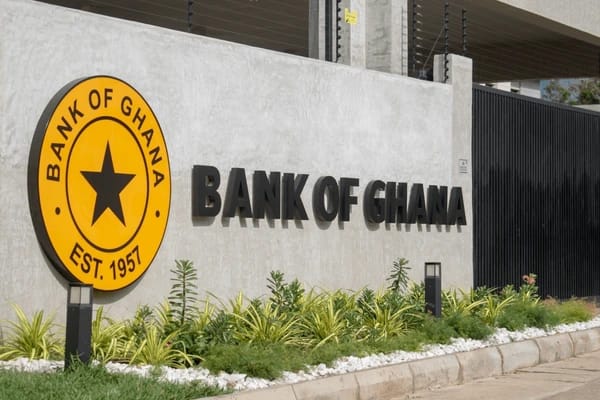
Ghana’s financial sector staged a significant recovery in 2025, with total assets reaching GH¢647.25 billion, representing roughly 45.1% of the nation’s GDP, according to the latest Financial Stability Review.
The milestone comes on the back of a strong domestic economic performance in which real GDP growth accelerated to 6.0%, surpassing the 5.8% recorded the previous year.
Launching the review in Accra, the Second Deputy Governor of the Bank of Ghana, Matilda Asante-Asiedu, said this year’s theme — “From Stress to Stability: Staying on Course” — reflects the financial sector’s resilience following years of economic turbulence and debt restructuring pressures.
“The theme reflects how the financial sector has navigated through the twin stresses — the macroeconomic shocks and the debt restructuring risks over the past few years — to the current state of stability that we enjoy,” she said.
“It also reflects the resolve of the financial sector regulators to stay on course of stability over the medium to long term.”

According to the report, Ghana’s economic gains were largely driven by strong growth in the services and agriculture sectors. Inflation also declined sharply from 23.8% in December 2024 to 5.4% by December 2025, supported by tight monetary policy measures and a stabilising cedi.
Sector-by-Sector Recovery
The report highlighted broad-based recovery across the country’s major financial segments.
The banking industry recorded improved financial soundness, strong profitability and sustained liquidity throughout the year. However, the Bank of Ghana said Non-Performing Loans (NPLs) remain elevated, prompting fresh directives aimed at strengthening credit risk management.
Mrs Asante-Asiedu noted that the financial sector had become more resilient overall.
“The financial sector was more resilient, bolstered by strong profitability and solvency positions across all the four financial industries,” she said.
The Ghana Stock Exchange also emerged as Africa’s second-best performing market in 2025, supported by gains in financial stocks and improving investor confidence.
Meanwhile, the pensions industry posted what the report described as “remarkable” growth, driven by the expansion of private pension schemes and stronger enforcement measures against defaulting employers. Portfolio diversification also shifted increasingly toward equities amid improving macroeconomic conditions.
The insurance sector likewise recorded steady revenue growth, supported by high solvency levels and the implementation of new policies, including compulsory local insurance for commercial cargo.
New Oversight Measures
The Financial Stability Review also outlined several initiatives aimed at strengthening regulation and supervision across the financial system.
Among them is the implementation of a framework for conglomerate supervision designed to improve oversight of financial groups operating across multiple sectors.
“This is aimed at strengthening oversight of financial groups with cross-sectoral activities, thereby minimising regulatory arbitrage,” Mrs Asante-Asiedu explained.
The Bank of Ghana is also increasing its monitoring of emerging financial technologies and digital assets.
Following the passage of the Virtual Assets Services Providers Act 2025, the Financial Stability Council (FSC) has tasked its technical committee with developing risk metrics for monitoring the virtual assets space.
“This is to ensure that while innovation is encouraged, it is balanced with financial stability considerations,” she said.
Global and Regional Context
Ghana’s recovery occurred within a relatively favourable global environment, where global GDP growth remained steady at 3.3% while global inflation eased to 4.1%.
Within Sub-Saharan Africa, growth averaged 4.1%, although several economies in the region continue to face inflationary pressures and tight external financing conditions.
Emerging Risks Remain
Despite the positive outlook, regulators warned that several threats could still undermine future financial stability.
The report identified sovereign debt pressures, climate-related financial risks and cybersecurity threats as key concerns. It also noted that the rapid adoption of Artificial Intelligence (AI) and cryptocurrencies is being closely monitored for potential systemic risks.
Mrs Asante-Asiedu cautioned that financial institutions were already reassessing their operational models in response to evolving risks.
“Some risks are also beginning to emerge in the outlook and financial institutions are reassessing their financial models to adapt to the evolving conditions so we can avoid disruptions to the stability that we are all beginning enjoying,” she said.
She reaffirmed the Bank of Ghana’s commitment to continued collaboration under the Financial Stability Council framework.
“The Bank of Ghana will continue to collaborate under the auspices of the FSC to deepen policy coordination, sustain development of the financial services sector, and preserve the country’s financial stability,” she added.
Regulators say maintaining macroeconomic discipline and strengthening risk-based supervision will be essential to sustaining the sector’s recovery momentum in the years ahead.
Latest Stories
-
Star Oil paid GH¢2.7bn in taxes, levies in nine months of 2026
7 minutes -
Samson’s Take: The rule of law is cheaper before the bulldozer
9 minutes -
GRA blames system failure for delay in issuing receipt over passenger’s customs duty
30 minutes -
Livestream: Newsfile discusses World Cup visa scandal, beach demolitions, education strikes, BRICS bid
33 minutes -
NC-PTAs welcomes end of teachers’ strike, urges parents to prepare children for Monday
43 minutes -
Government procures over 2,000 transformers as Ghana’s electricity access hits 89.13% – Energy Minister
1 hour -
UTAG-UG threatens strike on October 19 over unpaid allowance
1 hour -
Let The Constitution direct Chieftaincy to deliver “All Development Is Local”
2 hours -
John Jinapor outlines renewable energy, nuclear power priorities for 2027
3 hours -
Ghana explores centre of excellence for hearing, communication and cochlear implant care
4 hours -
Schizophrenia-related disorders lead mental health cases recorded in Ghana
4 hours -
Dutch authorities enlist Ghana in hunt for fugitive drug lord Bolle Jos
5 hours -
Ghana housing finance conference adopts communiqué to improve affordable housing access
9 hours -
Special Initiatives Minister urges Wa Technical Institute to enrol more girls as EU-backed solar training lab opens
9 hours -
In the matter of my first year at the Bar
10 hours