

Audio By Carbonatix
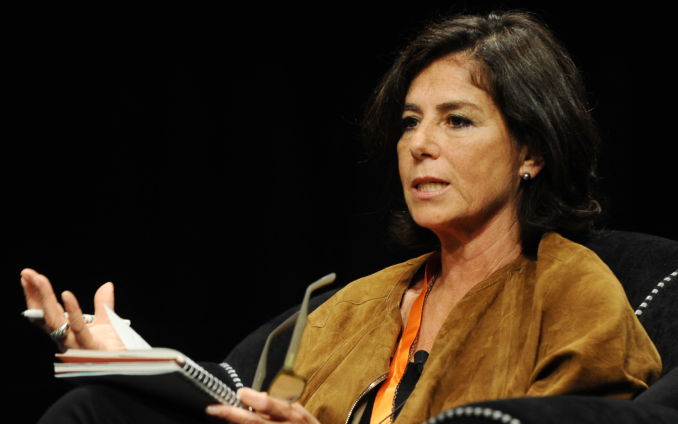
Other banking crises could happen, especially if Central Banks continue to tighten monetary policy, Lucrezia Reichlin, Professor of Economics at the London Business School, has revealed.
According to her, banking crises cannot be prevented in all contingencies, at least not in a fractional reserve system where loans do not need to be fully backed by deposits, like the system of today, adding, the recent crisis is a painful reminder of the fundamental instability of banks’ business model.
Speaking on the topic ‘Early lessons from the recent banking turmoil’ championed by the International Monetary Fund, she expressed hope that banks are well equipped to face generalized liquidity crises through Central Banks’ interventions.
“In principle, we also have tools to deal with the insolvency of a single institution. However, those crises are rarely managed in an orderly way. Today, if the world economy were to plunge into a deep recession, we are likely to see many cases of institutions facing solvency problems that will test this assertion”, she explained.
She added that the Credit Suisse episode rings an alarm on whether Central Banks can be confident that problems can be solved following the rulebook.
“If a bank is failing, the regulator can seek resolution with a bail-in or a bailout. A bail-in in theory is a good option to protect taxpayers, but in some cases a bailout may be wiser. The way to think about the choice is that a bail-in may cause financial instability while a bailout causes moral hazard and is an implicit subsidy to the banking sector”, she continued.
In many cases, she pointed out that the crisis of one bank is addressed by a national regulator facilitating a merger with a national bank, either by moral suasion, subsidy, or both.
This was the case in Switzerland, where UBS was encouraged by the regulator to absorb Credit Suisse at a very unfavorable exchange for Credit Suisse shareholders. Such a solution is not always feasible.
In the case of Switzerland, she noted that another merger would not be possible since UBS is now the only national bank, and a cross-border merger would involve authorities with different national interests.
Some early lessons from recent financial sector turmoil
Taking a cue from the Silicon Valley Bank failure in the US, she said the Fed’s post-mortem evaluation indicates that there was a failure of risk management, supervision, and regulation.
Therefore, two lessons can be drawn from that.
The first is that not only big banks but also midsize banks can create contagion; when this happens, intervention by public authorities is required to stop it.
A second lesson is that all deposits are potentially volatile; partial deposit insurance is not credible. In the case of Silicon Valley Bank, all depositors were bailed out, and this was a gift to wealthy depositors.
I expect other banking crises to happen, especially if central banks continue to tighten monetary policy. Banking crises cannot be prevented in all contingencies, at least not in a fractional reserve system where loans don’t need to be fully backed by deposits, like the system we have today. The recent crisis is a painful reminder of the fundamental instability of banks’ business model.
One question is whether the crisis management framework we have in place can prevent generalized contagion when one institution fails. I believe that we’re well equipped to face generalized liquidity crises through central banks’ interventions. In recent years, central banks have proactively intervened as liquidity providers and learned to do this in a timelier manner than in the past.
In principle, we also have tools to deal with the insolvency of a single institution. However, those crises are rarely managed in an orderly way. Today, if the world economy were to plunge into a deep recession, we are likely to see many cases of institutions facing solvency problems that will test this assertion. The Credit Suisse episode rings an alarm on whether we can be confident that problems can be solved following the rulebook.
If a bank is failing, the regulator can seek resolution with a bail-in or a bailout. A bail-in in theory is a good option to protect taxpayers, but in some cases a bailout may be wiser. The way to think about the choice is that a bail-in may cause financial instability while a bailout causes moral hazard and is an implicit subsidy to the banking sector.
In many cases, the crisis of one bank is addressed by a national regulator facilitating a merger with a national bank, either by moral suasion, subsidy, or both.
This was the case in Switzerland, where UBS was encouraged by the regulator to absorb Credit Suisse at a very unfavorable exchange for Credit Suisse shareholders. Such a solution is not always feasible. In the case of Switzerland, another merger would not be possible since UBS is now the only national bank, and a cross-border merger would involve authorities with different national interests.
Latest Stories
-
GUTA calls for suspension of Publican AI system over trade disruptions, demands temporary halt in import activities
2 minutes -
TTAG raises alarm over proposed recruitment of 7,000 teachers, demands national posting roadmap
35 minutes -
Civilians feared killed after reports of air strike on Nigerian market
45 minutes -
Bishop Simon Kofi Appiah installed as new Jasikan Diocese Bishop
46 minutes -
Trump’s Strait of Hormuz blockade threat raises risks and leaves predicaments unchanged
49 minutes -
US Court backs extradiction of former MASLOC CEO Sedina Tamakloe-Attionu’s to Ghana
1 hour -
Seven arrested as NAIMOS dismantles illegal mining camp, seizes firearms at Boin River
1 hour -
Fire erupts at Madina Ritz Junction, destroys multiple wooden structures and containers
1 hour -
Daniel-Kofi Kyereh returns from long-term injury, registers assist for Freiburg U23
2 hours -
Knifeman calling himself ‘Lucifer’ slashes three at NYC’s Grand Central
2 hours -
Brands are built from within to without
2 hours -
Matriculants urged to pursue excellence as gov’t reaffirms support for Maritime education
2 hours -
See the areas that will be affected by ECG’s planned maintenance on Monday, April 13, 2026
2 hours -
GPL 2025/26: Salim Adams double fires Medeama back to summit after Kotoko rout
2 hours -
Two robbery suspects convicted following violent gold dealer attack in Obuasi
2 hours