

Audio By Carbonatix
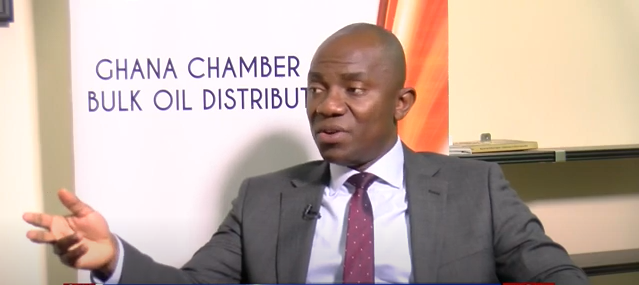
The Chief Executive Officer of the Ghana Chamber of Bulk Oil Distributors, Dr. Patrick Kwaku Ofori, says the seemingly crowded Bulk Oil Distribution space is a phenomenon beyond the Chamber’s control.
According to him, while there have been concerns about the saturation of the BOD space despite Ghana being a small country, the Chamber does not have the power to regulate the space or issue licenses to players in the industry.
He stated that that power is within the remits of the National Petroleum Authority.
Speaking on JoyNews’ Business Edition, Dr. Ofori said the issue is more of a regulatory and policy directive and not one for the Chamber.
“We have a large membership and that is something that is beyond our control. Under normal circumstances you’d say that the bigger your membership, you’re likely to receive more in terms of subscription payment.
“But I’d be looking at it from a nationalistic perspective and what you’re saying about the numbers and how many of them are trading. How many of them are actually trading on a regular basis? And this something that is more about regulatory and policy directive.
“None of us sitting here are the ones who grants those licenses, neither are we the ones who are supposed to set the benchmark for enforcement of those licensing regimes and the requirements, and the kind of reporting and the standards that are expected from us. That falls within the regulator’s perspective or purview,” he said.
He noted that while some license holders do not actively participate in the BOD space, he’s optimistic that as the NPA develops new performance criteria it would help streamline the industry and provide the needed structures and policy framework for the development of the space.
“But what we are so happy about is that setting up a certain performance criteria that makes it so elaborate and then also conducive and that once you know that there are certain targets and certain advantages that exist for our membership or people who are doing the right thing to be able to leverage on.
“In that case, like you were saying, if we were let’s say 20 or 15 of the membership who have traded and have been supported to build the necessary reporting mechanism and the internal governance and regulatory requirements and structures by now we could have also had a local form of Trafis or the Glencores that would have been maybe exporting to other countries to also be earning the much needed forex that the country is in need of.
“So there are conversations going on about how they can streamline the sectors. But this is something that we as a Chamber cannot necessarily set the guidelines,” he said.
Latest Stories
-
Power restoration fault suspected in Kumasi Central Market fire
3 hours -
The 7-foot giant of Ngleshie Amanfro: Seven-foot Ghanaian Ephraim Saawa dreams of joining the national basketball team
3 hours -
Government promises support for Kumasi Central Market fire victims
4 hours -
Vibes The Movie: Big Ghun’s Ghanaian film earns five nominations at 2026 REFFA
4 hours -
MamaCare CEO warns unresolved conflicts among health workers could undermine maternal and neonatal care
4 hours -
Health professionals urged to translate medical knowledge into practice to save mothers
5 hours -
Conflicts among care providers linked to maternal, neonatal deaths – Expert
6 hours -
GIS marks 10th TIME conference, champions improved teaching practices
6 hours -
BRICS Or Balance? What Ghana’s bid really means
7 hours -
GPRTU wants full TRAFFITECH-GH implementation to start in 2027
7 hours -
Mahama announces plans to import electric wheelchairs for PWDs
7 hours -
KGL U17 Colts 2026: Western beat Prempeh Elite Academy to set up final final with Greater Accra Region
7 hours -
Late Solanke strike salvages 10-man Spurs draw at Man United
8 hours -
Gender Ministry to monitor welfare of Nana Akua Addo’s children amid domestic violence case
8 hours -
Benedict Okyere Yeboah: Ghana’s football problem goes beyond sacking a coach
8 hours