

Audio By Carbonatix
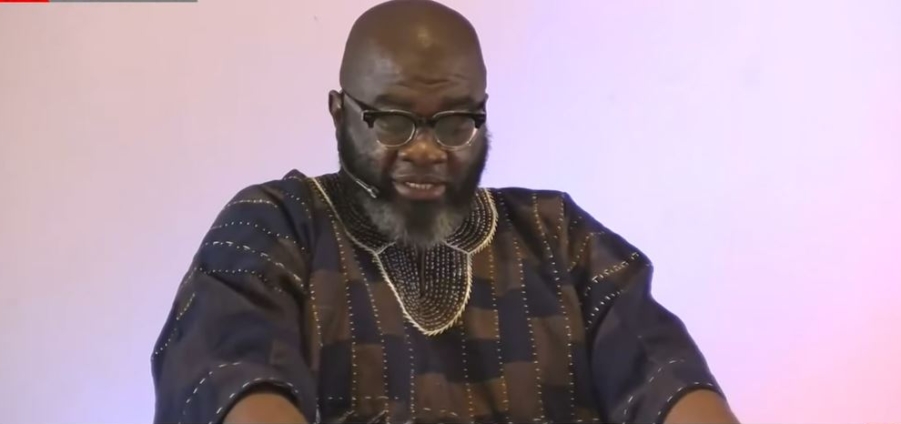
Executive Chairman of AB and David Africa, David Ofosu-Dorte, has said his analysis of manifestos churned out by Ghana’s two main political parties since 1992, shows that the real issues of importance to national development are often not captured.
According to him, his analysis also established that the two main parties usually say the same things in their manifestos except for the wording of the pointers that differ.
Speaking at a public lecture dubbed, 'A Common Manifesto for our Common Future' on Tuesday, November 28 at the British Council in Accra, Ofosu-Dorte said, “Incidentally if you take a look at the manifestos from 1992 till now, they essentially are spread on 12 points. The economy, trade and industry, education, health, energy and petroleum, natural resources, science, technology and innovation, security, sports, tourism, culture, chieftaincy, creative arts, foreign affairs, governance, corruption and accountability.
These are the twelve main points. Some have tweaked or changed the names over the period. But over these twelve have been 700 promises, some of which are repeated” he noted.
The interesting thing is that none of these manifestos seems to focus on the soft points without which the manifestos cannot thrive. For example, the manifestos make copious provisions for security. But what is security in an undisciplined society? If the society is undisciplined there cannot be security; it doesn’t matter how many plans you make” he argued.
“If you talk about a situation where you want to drive the economy, it doesn’t matter the provision you make, if there is no national unity, one side will undermine the other”, he added.
David Ofosu-Dorte expounded on how the various manifesto promises of the leading parties were mostly the same.
To prove his point, he read out several pages of separate manifestos of the two parties to drum home his point.
“I chose to pick three of the manifestos. One is NPP’s manifesto, and the other one is NDC. And the third is any other. The ‘any other’ happens to have centered a lot on the CPP manifesto. I have done this research since 2012, in fact, going back to 1992, but mainly from 2012 to now.
On the economy, inflation, interest rate, and exchange rates to restore macroeconomic stability is the core provision in point 1 of the NPP manifesto. If you go to the NDC’s manifesto, it makes a similar provision under what they call manage Ghana’s public sector debt on page 26, while the CPP talks about a self-reliant national economy.
“If you come to job creation, you’ll find that the NPP made the same provision under the economy, NDC made the same provision under the framework for industrial revitalization, support and transformation under a Ghana First agenda, page 36. And at times, some of the words they use are almost the same.
Trade and Industry, NPP wants to establish agro-processing factories and industries, and NDC wants to establish agro-processing industries in Lower Manya and Bono. Planting for Food and Jobs, one district one factory, then the other one says repositioning agriculture and agribusiness as the key drivers to economic growth and development. In education, you find similarities too.
After pointing out several other examples of the similarities in manifesto promises for various sectors of the economy, David Ofosu-Dorte concluded that “The real problem, therefore, is not what the manifestos say, it is rather what the manifestos don’t say. Because the manifestos in my view, are silent on very important issues which form the real foundation. It’s either they’re completely silent on them or do not address them adequately.
“Examples will include issues relating to the International Monetary Fund (IMF), whether we go to IMF or not, which you will find for example mentioned in section 61 on page 176 of the NPP manifesto, and mentioned similarly in the NDC manifesto, but the treatment of these are not very detailed.
“And you will find that when it comes to issues like the Central Bank, there is criticism from both sides. When it comes to infrastructure there is praise by both sides for what they have done. In fact, they both promise to actually continue projects that they did when they left office; and not projects the others were doing when they left office.
So, in the midst of this, it appears the manifestos overlook very serious challenges” he lamented.
Ban political party manifestos
The Lead Consultant for Konfidant, a globally oriented, Africa-region-focused advisory firm, Micheal Kottoh, who also spoke at the public lecture, called for a ban on party manifestos if Ghana wants to develop to the level of first-world countries.
According to him, the current political system that allows presidential aspirants to compete on their own ideas, for the best idea to emerge as victorious, is not pushing the country into development.
He said a common manifesto would propel the country into economic stability and infrastructural development.
“The only way we can have a common manifesto for a common future is to ban party manifesto. Let's ban them [party manifestos]. I hear time and again that a lot of Ghanaians are frustrated about why we cannot have a national development plan and stick to it.
“We keep referring to Malaysia, Singapore, and the Chinese and we know that this has been a very fundamental part of their transformation. There is no way we can have a common national development plan and stick to it if we keep having party manifestos. It is not possible. There is a contradiction there. So if we want a common manifesto that will translate into a common development plan, I say ban the party manifestos,” he said.
Mr Kottoh explained that when the era of manifestos ends, the country can then assess the presidential candidates on who is the best person to achieve the national ‘Key Performance Indicators (KPI).’
He said the current political system creates the picture where employees [politicians] are assessed on their own marking scheme [manifestos]. He said KPIs would help the populace determine whether to retain or sack them.
But Ofosu-Dorte disagreed, saying the citizenry must rather drive what goes into the manifestos of the parties to bring about the desired development.
He shared with the audience 30 pointers that all political parties must capture in their manifestos if they are indeed serious about transforming the country.
Below is the full public lecture:
Latest Stories
-
ILTM Africa 2026 opens doors to inbound and outbound luxury travel in Cape Town
3 minutes -
“BP Soul Travel and Tours scored the highest marks” – Sports Minister Kofi Adams endorses agency for World Cup travel
6 minutes -
‘At the age of 12, I was teaching people and collecting money from them’ – Forty Under 40 Awards
1 hour -
I broke my virginity at the age of 26 after university – Richard Abbey Jnr.
2 hours -
Sacked for fees, saved by faith: The untold story of Forty Under 40 Awards founder Richard Abbey Jnr
3 hours -
GCB Bank surges GH¢0.45, ETI gains GH¢0.06 as GSE ends week higher
3 hours -
Two teens jailed 55 years for robbery
4 hours -
UDS demands apology for MPhil student wrongly branded as Tamale robber
5 hours -
“We don’t sell fish!” – Tema Shipyard CEO hits back over dead fish discovery
5 hours -
Sam George defends anti-LGBTQ+ Bill as ‘national priority’ amid debate over gov’t focus
6 hours -
Artemis II astronauts safely back on Earth after trip around moon
6 hours -
Sam George unveils massive 1,150-cell site rollout to end network woes
6 hours -
This Saturday on Prime Insight: Fuel levy suspension, LGBTQ+ legislation, and Damang Mine controversy
7 hours -
Struggling Real suffer title blow with Girona draw
7 hours -
Mahama nominates Pamela Graham as Auditor-General
8 hours