

Audio By Carbonatix
On April 20, President Nana Akufo-Addo announced the end of the three-week lockdown, which had been imposed on the capital, Accra, and second-largest city, Kumasi, on March 30.
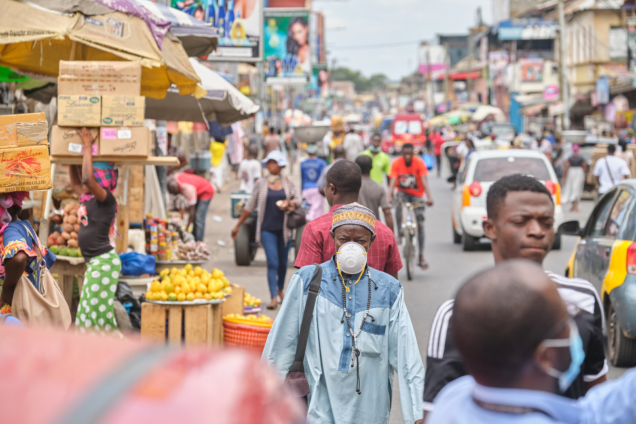
Citizens are still encouraged to wear face masks and adhere to social distancing guidelines. Other restrictions remain in place, including school closures and a ban on social events and public gatherings. Borders will be closed for a further two weeks from April 20.
The president said the decision was taken following successes in containing the spread of the virus, due to improved testing and an expansion of treatment centres.
As of April 28, Ghana had 1671 confirmed cases of Covid-19 and 16 virus-related deaths.
The move is also a response to fears regarding the negative impact of the lockdown on poorer citizens: in Ghana, as elsewhere, poor people are often the hardest-hit by Covid-19 containment measures as they rely on daily wage earnings and have few savings to fall back on. Similar concerns are being expressed across the continent.
Many African countries currently have lockdowns in place, but governments are struggling to provide adequate support to more economically vulnerable segments of the population, particularly those who normally work within the informal economy.
As a result, other countries in the region are feeling pressure to follow Ghana’s suit.
For example, in late March the South African government imposed one of world’s strictest lockdowns. In response, the opposition party vocally criticised the programme, saying that it could lead to deaths from violence and malnourishment. On April 24 President Cyril Ramaphosa announced the lockdown was to be eased as of May 1, on the grounds that "people need to eat" and "earn a living".
The outcome of Ghana’s decision to lift the lockdown is therefore set to attract considerable attention in the coming days and weeks.
Nationwide mobilisation
Ghana’s relative success in limiting the effects of Covid-19 so far is principally attributable to a series of large-scale health care initiatives.
As OBG has detailed, the pandemic has significantly expanded the uptake of e-health solutions in the country.
Alongside this, a new rapid-results testing programme has been established, with over 60,000 samples tested to date.
In collaboration with US start-up Zipline, the government has been using drones to expedite the delivery of samples from more remote areas.
Zipline already operates fleets of drones in Ghana and Rwanda that deliver blood, vaccines and essential medical supplies to rural areas. According to the company, this is the first time in world history that autonomous drones have been used for regular long-range deliveries into urban zones.
Elsewhere, local industry has been repurposed to support the medical campaign against Covid-19.
In early April five Accra-based companies began producing personal protective equipment, while the Ghana Education Service has joined forces with waste-management company Zoomlion Ghana on an initiative to fumigate all senior high, special and technical schools in the country.
The president has expressed a desire that Ghana become more self-sufficient as a result of the Covid-19 pandemic. In this regard, it is hoped that such initiatives continue to serve domestic demand as it evolves, bolstering the country’s production capacity and reducing its dependence on imports of medical supplies.
A new era for Ghana’s health care
Amid these initiatives, one recent development signals the government’s long-term commitment to overhauling the health care ecosystem.
On 27 April President Akufo-Addo announced plans to construct more than 90 hospitals, saying that the pandemic had highlighted weaknesses in the system stemming from under-investment.
To be built across the country, the new centres will comprise 88 district hospitals, six regional hospitals and three infectious disease centres.
There are around nine hospital beds per 10,000 people in Ghana, according to the World Health Organisation's most recent data. If the plan goes ahead as announced, it will thus provide a significant boost to the country’s medical infrastructure, as well as generate jobs and investment.
However, questions have been raised about the viability of the project in the context of the widely anticipated global economic slowdown; the government is to submit a proposal for the plan to parliament in July.
Latest Stories
-
6,079 promotion cases fully processed and paid – CAGD says amid nationwide teachers’ strike
1 minute -
Teacher unions to meet government Monday over nationwide strike
17 minutes -
Photo story: Republic Bank-JoyNews Habitat Fair clinic wraps up after three days of housing solutions, expert engagement
20 minutes -
National Peace Council urges investment in youth to sustain Ghana’s peace
42 minutes -
Afenyo-Markin urges youth to speak up against injustice
53 minutes -
CAF annuls Edo Queens victory, orders WAFU B final to resume from extra time
1 hour -
Interior Minister urges traditional authorities to enforce anti-bushfire bye-laws
1 hour -
3rd Republic Bank-JoyNews Habitat Fair Clinic ends on a high note after three days of strong patronage
1 hour -
Ten climbers missing after avalanche hits Himalayan base camp
2 hours -
NPP had more permanent fuel relief measures than current GH¢2 diesel cut – Amin Adam
2 hours -
Photos from the 3rd Republic Bank-JoyNews Habitat Fair Clinic
2 hours -
Ethiopia’s army promises restraint amid fears of new civil war
3 hours -
Amin Adam calls for review of fuel taxes as diesel prices remain above GH¢18
3 hours -
World Vision Ghana, Ahafo districts sign MoU for universal WASH coverage
4 hours -
When the gold engine stutters: What Ghana’s Cedi and reserves are telling us about the new economic architecture
4 hours