

Audio By Carbonatix
The date is 2 December 2022. Ghana face Uruguay in their final group match of the FIFA World Cup, knowing that at least a draw would give them a realistic chance of progressing to the round of 16. The encounter carries an extra edge. It is the first meeting between the two sides since Luis Suárez’s infamous handball in 2010, a moment that denied Ghana a historic place in the World Cup semi-finals.
Ninety minutes later, Ghana are out. A defeat to Uruguay confirms a group-stage exit, following a performance that was widely described as disappointing and lacking conviction. In the aftermath, serious questions are raised, not just about tactics, but about preparation, particularly on the psychological front.
Perhaps the most vivid exemplification of Ghana’s historical shortcomings in technical preparation came long before 2022, in that infamous penalty shootout defeat to Uruguay at the 2010 World Cup. Uruguay’s final kick was taken by Sebastián Abreu, a player already well known in South America for calmly chipping penalties straight down the middle. Yet Ghana appeared completely unprepared.
Goalkeeper Richard Kingson committed early, diving to his right as the ball bounced into the net after Abreu executed a trademark Panenka. In an interview with FIFA years later, Abreu revealed his thinking:
“I’d been watching their keeper, and I saw that he was diving before the penalty taker struck the ball. Given that a place in the semi-finals was at stake, I didn’t think he was likely to stand still,” he said.
The revelation was damning. Ghana had a goalkeeping coach and scouts as part of their backroom staff, yet none picked up on a pattern that was publicly associated with the penalty taker. It was a painful reminder of a simple truth: no single individual can see everything or cover every detail at the highest level. The broader and more specialized your technical team, the greater your chances of covering all bases.
That lesson resurfaced in 2022. Throughout the tournament, Ghana showed a worrying pattern of collapse. Against Portugal, two goals were conceded in the space of two minutes. South Korea scored twice in three minutes. Uruguay struck twice in six. At that level, such lapses are unforgivable. The competence of the technical team was tested under the brightest lights and found wanting.
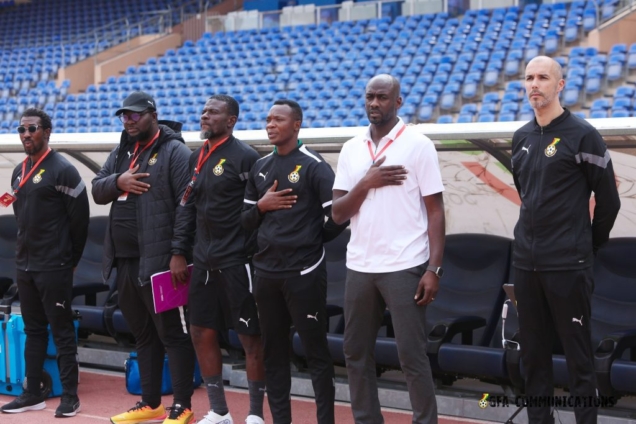
Fast forward four years. Ghana heads into another World Cup, once again under the leadership of Otto Addo. This time, however, the Ghana Football Association has taken a notable step: strengthening the technical bench.
Five additional coaches have been appointed, including Black Queens Head Coach Kim Lars Björkegren, in various specialist roles to support Addo at the 2026 FIFA World Cup in the USA, Canada and Mexico. Yet, somewhat surprisingly, the move has been met with backlash in some quarters, particularly on social media.
This reaction is puzzling.
The World Cup is the biggest and most competitive football tournament on the planet. The margins are infinitesimal, the pressure relentless, and the consequences of failure severe. After the disappointment of 2022 and the team’s failure to qualify for the AFCON in Morocco, it is non-negotiable that Ghana arrive better prepared and better supported.
So what is the standard when it comes to technical teams? And is Ghana’s eight-man coaching setup (excluding the medical department) really excessive?
The facts suggest otherwise. There is no fixed limit on the size of a technical team. Federations are free to appoint personnel as they see fit. AFCON finalists Morocco operated with a nine-man coaching staff, including the head coach. Germany, hosts of Euro 2024, had eight technical staff members during World Cup qualification, with reports suggesting that number could increase for the tournament proper.
Modern football demands specialization. At club level, the trend is even more pronounced. Liverpool’s 2024/25 Premier League title-winning side worked with a coaching staff of 18, including eight match and video analysts alone. Each brought a different perspective to match analysis and preparation. That is the reality of the modern game.
To assume all of this can be handled by one or two individuals, especially for a team heading into the World Cup as one of the lower-ranked nations, would be dangerously naive.
In that context, Ghana’s technical setup is not excessive. If anything, some may argue it is still light!
Concerns about cost should also not dominate the conversation. If financial savings are the primary objective, then Ghana may as well not participate, or resign itself to another group-stage exit. An elite, highly experienced head coach would command significantly more than Otto Addo does, and these additional appointments are short-term, World Cup-specific investments.
The reality is simple: Ghana and Otto Addo need all the help they can get. This is the World Cup - a convergence of the best minds, best preparation, and best talent in global football. There are no second chances. Ghana cannot afford to leave North America in 2026, wondering what might have been.
Latest Stories
-
Ghana’s BRICS bid must be guided by national interest – International Affairs Analyst
9 minutes -
Journalists look back on a decade of breast cancer reporting in Ghana
47 minutes -
President Mahama ends Resetting Ghana tour of Ahafo Region
3 hours -
African negotiators seek delivery of climate commitments at COP31
3 hours -
BoG develops AI rules for financial sector
3 hours -
‘Big Push’: Government assures contractors of prompt payments
3 hours -
Court fines miner for breaking into gold buying shop
3 hours -
Tarkwa court jails labourer for three years over GH¢123,000 theft
4 hours -
GAEC must retain nuclear scientists for Ghana’s nuclear ambitions – Minister
4 hours -
Man reportedly mistaken for game and shot by hunter dead in forest
4 hours -
19-year-old mason jailed 15 years for defiling seven-year-old pupil
5 hours -
Ghana’s banking sector assets rise 20.47% to GH¢500.2bn – BoG Governor
5 hours -
22 injured as Sprinter bus overturns at Sege after tyre burst
5 hours -
UN housing expert urges Ghana to strengthen Rent Control Department amid housing affordability concerns
5 hours -
Delta-BCI partnership reaches 166,000 people with breast cancer education
5 hours