

Audio By Carbonatix
Research suggests that some children as young as five, are exposed to sexual exploitation.
Again, some societal norms and practices put young people and their sexual and reproductive health at a greater risk thereby burdening the entire country in the long run.
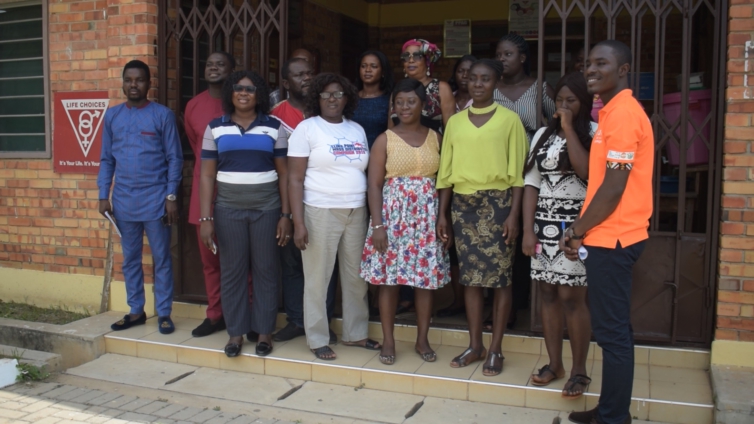
In a bid to address the issue, the Planned Parenthood Association of Ghana (PPAG) is empowering young girls against negative effects of societal norms and to compel them to achieve their aim.
The programme, UNFPA – PPAG Adolescent Girls Project, seeks to curb this menace in the short and long term.
Project officer, Anthony Kwabena Sarfo observes that many young girls are married off to men after getting pregnant.
At a pre implementation and stakeholder consultative meeting in Kumasi, he said, young girls should be brought back to school after delivery.
He encouraged stakeholders and society to assist girls in achieving their goals.
''We hope that through this engagement, we'll realize that young girls have aspirations, they have body autonomy that they should exercise as young people.
“Society, family and parents should support the vision and goals that young girls have set for themselves and we are hoping that the society and country gets better,” he stressed.
Gender desk officer at Kumasi Metropolitan Assembly (KMA), Anastasia Ayuni also emphasized on the need for parents to assist the girls so that such acts are not repeated.
She cautioned young girls to learn how to manage their sexual urges.
“Since they are humans, once in a while they'll have that curiosity, but I will want them to know how to handle it," she said
“But should there be pregnancy, I want them to know it's okay, it's not the end of the world so that they don't quickly opt for abortions which are mostly done in an unsafe environment,” she added.
Miss Anastasia hopes that by the end of the programme, there'll be girls going back to school after delivery and a reduction in teenage pregnancy.
Owusuaa Rebecca, is a teacher at Akosa M/A JHS North Suntreso.
“We hope to see these girls back to school and I know this programme will help break the silence,” she said.
She hopes that even after the project has ended, the reproductive health education and services for young people will continue.
The project is funded by United Nations Population Fund (UNFPA)
Latest Stories
-
Parliament demands financing plan for Pwalugu Irrigation Project before 2027 Budget
2 minutes -
Minority calls for the immediate suspension of Ghana-Colombia maritime agreement
12 minutes -
Ghanaian professional Sydney Hushie appointed UNFPA Chief of Digital Centre of Excellence
17 minutes -
GHS urges health managers to use community scorecards to improve healthcare delivery
24 minutes -
Ekyeamamfrom-Pivot irrigation project 90% complete but stalled over unpaid certificates
28 minutes -
When the Gavel speaks, where is the choir that once sang for Wontumi?
28 minutes -
NPP does not need a new chairman: It needs a brand architect
31 minutes -
GNFS contains fire at Avenor North Industrial Area in Accra
34 minutes -
NITA appoints Anthony Owusu-Ansah as Acting Deputy Director-General
41 minutes -
RANA warns Salomey Bafoh case could have chilling effect on free expression
41 minutes -
Who is the ‘hero’ Indian pilot who was stabbed on Israel-bound flight?
58 minutes -
NPP External Branches demand 90-day roadmap for ROPAA implementation
60 minutes -
No sustainable digital economy without trust, cybersecurity – CSA
1 hour -
SSNIT increases stake in Société Générale Ghana to 24.36%
1 hour -
Ghana-Colombia port deal sparks fresh cocaine trafficking security concerns
1 hour