

Audio By Carbonatix
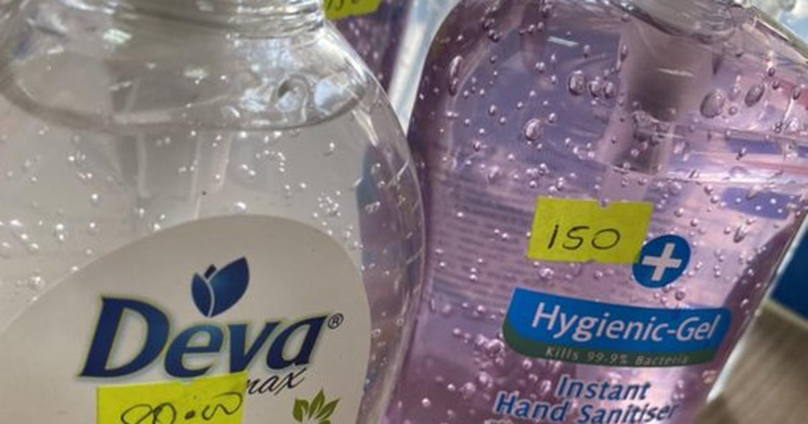
Prices of hand sanitizers have come down drastically in the Kumasi metropolis, following a boost in production by local companies and instituteions.
Currently, almost all local alcoholic beverage distillery companies in Kumasi as well as institutions such as the Kwame Nkrumah University of Science and Technology (KNUST), Kumasi Technical University and the Komfo Anokye Teaching Hospital (KATH), are producing hand sanitizers.
This mass production seems to have flooded the local market, forcing the prices of personal hygiene and protective medical disinfectant, down to the reach of the majority of the people.
A survey conducted by the Ghana News Agency (GNA) Business Desk in Kumasi to sample prices of hand sanitizers, barely forty (40) days after Ghana recorded its first two cases of coronavirus, saw a drastic reduction in prices of the product.
A medium-size standard hand sanitizer produced per the required standards of the World Health Organization (WHO), Food and Drugs Authority (FDA) and Ghana Standard Authority (GSA), is now selling between GH¢10.00 - GH¢15.00, about half the price, when the product gained instant prominence, following the recording of the first COVID-19 case in the country.
The small sizes could also be purchased for GH¢7.00 or GH¢8.00.
The Food and Drugs Authority (FDA) has however, cautioned the public against the purchase and use of fake and unapproved hand sanitizers.
The GNA gathered that a standard hand sanitizer must have an ethanol content of about 65 percent, to be able to kill harmful bacteria.
Dr. Ernest Kwarko, a Technical Member of the Kumasi Metropolitan Emergency Health Committee, the body mandated to coordinate the campaign against COVID-19, told the GNA in an interview that, the use of hand sanitizers, face masks and other personal protective items should not be compromised at this critical time.
Ghana has over the last one month, recorded more than one thousand (1,000) confirmed cases of COVID-19 and nine deaths.
Dr. Kwarko advised the public to make the use of protective items and personal hygiene such as regular washing of hands under running water, a regular feature in their daily lives to help prevent infections
They should also adhere to all health guidelines and protocols, such as social distancing instituted by the government for their safety
Latest Stories
-
Anti-LGBTQ Bill: Forget the rumour mongers, I’m a man of action, and will pass the bill – Speaker
37 minutes -
Women and children among those killed in Sudanese army shelling of wedding celebration
40 minutes -
President Mahama is not sincere with Ghanaians on LGBTQ bill matter – Hassan Tampuli
58 minutes -
Gov’t to establish Prison Industrial Hub to equip inmates with income-generating skills – Prison Service boss
1 hour -
Alhassan Tampuli donates cement, roofing sheets to support storm victims in Gushegu
1 hour -
Alhassan Tampuli appeals for urgent support for storm victims in Gushegu
1 hour -
The hypocrisy must stop; pass Anti-LGBTQ+ Bill now – Alhassan Tampuli to Mahama
1 hour -
Imprisonment should be rehabilitative, not punitive – Ghana Prisons boss at UNGA
2 hours -
Ga Adangbe traditional priests petition Mahama over McDan aviation licence revocation
2 hours -
Anti-LGBTQ Bill: NDC’s arrogance is worrying – Hassan Tampuli
2 hours -
Let’s give OSP time to mature, not to scrap it – Hassan Tampuli
2 hours -
Nigeria convicts 386 Islamist militants in mass trials
2 hours -
Djibouti president wins election with 97.8% of vote, state media says
2 hours -
We don’t have mandate to deduct tax from rent allowance of security services personnel – Interior Ministry clarifies
3 hours -
Ablakwa receives Presidential Special Envoy on Reparations to advance global agenda
3 hours