

Audio By Carbonatix
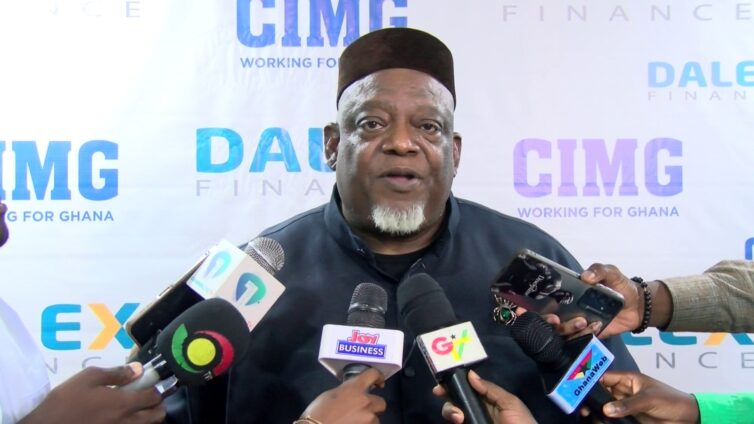
The CEO of Dalex Finance, Joe Jackson, has rejected calls for fuel tax cuts and subsidies, warning that such measures could worsen Ghana’s economic outlook.
Speaking on PM Express on Joy News on Thursday, he cautioned that rising energy costs could trigger broader inflationary pressures, particularly in food prices.
“Listen, the energy prices are but one of the major effects that we could have. The bigger challenge would be food price inflation, because the cost of food, even locally grown food, has embedded in it up to 40% of logistics costs,” he said.
He warned that any increase in fuel and transport costs would inevitably feed into food prices.
“So if, the if, if the cost of fuel and logistics go up, we’re going to be hit eventually. Where to hit us hardest will be food,” he stated.
Mr Jackson noted that both local and imported food would be affected by rising global costs.
“Now, even if the food was imported, remember that the cost per container has gone up. Insurance and transportation costs have gone up. So any which way, we are between a rock and a hard place where food prices are concerned,” he explained.
He added that recent low inflation could make the impact of any price shock feel worse.
“And the worst part is the very low levels of inflation we’ve been having over the last few months will make the way we feel this effect worse, because when inflation is high, any shock is really absorbed and expected. But when inflation is low, the effect is hard, and it feels harder,” he said.
Mr Jackson warned against panic-driven policy responses.
“The biggest danger we have now is that there is a possibility of an impending crisis, but the crisis is not there yet, and we should avoid overreacting.
"We should avoid this effect. Should be treated as if a shock may be coming. We should go at it with a scalpel, not with a sledgehammer; we risk actually making the effect worse,” he cautioned.
He stressed that poor policy choices could inflict more pain than the shock itself.
“If we lose our discipline and don’t keep the macroeconomic numbers right, the pain we will have after reacting, overreacting to this shock could be worse than the shock itself,” he added.
Outlining his recommendations, Mr Jackson said the government must prioritise targeted support rather than broad price controls.
“Number one, protect households, not prices. The mistake would be to suppress prices worldwide through blanket subsidies or administrative controls. That will be expensive. It will be distorting. It will be regressive,” he said.
He urged authorities to focus on vulnerable groups.
“Instead, government should expand tip-free support for the most exposed households, urban poor, low-income, transport-dependent workers and food-insecure districts,” he noted.
On implementation challenges, he acknowledged the difficulty but insisted action was necessary.
“It’s going to be difficult, but we have to make an attempt. Because if we are, if we go through this, remove subsidies, administrative controls, we’re going to be heading for real trouble in the medium term,” he said.
Mr Jackson also called for urgent action to stabilise food logistics.
“As food inflation rises, it is not because farm produce is less. It is because transport, storage and wholesale distribution have become more expensive,” he explained.
He proposed a coordinated national response.
“One of the things I will be looking for tomorrow will be to set up a food logistics Task Force, trade, agree, transport, local government and security in one room focused on the movement of staples,” he said.
He cautioned against interventionist policies.
“Please, we should not react with export bans, price controls in any of those anti-market theatrics that play to the gallery,” he warned.
Rejecting calls to suspend fuel taxes, he was emphatic.
“No, I’m not in favour. And I say again, let us not do blanket interventions… it will distort. It will be expensive, and worst of all, it will be regressive,” he said.
“Regressive means the poor will benefit least… what are we trying to do to remove blanket subsidies so that those of us who drive big engine cars can still get fuel at a lower price? No, we shouldn’t do that,” he added.
He urged government to maintain fiscal discipline.
“Let’s keep our macroeconomic stability intact. Let’s keep the discipline that we’ve heard about government expenditure intact, otherwise the cost will be higher than the shock itself,” he concluded.
Latest Stories
-
Mahama approves Integrated Basic Education Model, with funding expected in 2027 under GETFund formula
3 minutes -
Money-driven elections fuelling corruption – Haruna Iddrisu
7 minutes -
Excessive borrowing ‘cracked’ Ghana’s economy under Akufo-Addo – Haruna Iddrisu
16 minutes -
NPP’s silence on economic indicators suggests Mahama is doing better – Haruna Iddrisu
29 minutes -
GoldBod must be more accountable to Ghanaians – Haruna Iddrisu
44 minutes -
Affi Agbenyo’s EC appointment is constitutionally appropriate, but politically, people have the right to remind us – Haruna Iddrisu
56 minutes -
Accra Mall brings Soulful Weekend Vibes to October with Live R&B and Jazz
1 hour -
Education is critical to Ghana’s future and development – Haruna Iddrisu
1 hour -
Who’s Emelia Affi Agbenyo, the 43-year-old newly sworn-in Deputy EC Chair?
2 hours -
Haruna Iddrisu calls for limits on annual university accommodation fee increases
2 hours -
Today’s front pages: Tuesday, October 13, 2026
3 hours -
Wealth Over Water: How Galamsey Is Threatening Ghana’s Water Security
4 hours -
LA 2028: Black Queens pumped up for second leg of Mauritius tie
4 hours -
LA 2028: Black Queens hold final training session ahead of second leg against Mauritius
4 hours -
Standards are not Seasonal: What the EC appointments teach both sides
5 hours