

Audio By Carbonatix
Into the two big foreign policy arenas sucking up much of the Trump administration's time and effort come two major challenges in less than 24 hours.
Israel's air raid on the offices of Hamas in Doha and a Russian drone incursion deep into Polish airspace represent two massive headaches for the White House.
And, arguably, two major affronts to the president's authority.
After all, these are conflicts – Ukraine and Gaza - US President Donald Trump said he would deal with them swiftly and decisively.
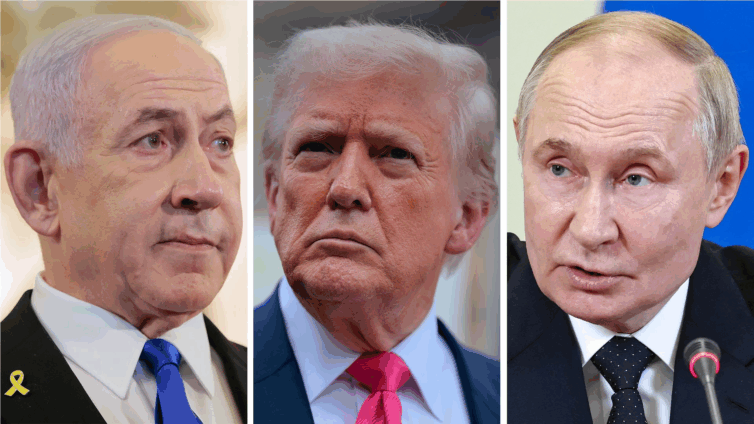
In each case, a leader he sees as a natural, if problematic ally – Russian President Vladimir Putin and Israeli Prime Minister Benjamin Netanyahu – has thrown a massive spanner in the wheels of White House peace-making.
Consider the timing. The Doha raid came just two days after the Trump administration delivered its latest proposals to end the war in Gaza.
On social media, Trump told Hamas that this was a last chance.
"I have warned Hamas about the consequences of not accepting," he wrote on Truth Social on Sunday. "This is my last warning, there will not be another one!"
In Doha, Hamas' senior leadership gathered to consider their response, but Israel didn't wait to hear it. The attack didn't just blow up the latest US proposals, it may have wrecked the entire, delicate architecture of Gaza diplomacy, on which the Trump administration was relying heavily.
Debate swirls over how and when the US found out about the Israeli raid and whether it could have done more to stop it. The presence in Qatar of one of the most important US airbases in the world has led many to conclude that it's inconceivable that Washington didn't see the Israeli jets approaching.
But if there wasn't a green light from Washington – and many assume there was – what does this say about Mr Trump's ability to influence Benjamin Netanyahu's actions?
For the past two years, following the humiliation suffered at the hands of Hamas gunmen on 7 October 2023, Israel has been flexing its military muscles across the Middle East, mostly with the tacit or explicit approval of the United States.
Israel has established itself as the region's undisputed hegemon, able to attack at will countries as far flung as Yemen and Iran.
But in both those cases, the US was also involved and shared the objectives – halting Houthi attacks on Israel and shipping in the Red Sea and thwarting Iran's nuclear ambitions.
An attack on Qatar, a key US regional ally, is a whole other thing.
Donald Trump said he felt "very badly" about it. According to the White House account of events, news of the Israeli raid came too late to offer Qatar any meaningful warning.
"Unilaterally bombing inside Qatar, a sovereign nation and close ally of the United States that is working very hard and bravely taking risks with us to broker peace does not advance Israel or America's goals," the White House press secretary Karoline Leavitt told reporters.
It won't be enough to quell the suspicions of American complicity, but it sounded like real anger.
For his part, Mr Netanyahu was keen to emphasise that this was a "wholly independent" action.
In The Washington Post, David Ignatius wrote that what the Israelis have dubbed "Operation Summit of Fire" came despite US and Israeli assurances that Hamas leaders would not be targeted in Qatar.
For such assurances, if given, to have been so flagrantly cast aside will inevitably be seen in the Gulf as a sign of American weakness.
Then there's Poland.
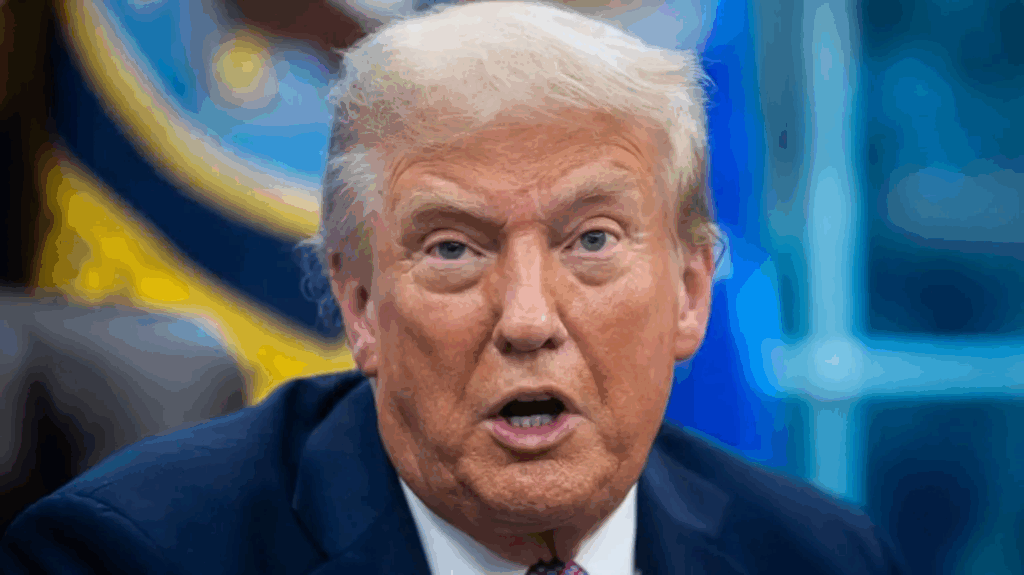
Less than a month ago, Trump welcomed Putin to a summit in Alaska, rolling out the red carpet, warmly embracing the architect of the war in Ukraine and, in a hot mic moment days later, telling France's Emmanuel Macron that Putin "wants to make a deal for me….as crazy as it sounds."
But far from progress towards a deal, the weeks since have brought only escalation. More record-breaking Russian drone and missile attacks on Ukraine, and now, for the first time, a flagrant incursion into NATO airspace.
It's not the first time Russian projectiles have landed in Poland, but previous episodes were close to the border and seemingly accidental.
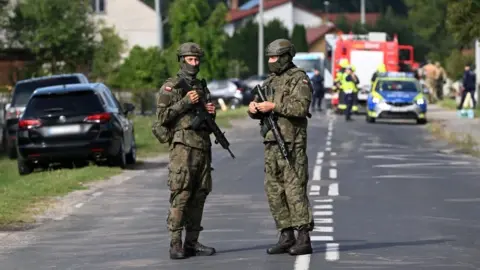
But the incursions early on Wednesday morning were anything but accidental. Polish officials reported 19 Russian drones, some flying deep into Poland.
The Prime Minister Donald Tusk told parliament this was "the closest we have been to open conflict since World War Two."
Despite Russian denials, there's a near-universal consensus that this was a deliberate effort by Moscow to test NATO's resolve.
And since the United States remains the alliance's most powerful member, that means testing Donald Trump's resolve, too.
The president's apparent reluctance to respond – in contrast to his comments on the Doha attack – did not go unnoticed.
"A stunning silence from the White House greeted news that a Nato ally for the first time engaged and shot down Russian military assets," the Kyiv Post newspaper wrote.
A post on Truth Social did eventually – and inevitably – come.
"What's with Russia violating Poland's airspace with drones?" the president wrote, adding, somewhat ambiguously, "Here we go!"
But his initial silence, coupled with his seeming unwillingness to follow through on his own threats to impose new sanctions on Russia, leaves Ukraine's western allies where they have always been: wondering where Donald Trump's heart is.
This could be about to change, with European officials working with their American counterparts on a coordinated package of sanctions, the first since Trump returned to the White House.
But given the president's previous ambivalence about NATO, alliance members want reassurance that when the sovereignty of an ally is threatened, Washington can be relied on to respond.
A recent agreement to allow Nato members to purchase US military equipment for Ukraine, along with the commitment of members to spend more on their own defence, has done much to improve relations within the alliance, and Trump has abandoned the sort of hostile rhetoric towards Nato that characterised his first term in office.
For their part, Nato's European members have generally acknowledged that they must do more to look after their own security. Policing Poland's airspace is a good example.
But American might, military and political, is still the bedrock on which the alliance is built, and questions linger about this president's willingness to wield it.
Two days, two conflicts and two conundrums. For Trump, a leader who does not like or expect to be challenged, this has been a testing experience. Everyone is waiting to see if he rises to the occasion.
Latest Stories
-
Imagination Africa, Mentors Chess Academy to host second African Genius Chess Championship at Ghud Park
3 hours -
Saudi man charged with planting ‘sophisticated’ recording device in OpenAI office
3 hours -
Ghana wins UN Human Rights Council seat as calls grow for action against atrocities
3 hours -
Royal Mail losing 400 postal workers a week, says union
3 hours -
Techiman South MP ends decades of water struggle in Asutia
4 hours -
Three things we’ve learnt about the UK economy from the IMF
4 hours -
Nana B passport claims a diversionary tactic — Abu Jinapor
4 hours -
Pope Leo diagnosed with cancer as doctors remove lobe of lung, Vatican says
4 hours -
Legal Aid Commission takes free legal services to Techiman main lorry terminal
4 hours -
Nana B denies seeking passport favour, accuses Ablakwa of failing to account for GH¢16.4m
4 hours -
Young girls demand climate action, stronger protection against child marriage
4 hours -
Ex-gang boss sentenced to 40 years for orchestrating Tupac Shakur’s murder
4 hours -
From near-deferral to three awards: UMaT graduate’s academic journey
4 hours -
Atta Akyea denies seeking presidential pardon for Wontumi in galamsey case
5 hours -
Sasaabi scam centre busted: 19 arrested, 117 trafficking victims identified in global crackdown
5 hours