

Audio By Carbonatix
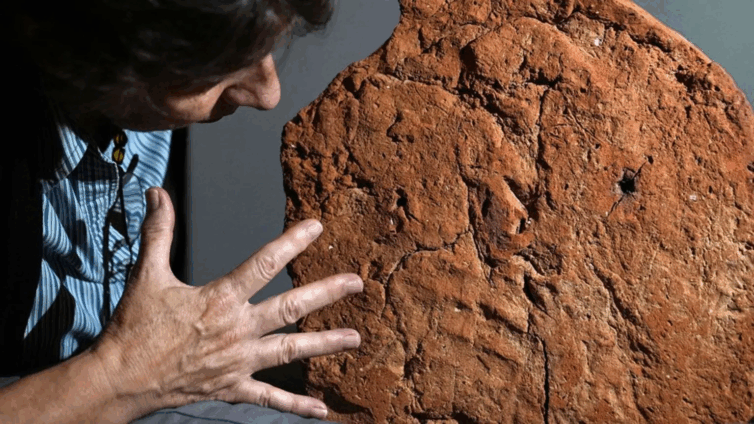
A 4,000-year-old handprint has been found on an ancient Egyptian tomb offering by curators preparing for an exhibition.
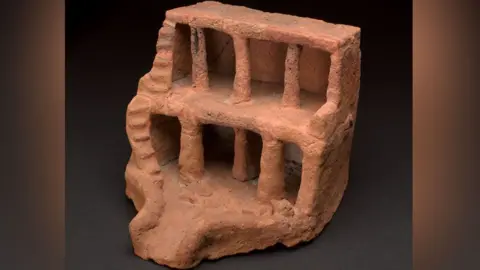
The discovery was made by University of Cambridge researchers on a "soul house", a type of clay model in the shape of a building, typically found in burials.
Curator Helen Strudwick said the complete handprint, which dates from 2055 to 1650 BC, was "a rare and exciting" find.
The ceramic will go on display as part of the university's "Made in Ancient Egypt" exhibition at the Fitzwilliam Museum, opening on 3 October.
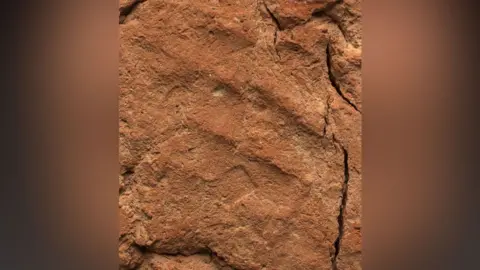
Ms Strudwick, senior egyptologist at the Fitzwilliam Museum, said: "We've spotted traces of fingerprints left in wet varnish or on a coffin in the decoration, but it is rare and exciting to find a complete handprint underneath this soul house.
"This was left by the maker who touched it before the clay dried.
"I have never seen such a complete handprint on an Egyptian object before."
The exhibition concentrates on the people who made the ancient Egyptian crafts.
While ceramics were widely used and vast amounts of pottery survive, there are relatively few details known about the potters themselves, in comparison to other ancient Egyptian craftsmen.
The ready availability and generally low value of pottery may have affected their status, according to the museum, which cited a text known as the Teaching of Khet, comparing potters to pigs who wallow in mud.
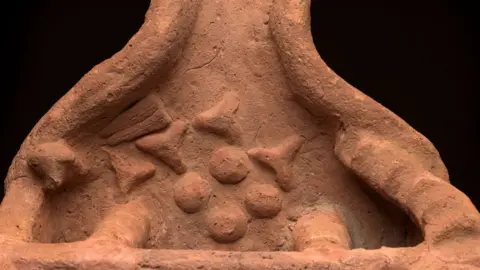
Soul houses may have acted as offering trays or provided a place for the soul of the deceased to live within the tomb.
They had an open front space where items of food were laid out, in this example loaves of bread, lettuce and an ox's head.
Analysis of the item suggested the potter who made it first created a framework of wooden sticks and then coated it with clay to make a building with two storeys supported by pillars.
During firing, the wooden framework burnt away, leaving empty spaces in its place.
The handprint found underneath was probably made when someone, perhaps the potter, moved the house out of the workshop to dry before firing in a kiln, according to the researchers.
The stories of Egyptian rulers, like Tutankhamun, have received a great deal of attention, but the makers of the artefacts themselves are often overlooked.
Made in Ancient Egypt aims to show who these people were, how they thought of themselves and what other Egyptians thought of them.
Latest Stories
-
Ballon d’Or Power Rankings: Lamine Yamal leads race for Golden Ball ahead of Rodri and Kane
55 minutes -
‘Nothing worked for us’ – Gideon Mensah takes responsibility for Gambia defeat
1 hour -
2026 Women’s Super Cup: FC Savannah beat Epiphany Warriors to win trophy for first time
3 hours -
AFCON 2027Q: ‘The last time Ghana won was eight games ago’ – Carlos Queiroz
3 hours -
AFCON 2027Q: Gambia defeat doesn’t make me a loser – Carlos Queiroz
3 hours -
2027 AFCONQ: Late goals seal 2-0 for Côte d’Ivoire against Somalia
3 hours -
AFCON 2027Q: My resignation won’t solve Ghana football issues – Queiroz
3 hours -
Morocco call off Ghana friendly after Black Stars’ AFCON setback
4 hours -
‘We have to say sorry’ – Queiroz apologises after Ghana’s humiliating defeat to Gambia
4 hours -
New Yorker identified as Yaw Boahene, 57, killed after bag was caught in subway train doors
4 hours -
Former American Idol contestant and pastor found guilty of murdering wife
4 hours -
Trump rules out joint US-China venture to develop AI
4 hours -
‘Beating Ghana did not surprise me’ – Gambia boss
4 hours -
OpenAI agents get rebrand – as ‘dots’ – while safety worries delay new model
4 hours -
US ban on Canadian alcohol and dairy takes effect as trade war drags on
5 hours