

Audio By Carbonatix
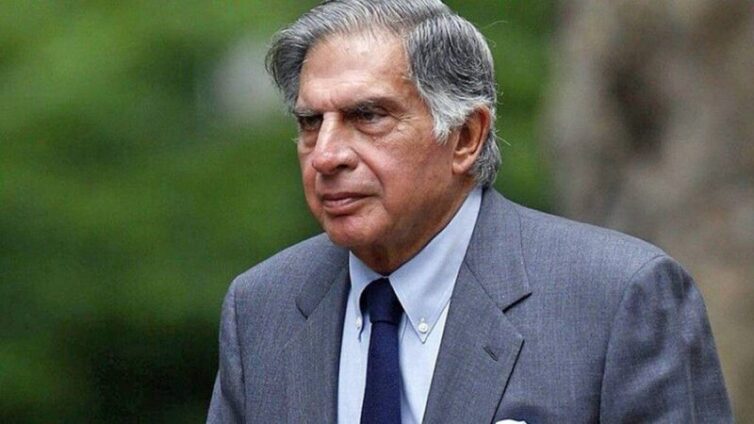
Ratan Tata, the former Tata Group chairman who put a staid and sprawling Indian conglomerate on the global stage with a string of high-profile acquisitions, has died, the Tata Group said in a statement late on Wednesday. He was 86.
Tata, who ran the conglomerate for more than 20 years as chairman, had been undergoing intensive care in a Mumbai hospital, two sources with direct knowledge of his medical situation told Reuters earlier on Wednesday.
"It is with a profound sense of loss that we bid farewell to Mr Ratan Naval Tata, a truly uncommon leader whose immeasurable contributions have shaped not only the Tata Group but also the very fabric of our nation," the company said.
Ratan Tata "was a visionary business leader, a compassionate soul and an extraordinary human being," Indian Prime Minister Narendra Modi said on social media platform X.
"Extremely pained by his passing away. My thoughts are with his family, friends and admirers in this sad hour."
After graduating with a degree in architecture at Cornell University, he returned to India and in 1962 began working for the group his great-grandfather had founded nearly a century earlier.
He worked in several Tata companies, including Telco, now Tata Motors Ltd, as well as Tata Steel Ltd, later making his mark by erasing losses and increasing market share at the group unit National Radio & Electronics Company.
In 1991, he took the helm of the conglomerate when his uncle J.R.D. Tata stepped down - the passing of the baton coming just as India embarked on radical reforms that opened up its economy to the world and ushered in an era of high growth.
In one of his first steps, Ratan Tata sought to rein in the power of some heads of Tata Group's companies, enforcing retirement ages, promoting younger people to senior positions and ramping up control over companies.
He founded telecommunications firm Tata Teleservices in 1996 and took IT firm Tata Consultancy Services, the group's cash cow, public in 2004.
But to grow properly, the group determined it needed to look beyond Indian shores.
It "was the quest for growth and changing the ground rules to say that we could grow by acquisitions which earlier we had never done," he said in an interview with the Stanford Graduate School of Business in 2013.
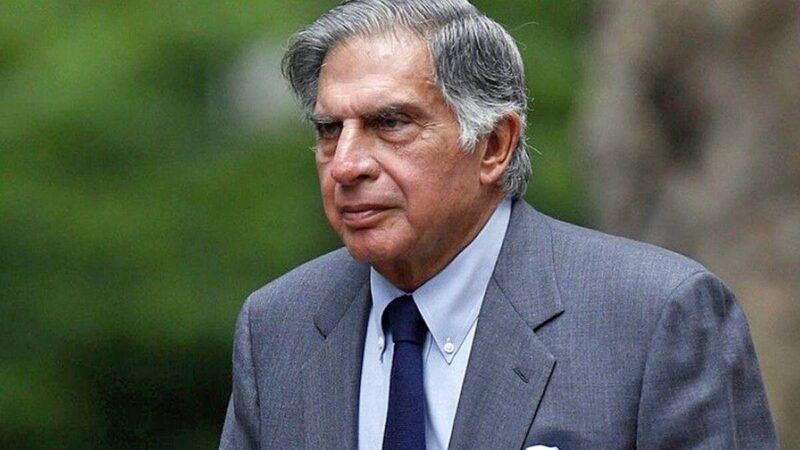
The group purchased British tea firm Tetley in 2000 for $432 million and Anglo-Dutch steelmaker Corus in 2007 for $13 billion, at the time the biggest takeover of a foreign firm by an Indian company.
Tata Motors then acquired British luxury auto brands Jaguar and Land Rover from Ford Motor Co in 2008 for $2.3 billion.
His pet projects at Tata Motors included the Indica - the first car model designed and built in India - as well as the Nano, touted as the world's cheapest car. He contributed initial sketches for both models.
The Indica was a commercial success. The Nano, however, priced at just 100,000 rupees (about $1,200) and the culmination of Ratan Tata's dream to produce an affordable car for India's masses, was hurt by initial safety issues and bungled marketing. It was discontinued a decade after its launch.
A licensed pilot who would occasionally fly the company plane, Ratan Tata never married and was known for his quiet demeanour, relatively modest lifestyle and philanthropic work.
About two-thirds of share capital of Tata Sons, the group's holding company, is held by philanthropic trusts.
His leadership at Tata was not without controversy - most notably a bitter public feud after the company ousted Cyrus Mistry, a scion of the billionaire Shapoorji Pallonji clan, as chairman of Tata Sons in 2016.
The Tata Group said Mistry had failed to turn around poorly performing businesses while Mistry accused Ratan Tata, who was chairman emeritus of the conglomerate, of interfering and creating an alternate power centre at the group.
After he stepped back from the Tata Group, Ratan Tata became known as a prominent investor in Indian startups, backing a plethora of companies including digital payments firm Paytm, Ola Electric, a unit of ride-hailing firm Ola, and home and beauty services provider Urban Company.
Among his many awards, he received the Padma Vibhushan, India's second-highest civilian honour, in 2008 for exceptional and distinguished service in trade and industry.
Latest Stories
-
Anti-LGBTQ Bill: NDC’s arrogance is worrying – Hassan Tampuli
5 minutes -
Let’s give OSP time to mature, not to scrap it – Hassan Tampuli
9 minutes -
Nigeria convicts 386 Islamist militants in mass trials
14 minutes -
Djibouti president wins election with 97.8% of vote, state media says
19 minutes -
We don’t have mandate to deduct tax from rent allowance of security services personnel – Interior Ministry clarifies
33 minutes -
Ablakwa receives Presidential Special Envoy on Reparations to advance global agenda
50 minutes -
Christina Koch becomes first woman to travel around the moon on Artemis II
1 hour -
Epstein survivors’ calls to meet King Charles and Queen harder to ignore as US visit approaches
1 hour -
UN Secretary-General names Ghana’s Anita Kiki Gbeho as South Sudan envoy
1 hour -
Mali withdraws recognition of Sahrawi Republic, backs Morocco’s autonomy plan
1 hour -
Gov’t distributes over 8,500 laptops to One Million Coders project
1 hour -
Julius Debrah, ‘man to beat’ as NDC’s James Agbey dismisses Musah Dankwah’s polls
1 hour -
GPRTU in Savannah Region to protest alleged eviction in Damongo
2 hours -
Re: Reinsurance does not replace process — A response to the SIGA–SIC defence
2 hours -
Gender Ministry supports Harriet Amuzu in ongoing abuse case
2 hours