

Audio By Carbonatix
Significantly, rating agencies are firms that assesses the financial strength of governments, government entities and institutions on their ability to borrow and repay loans or alternatively their ability to meet principal and interest payments on their debts.
Today, they’ve become so important and somehow powerful because majority of investors depend on them for information to make investment decisions.
Importantly, the ratings they assign to governments, government entities or institutions demonstrate the capacity of the borrower to honour its debt obligations as agreed.
Though there are other rating agencies, the global credit rating industry is highly concentrated, with the three agencies - Moody's, Standard & Poor's, and Fitch.
Together they control nearly the entire market (95%). They also provide the much-needed service for both borrowers and lenders.
The top firms include Moody’s Investor Services, Standard and Poor’s (S&P), and Fitch Group. Moody’s and S&P are located in the United States, and they dominate 80% of the international market. Fitch is located in the United States and United Kingdom and controls approximately 15% of the global market.
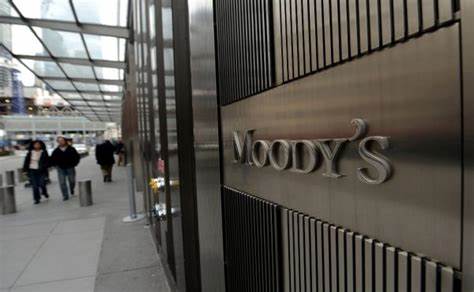
Indeed, it is not surprising that the Finance Ministry is unhappy with Moody’s rating of Ghana's credit to Caa1, alternatively a junk status. One, it is based in the USA where a chunk of the global investors reside and also because the USA boast of a greater number of the world’s richest investors who are active on the capital market.
Operations of credit ratings
Each ratings agency uses unique letter-based grades to indicate if a debt has a low, high default risk or financial stability with respect to the issuer.
Usually, the debt issuers may be sovereign nations, local and state governments, special purpose institutions, companies, or non-profit organizations.
Whilst S&P and Fitch have similar mode of assigning their ratings, Moody’s ratings differ a bit.
The credit rating agencies received lots of criticism during the global financial crisis in 2008 for failing to assign the appropriate ratings on institutions that led to collapse and subsequently the subprime mortgage crisis. Due to this they’ve become very careful and alert with their ratings.
They were slammed for failing to identify risks that would have warned investors against investing in certain types of debts such as mortgage-backed securities.
Classifications of credit ratings
Ratings are classified as investment grade and speculative grade.
Investment grade ratings indicate that the investment is considered solid by the rating agency, and the issuer is likely to honour the terms of repayment.
Credit rating agencies typically assign letter grades to indicate ratings.
For instance, S&P, has a credit rating scale ranging from AAA (excellent) to D (default), whilst Fitch uses AAA (prime or excellent) to D (default). Moody’s uses credit rating scale of Aaa to C (default).
Below is the rating scales of the rating agencies:
| Moody’s | S&P | Fitch | |
| Long-term | Long-term | Long-term | |
| Aaa | AAA | AAA | Prime |
| Aa1 | AA+ | AA+ | High grade |
| Aa2 | AA | AA | High grade |
| Aa3 | AA- | AA- | High grade |
| A1 | A+ | A+ | Upper median grade |
| A2 | A | A | Upper median grade |
| A3 | A- | A- | Upper median grade |
| Baa1 | BBB+ | BBB+ | Lower medium grade |
| Baa2 | BBB | BBB | Lower medium grade |
| Baa3 | BBB- | BBB- | Lower medium grade |
| Ba1 | BB+ | BB+ | Non-investment grade speculative |
| Ba2 | BB | BB | Non-investment grade speculative |
| Ba3 | BB- | BB- | Non-investment grade speculative |
| B1 | B+ | B+ | Highly speculative |
| B2 | B | B | Highly speculative |
| B3 | B- | B- | High speculative |
| Caa1 | CCC+ | CCC | Substantial risk |
| Caa2 | CC | CCC | Extremely speculative |
| Caa3 | CC- | CCC | In default with little prospect for recovery |
| Ca | CC | CCC | In default with little prospect for recovery |
| C | C | DDD | Default |
| D | DD | Default | |
| D | Default |
Parameters of credit rating
The credit rating agencies take into consideration several factors like the financial statements, level and type of debt, lending and borrowing history, ability to repay the debt, and past debts of the entity before rating them.
Be it a sovereign or an institution that is being assessed, the key factors generally considered are
Business Analysis or Company Analysis
Economic Analysis
Financial Analysis
Management Evaluation
Geographical Analysis
Fundamental Analysis
Importance of credit rating agencies
The credit rating agencies have become a benchmark for regulation of financial markets.
Legal policies require certain institutions to hold investment graded bonds. Bonds are therefore classified to be investment graded based on their ratings by these agencies.
Credit rating agencies are so important that they provide risk measures for various entities and make it easier for financial market participants to assess and understand the credit risk of the parties involved in the investing process.
Significantly, their information indicates whether a borrower does or does not receive a loan. Good credit ratings allow people, companies, and governments to easily borrow from financial institutions or public debt markets.
The rating agencies also assess the credit risk of specific debt securities and the borrowing entities.
In the bond market, a rating agency provides an independent evaluation of the creditworthiness of debt securities issued by governments and corporations.
Ratings are used in structured finance transactions such as asset-backed securities, mortgage-backed securities, and collateralised debt obligations. The rating agencies as a result focus on the type of pool underlying the securities and the proposed capital structure to restructured financial products.
Ultimately, rating agencies also give ratings to sovereign borrowers, who are the largest borrowers in most financial markets. Sovereign borrowers include national governments, state governments, municipalities, and other sovereign-supported institutions.
Latest Stories
-
Association of Small-Scale Industries empowers trade executives in Bono East with a mentorship programme
5 minutes -
AMA evacuates refuse along Graphic Road, warns against indiscriminate dumping
10 minutes -
STC interdicts driver over Pokuase overtaking incident
14 minutes -
Ekumfi: How $6m EXIM participation built a $53m industrial asset — now poised for a 24-Hour Economy breakthrough
15 minutes -
4 arrested, 142 parcels of suspected Indian hemp seized as officers reject GH¢50k bribe
15 minutes -
No MMDCE can say they don’t see galamsey – Local Government Ministry
17 minutes -
Ghana, Germany explore stronger partnership in technical and vocational education
23 minutes -
AMA urges motorists and road users to comply with traffic regulations
24 minutes -
Sam George urges One Million Coders participants to complete all three levels
24 minutes -
Communications Minister announces 2,800-site telecom expansion during Volta visit
26 minutes -
Impunity fuelling sexual abuse in Ghana – Angela Dwamena-Aboagye
27 minutes -
NUGS condemns alleged sexual abuse by Obuasi SHTS headmaster, calls for prosecution
31 minutes -
President Mahama urges investors to employ trained local residents as 1,238-acre industrial park takes off
34 minutes -
Media doing its job, but politicians fuelling insults on social media – NMAG president
36 minutes -
Child protection must be the state’s responsibility, not NGOs’ burden – ARK Foundation Boss
42 minutes