

Audio By Carbonatix
The President of the New Media Association of Ghana (NMAG), Eugene Osafo-Nkansah, has accused politicians of fuelling insults in Ghana’s political discourse, arguing that social media is amplifying the problem rather than creating it.
He said political insults had existed long before the emergence of social media, but the growing reach and influence of digital platforms had made the practice more visible and increasingly concerning.
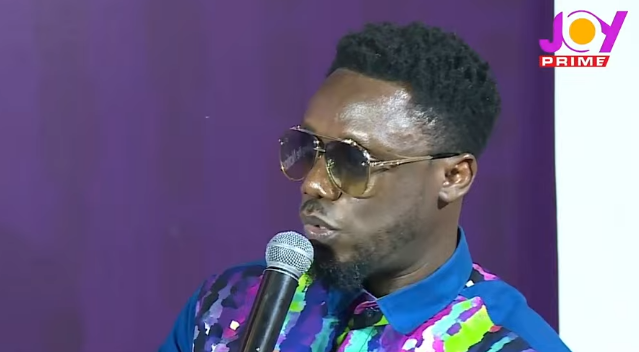
Speaking at a Joy Prime round-table discussion on the topic “The Politics of Insults: Where Do We Draw the Line?” on October 16, Mr Osafo-Nkansah said politicians must take greater responsibility for the conduct of their supporters and the language used in political debates.
“What’s happening is just a reflection of our society. And it’s just reflecting how powerful social media is. Politics of insults is not something new,” he said.
According to him, the problem lies primarily in politics, with social media serving as a powerful tool through which inflammatory statements can spread rapidly to a wider audience.
He explained that social media had transformed the scale of political communication, allowing people from different parts of the world to access discussions and content almost instantaneously, provided they had internet access.
He said this increased reach had made political insults appear more widespread and alarming, even though he believed the number of people engaging in such behaviour was relatively small.
Mr Osafo-Nkansah argued that politicians were at the centre of the problem because of their influence over political supporters and the platforms they use to communicate their messages.
He expressed concern that political insults had become closely associated with partisan affiliations, arguing that political leaders must examine their role in encouraging or enabling abusive exchanges.
“I think the core, the source, is still the politicians. They are the ones enabling them,” he said.
He acknowledged that social media users also had a responsibility to use their platforms carefully, but maintained that efforts to address the problem would have limited impact unless politicians took the lead in changing the tone of political discourse.
The NMAG president further expressed concern about what he perceived as political influence in cases involving arrests over political insults.
He said, in his observation, almost everyone arrested over such comments had links to one political party or another, raising questions about the role of political affiliations in how these cases were pursued.
“I don’t think that the police will just wake up and go and arrest people because of something they have said, but it will be done because of some political affiliation,” he said.
Despite his concerns about the state of political discourse, the NMAG president maintained that social media remained an important platform for criticism, accountability and public engagement.
He urged users to express their views objectively and challenge political leaders where necessary without resorting to insults, defamation or personal attacks.
“You can actually be on social media, do whatever you are doing, criticise, be critical, but still be objective and put your case across without insulting,” he said.
Mr Osafo-Nkansah said his participation in the discussion was intended partly to encourage digital media practitioners and other social media users to adopt more responsible communication practices.
He said he was using his position as a digital media leader to encourage members to communicate their views without responding to provocation with abusive language.
“Whatever you want to do, whatever you want to say, you can still use your platform and say it without necessarily insulting, defaming, or going personal,” he said.
He maintained that while individuals must use their platforms responsibly, politicians have a crucial role to play in curbing the politics of insults by setting a better example in their own public communication and discouraging abusive exchanges among their supporters.
Latest Stories
-
Ghana’s fertility rate too high for development – Reproductive health specialist warns
11 minutes -
NLA/KGL Licence Contract: Why Ghana must reform the law to maximise the state’s benefit
17 minutes -
Association of Small-Scale Industries empowers trade executives in Bono East with a mentorship programme
23 minutes -
AMA evacuates refuse along Graphic Road, warns against indiscriminate dumping
29 minutes -
STC interdicts driver over Pokuase overtaking incident
33 minutes -
Ekumfi: How $6m EXIM participation built a $53m industrial asset — now poised for a 24-Hour Economy breakthrough
34 minutes -
4 arrested, 142 parcels of suspected Indian hemp seized as officers reject GH¢50k bribe
34 minutes -
No MMDCE can say they don’t see galamsey – Local Government Ministry
35 minutes -
Ghana, Germany explore stronger partnership in technical and vocational education
42 minutes -
AMA urges motorists and road users to comply with traffic regulations
42 minutes -
Sam George urges One Million Coders participants to complete all three levels
43 minutes -
Communications Minister announces 2,800-site telecom expansion during Volta visit
45 minutes -
Impunity fuelling sexual abuse in Ghana – Angela Dwamena-Aboagye
46 minutes -
NUGS condemns alleged sexual abuse by Obuasi SHTS headmaster, calls for prosecution
49 minutes -
President Mahama urges investors to employ trained local residents as 1,238-acre industrial park takes off
53 minutes