

Audio By Carbonatix
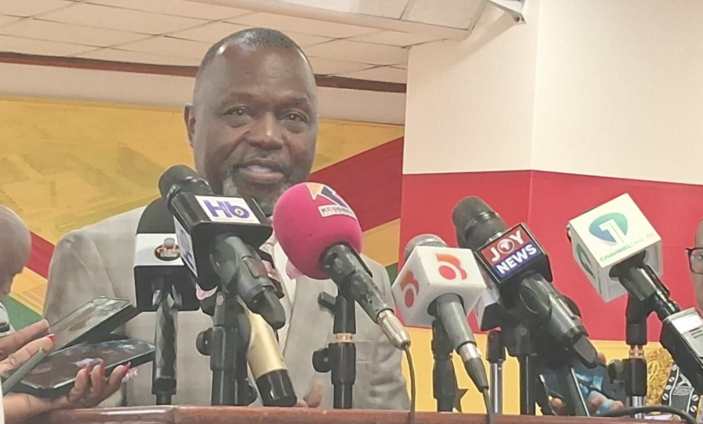
Dr Dominic Ayine, the Attorney-General and Minister of Justice, has assured Ghanaians that the operationalisation of Regional Tribunals under the Regional Tribunal Bill, 2026, will not resurrect the human rights abuses and excesses associated with past tribunals.
Addressing the Parliamentary Press Corps at Parliament House, on Wednesday after the Bill was debated by legislators, Dr Ayine said the new dispensation is designed to complement the existing traditional courts and ensure the expeditious administration of justice.
“Operationalising the Regional Tribunal does not intend to resurrect the ghost of the past abuses and excesses, and that will not exist in the new dispensation,” Dr Ayine emphasised.
He explained that the Bill seeks to ensure citizen participation and is aligned with the values of the 1992 Constitution.
To safeguard rights of the citizens, Dr Ayine said, an Oversight Committee under the authority of the Judicial Council will monitor adherence to constitutional provisions and avert potential abuses.
The Attorney-General noted that the chair of a Regional Tribunal would be a lawyer with at least 10 years’ experience and qualified to serve as a High Court Judge, while panel members would be individuals of integrity capable of making sound decisions.
Dr Ayine acknowledged the negative history of past tribunals but stressed that the new framework incorporates constitutional safeguards, probity, and accountability. He cited Articles 142 and 126 of the 1992 Constitution as validating the operationalisation of Regional Tribunals.
The Regional Tribunal Bill, 2026, is part of judicial reforms aimed at decentralising justice delivery and reducing delays in the court system. Regional Tribunals are expected to handle specialised cases requiring swift resolution.
During debate on the floor of Parliament, Mr Samuel Abu Jinapor, NPP Member of Parliament for Damongo, questioned the rationale for reintroducing Regional Tribunals given their historical excesses.
He argued that government should instead strengthen existing traditional courts to clear the backlog of cases, alleging that the move could be politically motivated to create positions for party loyalists.
Despite the concerns, proponents of the Bill maintain that the new tribunals will operate under strict constitutional oversight, ensuring fairness and efficiency in Ghana’s justice system.
Latest Stories
-
The man who saw tomorrow: How Dr Bawumia built for Ghana what America and Nigeria are building today
19 minutes -
Kumasi drivers demand price controls for goods, brand some traders as real ‘Kalabule’
22 minutes -
Consumer Protection Agency commends FDA for destroying illegal bales of diapers
26 minutes -
GNFS rescues stranded persons after flooding in Hohoe
47 minutes -
Baffour Awuah deliberately refused to honour EOCO invitation – Deputy AG, Srem-Sai
1 hour -
‘Believe in these players’ – Carlos Queiroz tells Ghanaians after leaving Black Stars job
1 hour -
ECG announces planned maintenance outage in parts of Accra on Friday
1 hour -
Carlos Queiroz sacked as Black Stars head coach
1 hour -
Parliamentary Sports Committee to ‘interrogate’ Black Stars struggles with Ministry, GFA invitations
2 hours -
Asutifi North Police arrest 7 in crackdown on suspected drug activities
2 hours -
Attijariwafa Bank: What to know about the Moroccan Group taking over SG Ghana
2 hours -
University Librarians Ghana honours past leaders for distinguished service
2 hours -
Seychelles President leads high-level dialogue on Africa’s digital future at FALS Global Conversations in New York
2 hours -
24-hour economy requires faster justice for commercial cases – Chief of Staff
2 hours -
Five Agric Colleges receive digital tools to drive climate-smart farming
2 hours