

Audio By Carbonatix
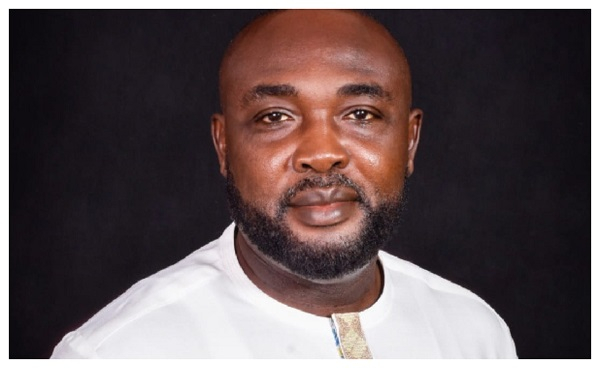
In a thought-provoking piece, former Deputy Minister for Works and Housing, Samuel Yaw Adusei, delves into the ongoing debate on whether Ghana’s economic fundamentals under the current administration need an upgrade or a complete reset.
The former deputy minister contrasts the literal interpretations of "reset" and "upgrade" to highlight the critical differences between these approaches and argues that Ghana’s current economic situation calls for a reset rather than an upgrade.
Understanding the Fundamentals
Hon. Yaw Adusei begins by referencing the famous statement by Dr. Mahamudu Bawumia, the Vice President of Ghana, who once declared, "If the fundamentals are weak, the exchange rate will expose you." This statement, Adusei notes, pointed directly to the economic fundamentals of the country.
He then revisits the economic indicators at the time Dr. Bawumia made this statement, emphasizing that while the fundamentals then were not perfect, they were relatively stable compared to the current situation.
In 2016, Ghana’s total debt stood at GHC 120 billion, the exchange rate was $1 to GHC 4, the unemployment rate was 8.5%, agriculture growth was 2.7%, and the debt-to-GDP ratio was 55.6%.
Additionally, the country had significant accruals in its Sinking, Stabilization, and Infrastructure Funds, and annual cocoa production was robust at 969,000 metric tonnes. The IMF had even projected the economy to grow at 8% in 2017, based on these fundamentals.
The Current Economic Landscape
Fast forward to 2024, and Adusei paints a starkly different picture. Ghana's total debt has ballooned to GHC 742 billion, the exchange rate has plummeted to $1 to GHC 16, and the unemployment rate has risen to 15%.
Agriculture growth has slowed to 0.7%, inflation has soared to over 20%, and annual cocoa production has dropped to 580,000 metric tonnes.
Moreover, the government has introduced several new taxes, such as the e-levy, COVID levy, and emission levy, further straining the population amid rising living costs and increasing inequality.
Yaw Adusei points out that the economy, which was projected to grow at 8% in 2017, is now only expected to grow at 5.4% in 2025. These figures, he argues, clearly show that the economic fundamentals under Dr. Bawumia and Nana Akufo Addo’s government have not only deteriorated but have exposed the administration’s failure to manage the economy effectively.
Fiscal Vulnerabilities and Reckless Spending
The former deputy Ashanti regional minister does not hold back in his criticism of the current administration’s fiscal policies, labelling them as reckless.
He cites excessive borrowing and inadequate revenue generation as key factors that have led to fiscal vulnerabilities.
By 2022, Ghana's fiscal deficit had reached 12% of GDP, leading to a suspension of funding for future projects and the halting of many ongoing projects across the country.
In response to these fiscal challenges, the government resorted to the Domestic Debt Exchange Program, which Adusei describes as "demonizing" for future investors due to the ‘haircuts’ imposed on domestic debt holders.
He also criticizes the "shady" Gold for Oil (G4O) program, which was introduced to stabilize the cedi but failed to achieve its intended purpose.
Reset: The Only Viable Option
Given the current state of Ghana’s economy, Yaw Adusei argues that a simple upgrade of the existing economic fundamentals is not sufficient.
He contends that the fundamentals are not formidable but rather dysfunctional and defective.
Therefore, a reset—changing the system to correct these flaws—is the only viable option to rebuild Ghana's economy and steer it towards sustainable growth.
Mr. Adusei concludes by advocating for change, emphasizing that only a reset can address the deep-seated economic challenges facing Ghana today.
According to him, this reset is crucial for building the Ghana that all citizens aspire to, and it is a responsibility that cannot be overlooked.
Conclusion
Samuel Yaw Adusei’s analysis presents a compelling argument for why Ghana’s economic fundamentals require more than just an upgrade.
He highlights the significant deterioration in key economic indicators under the current administration and calls for a comprehensive reset to correct the systemic issues that have led to the country's current economic woes.
The former deputy minister of works and housing’s commentary serves as a clarion call for policymakers and citizens alike to recognize the need for change and to take decisive action to rebuild the economy from the ground up.
Latest Stories
-
Imagination Africa, Mentors Chess Academy to host second African Genius Chess Championship at Ghud Park
46 minutes -
Nana B passport claims a diversionary tactic — Abu Jinapor
2 hours -
Pope Leo diagnosed with cancer as doctors remove lobe of lung, Vatican says
2 hours -
Legal Aid Commission takes free legal services to Techiman main lorry terminal
2 hours -
Nana B denies seeking passport favour, accuses Ablakwa of failing to account for GH¢16.4m
2 hours -
Young girls demand climate action, stronger protection against child marriage
2 hours -
Ex-gang boss sentenced to 40 years for orchestrating Tupac Shakur’s murder
2 hours -
From near-deferral to three awards: UMaT graduate’s academic journey
2 hours -
Atta Akyea denies seeking presidential pardon for Wontumi in galamsey case
3 hours -
Photos: Mahama commissions 85-bed Police Hospital ward, donates two ambulances
3 hours -
GTEC directs Ghana’s public universities to reopen by October 16 and begin lectures on October 19
3 hours -
Star Oil donates GH¢1million towards construction of new CID facility
3 hours -
Court hands Adjetey Sowah, two others lifetime bans after Amputee Football legal dispute
3 hours -
NDC appoints Julius Kwame Anthony as a Deputy Communications Director
3 hours -
Ghana repatriates 120 Nigerians rescued from suspected cybercrime centres
3 hours