

Audio By Carbonatix
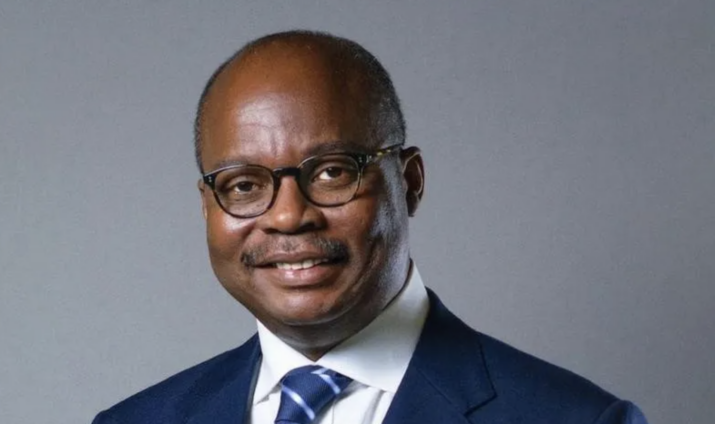
The Governor of the Bank of Ghana (BoG) Dr. Ernest Addison has disclosed that he inherited a challenging banking sector that had the International Monetary Fund (IMF) already recommending strict reforms, including the revocation of the banking licenses of UT Bank and Capital Bank.
The banking licences of the two banks were revoked in August 2017, the same year Dr. Addison assumed office at the central bank.
Speaking at this year’s Governor’s Day dinner organised by the Chartered Institute of Bankers, Dr. Addison said the Bank of Ghana was faced with no option but to take tough measures in revoking the licenses of the banks to protect the financial sector.
“There are a few requirements which the IMF calls the prior actions, you have to do this, you have to do that otherwise they are not even going to organize a board meeting to discuss Ghana and disburse any funds to you”.
He stated that such requirements compelled the Bank of Ghana to undertake the reforms.
“This was one of the prior actions to dissolve UT and Capital Bank. Ghanaians had never seen that in a long period of time. People were shocked when the licences of those two banks were pulled”.
According to Dr. Addison, the measures taken to clean up the financial sector strengthened the banks to withstand external shocks associated with the COVID 19 and the Russian Ukraine war.
Background
In 2017, Dr. Addison blamed the lack of good corporate governance for the collapse of UT and Capital bank.
Speaking at a breakfast meeting at the Banking College, Dr. Addison said good corporate governance is not only essential to minimizing risk but it is also fundamental to improving economic performance.
He said, “Corporate governance plays an important role in promoting a sound financial system, contributing significantly to improving overall performance not only in profits but in credibility.”
Addressing the revocation of the licenses of UT and Capital Bank earlier in the year, he said “the revocation of banking licenses of UT and Capital bank due to significant capital deficiencies, also partly reflected poor corporate governance practices within these institutions.
Latest Stories
-
Kenya confirms second Ebola case – a relative of the first victim
1 hour -
Hidden video recording device found in cabin of Australian navy ship
1 hour -
Saudi Arabia overturns death sentence for man over Facebook comment, Sri Lanka says
2 hours -
Burnham says he wants to ‘repair bridges’ between Ukraine and US
2 hours -
Pope walking and recovering ‘as expected’ after surgery, doctors say
2 hours -
Total expenditure as of July 2026 amounted to GH¢147.07bn, 16% below target – BoG
4 hours -
Total revenue & grants stood at GH¢144.5bn in July 2026, slightly below target – BoG
4 hours -
Ghana Sports Fund urges sports federations to submit credible proposals and measurable targets
4 hours -
Sally Rooney books withdrawn in UK over Palestine Action support
4 hours -
Musk says US government may be behind slowdown of Ukraine drone speeds
4 hours -
Picking Chief Justices nearing retirement could give Mahama immense power – Bentil
4 hours -
Netflix to shed 1,000 jobs in steepest cuts since 2022
5 hours -
Burnham had two hospitality dinners with Man City chairman, deleted records show
5 hours -
Semenyo ‘froze’ after alleged racist abuse, court told
5 hours -
‘Shameless’ – Mourinho critical of Vinicius Jr ban timing
5 hours