

Audio By Carbonatix
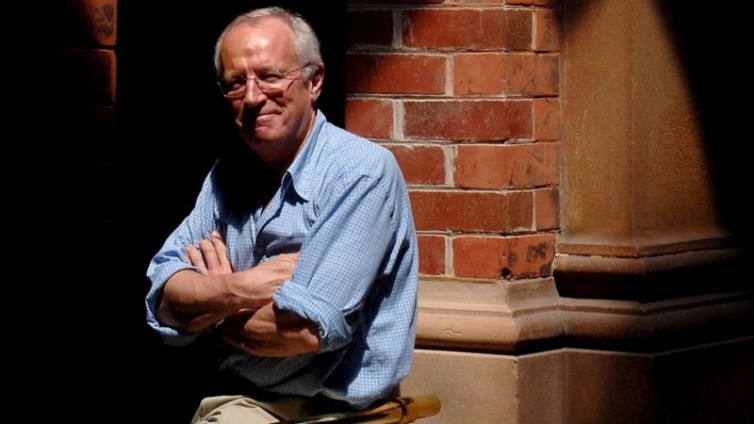
Veteran foreign correspondent Robert Fisk has died of a suspected stroke at the age of 74.
He had been admitted to St Vincent's Hospital in Dublin after falling ill at his home on Friday, and died shortly afterwards, the Irish Times reported.
Fisk won numerous awards for his reporting on the Middle East, starting from the 1970s.
But he also drew controversy for his sharp criticism of the US and Israel, and of Western foreign policy.
A wonderful and dedicated journalist & author who I had the pleasure of meeting several times in the US
Robert Fisk, veteran UK journalist, dies aged 74 https://t.co/BCwgPkKMJ7— The Ancient World #BLM (@TheAncientWorld) November 2, 2020
Covering wars in the Balkans, Middle East and North Africa for UK newspapers over five decades, Fisk was described by the New York Times, in 2005, as "probably the most famous foreign correspondent in Britain".
Born in Maidstone, Kent in 1946, he later took Irish citizenship and had a home in Dalkey outside the capital Dublin.
Irish President Michael D Higgins has expressed his "great sadness" about Fisk's death on Sunday.
"With his passing the world of journalism and informed commentary on the Middle East has lost one of its finest commentators," he said in a statement.
"With his passing the world of journalism and informed commentary on the Middle East has lost one of its finest commentators."
— President of Ireland (@PresidentIRL) November 1, 2020
Statement from President Higgins on the death of Robert Fisk:https://t.co/iuewqXuE4n
After starting his career at the Sunday Express, Fisk moved to Belfast in 1972 to cover the Troubles as Northern Ireland correspondent for the Times. He became the paper's Middle East correspondent in 1976.
Based in Beirut, he reported on the civil war in Lebanon, as well as the Iranian Revolution in 1979, the Soviet war in Afghanistan and the Iran-Iraq War.
He resigned from the Times in 1989 after a dispute with the owner Rupert Murdoch and moved to the Independent, where he worked for the remainder of his career.
In the 1990s he interviewed Osama Bin Laden three times for the paper. He described him as a "shy man" and looking "every inch the mountain warrior of mujahedin legend" in their first interview in 1993.
Latest Stories
-
At least 22 dead after two boats collide on Congo river, official says
1 hour -
Heavy rains lead to Senegal floods, government reports several deaths
1 hour -
FTBLRLIFE targets Ghana in expansion of global grassroots football network
3 hours -
Former ‘American Idol’ contestant sentenced to life without parole for wife’s murder
4 hours -
Education Ministry commends Ghanaian teachers on World Teachers’ Day 2026
4 hours -
NPP can reconcile with aggrieved members who want to return – Nana Akomea
5 hours -
Tamale Child Deaths: Vehicle owner arrested as IGP deploys homicide team
5 hours -
From ShattaFest to MoMo Fest: Entertainment takes centre stage in youth engagement
5 hours -
Nigerian military aircraft crashes, killing 32
5 hours -
MTN encourages Ghanaians to use MoMo for saving, investing and financial planning
5 hours -
Absa Bank Ghana names Stephen Ato Frimpong as Board Chair
5 hours -
Pickford ‘almost caused crash’ with careless driving
5 hours -
Author and former politician Jeffrey Archer dies aged 86
5 hours -
No education reform can succeed without teachers – Education Ministry
5 hours -
Gauff condemns racist abuse after China Open win
6 hours