

Audio By Carbonatix
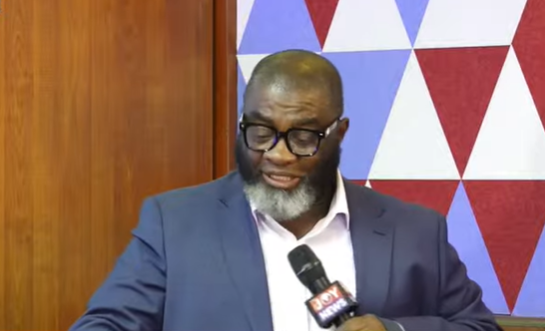
Senior Partner at AB & David Africa, David Ofosu-Dorte, has described Ghana’s land ownership system as deeply confusing and chaotic, warning that its complexity continues to hinder effective urban management and economic growth.
Speaking at the JoyNews and Amalgam of Professional Bodies Speaker Series on Wednesday, May 6, held under the theme “Centers of Prosperity @ the Center of the World: How we can manage our cities better to stimulate economic growth,” he said Ghana’s land tenure structure remains one of the most complicated he has encountered globally.
“I don’t know of any country in the world where land ownership issues are more confused and chaotic than Ghana, and I say that in all sincerity,” he stated.
Drawing on his experience studying land systems in other jurisdictions, Mr Ofosu-Dorte noted that while some countries, particularly in Eastern Europe, operate distinct systems where ownership of land can be separated from what is built on it, Ghana’s structure presents a different challenge.
“In Ghana, where, as in most countries, whatever is on the land is part of the land, the ownership itself is very, very chaotic,” he explained.
He traced the roots of the problem to historical developments, pointing out that attempts to reform land ownership have long been contentious, dating back to colonial-era policies.
“Anybody who tries to touch on this or attempt to change it must be aware that the very formation of the Aboriginal Rights Protection Society and the agitation against colonialism was related to the Land Trust Act,” he said.
Mr Ofosu-Dorte stressed that land ownership remains a sensitive and complex issue involving multiple stakeholders, including traditional authorities and families, which often leads to overlapping claims and disputes.
From the role of chiefs as custodians of land to family ownership structures and issues such as double documentation, he said these layers continue to create uncertainty and inefficiencies in land administration.
“The double seal and all the rest create problems on their own,” he added.
He added that without addressing these structural challenges, efforts to properly manage cities and unlock their economic potential will remain constrained.
Latest Stories
-
2026 U-20 WWC: Sarah Nyarko targets knockout stages with Black Princesses after victory over South Korea
2 minutes -
President Mahama warns: Poor refereeing, match manipulation are destroying Ghana football
20 minutes -
Businessman rejects GH¢79.7m judgment windfall – He says actual claim was below GH¢10m
24 minutes -
Mahama calls on GFA, clubs to raise standard of domestic football
25 minutes -
Ghana’s Rahim Ibrahim makes Champions League debut in PSG thrashing
49 minutes -
Tariq Lamptey suffers another injury setback at QPR
1 hour -
PRESEC, Augusco and Accra Academy battle for 2026 NSMQ crown today
1 hour -
GH₵12 addition to cement price: GPHA clarifies attribution to port congestion
1 hour -
Pythagoras won’t balance your books
1 hour -
Pay me by Sept. 11 or face the court – Kow Essuman demands salary, benefits from Finance Minister
2 hours -
Bawumia’s destiny lies in the hands of God; not you – Muslim Forum for Peace and Unity replies Rev. Owusu Bempah
2 hours -
NPP NEC meets today to discuss and approve party’s position paper on Constitution Review proposals
2 hours -
Today’s frontpages: Thursday, September 10, 2026
2 hours -
Ghana Garden and Flower Show returns on Sept 11 with focus on green jobs, business and wellbeing
2 hours -
Titus-Glover camp says Mustapha Salam wasn’t pressured to withdraw from National Organiser race
2 hours