

Audio By Carbonatix
Russia has dismissed mounting international concern over the safety of its locally developed Covid-19 vaccine as "absolutely groundless".
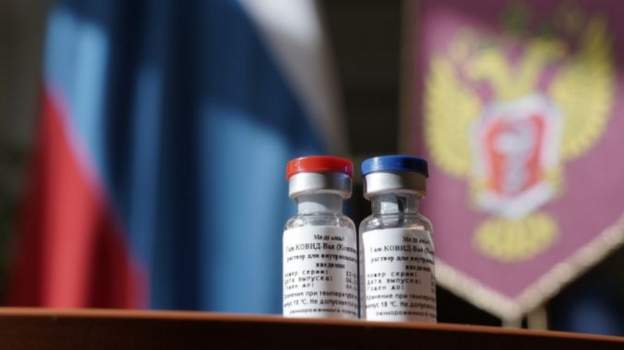
On Tuesday, it said a vaccine had been given regulatory approval after less than two months of testing on humans.
But experts were quick to raise concerns about the speed of Russia's work, and a growing list of countries have expressed scepticism.
Scientists in Germany, France, Spain and the US have all urged caution.
"It seems our foreign colleagues are sensing the specific competitive advantages of the Russian drug and are trying to express opinions that... are absolutely groundless," Russia's Health Minister Mikhail Murashko told the Interfax news agency on Wednesday.
He added that the vaccine would be available soon.
"The first packages of the medical vaccine... will be received within the next two weeks, primarily for doctors," Mr Murashko said.
Russian officials have said they plan to start mass vaccination in October.
The announcement on Tuesday was made by President Vladimir Putin, who said the vaccine had passed all the required checks and his daughter had already been given it.
But the World Health Organization (WHO) said it was in talks with Russian authorities about undertaking a review of the vaccine, which has been named Sputnik-V.
It is not among the organisation's list of six vaccines that have reached phase three clinical trials, which involve more widespread testing in humans.
What has the reaction been?
The progress Russia says it has made on a coronavirus vaccine has been met with scepticism by health officials and media outlets in the US and Europe.
On Wednesday, Germany's health minister expressed concern that it had not been properly tested.
"It can be dangerous to start vaccinating millions... of people too early because it could pretty much kill the acceptance of vaccination if it goes wrong," Jens Spahn told local media.
"Based on everything we know... this has not been sufficiently tested," he added. "It's not about being first somehow - it's about having a safe vaccine."
Elsewhere in Europe, Isabelle Imbert, a researcher at the French National Centre for Scientific Research in Marseille, said promising a cure too early could be "very dangerous".
"We do not know the methodology or the results of their clinical trials," she told Le Parisien.
And in the US, the country's top virus expert, Dr Anthony Fauci, said he doubted Russia's claims.
"I hope that the Russians have actually definitively proven that the vaccine is safe and effective," he told National Geographic. "I seriously doubt that they've done that."
Meanwhile the Moscow-based Association of Clinical Trials Organizations (Acto), which represents the world's top drug companies in Russia, urged the health ministry to postpone approval until after phase-three trials.
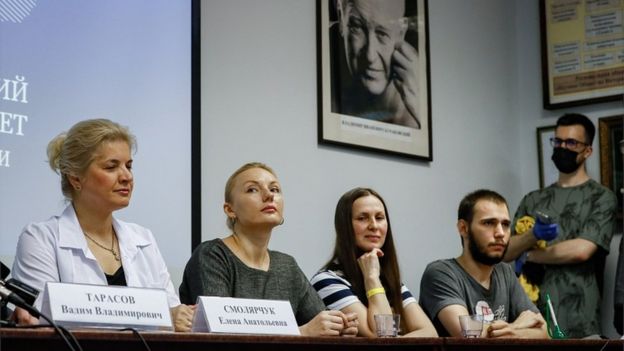
Acto executive director Svetlana Zavidova told the Russian MedPortal site that a decision on mass vaccination had been carried out after combined first- and second-phase tests on 76 people, and that it was impossible to confirm the efficacy of a drug on this basis.
But some countries have reacted more positively to Moscow's announcement.
In the Philippines, President Rodrigo Duterte offered to test the vaccine himself.
"I believe the vaccine that you have produced is really good for humanity," he said. "I will be the first one to be experimented on."
And Israel said it would enter negotiations to buy it if it is found to be a "serious product".
What do we know about the vaccine?
Russian scientists said early-stage trials of the vaccine had been completed and the results were a success.
The Russian vaccine uses adapted strains of the adenovirus, a virus that usually causes the common cold, to trigger an immune response.
But the vaccine's approval by Russian regulators comes before the completion of a larger study involving thousands of people, known as a phase-three trial.
Experts consider these trials an essential part of the testing process.
Despite this, Mr Murashko said on Tuesday the vaccine had "proven to be highly effective and safe", hailing it as a big step towards "humankind's victory" over Covid-19.
Russia has likened the search for a vaccine to the space race contested by the Soviet Union and the US during the Cold War.
Russia has previously been accused by the UK, US and Canada of seeking to steal research related to Covid-19.
More than 100 vaccines around the world are in early development, with some of those being tested on people in clinical trials.
Despite rapid progress, most experts think any vaccine would not become widely available until mid-2021.
Latest Stories
-
Strengthening economy through informal sector tax collection
16 minutes -
Stonebwoy Can Do It: A call to unite behind 2026 BHIM Fest
42 minutes -
World Shea Expo returns to Tamale for 2026 edition
44 minutes -
Prioritise cocoa sector with better prices, timely payments-Annoh-Dompreh urges NDC
1 hour -
Lands and Mines Watch Ghana endorses Heath Goldfields’ mining capacity
1 hour -
Gbintiri residents protest alleged diversion of 24-hour market project
2 hours -
Justin Bieber headlines Coachella with nostalgia-fuelled set
2 hours -
Ukraine and Russia accuse each other of hundreds of ceasefire violations
2 hours -
Asha Bhosle: The sound of Bollywood dies aged 92
2 hours -
Fire destroys section of 4-bedroom apartment at Tantra Hill
2 hours -
Safe city: Unnoticeable protection
3 hours -
North East Regional Police Commander raises alarm over burning of checkpoints
3 hours -
Free Primary Healthcare Programme set for take-off — Health Ministry confirms readiness
3 hours -
3 co-wives, 5 children perish in canoe disaster – Maritime Authority insists life jackets use mandatory for all water transport
4 hours -
Iran war lands ‘triple blow’ to flood-ravaged Sri Lankans
4 hours