


Audio By Carbonatix
The Sekondi Landing Beach Committee has raised GH¢126,000 towards community development within ten months, according to figures presented during the Premix Accountability Series in the Western Region.
The disclosure was made as landing beach committees from Sekondi, New Takoradi, and Abuesi publicly accounted for their stewardship of premix fuel allocations and proceeds for the 2025 operational year.
Administrator of the National Premix Fuel Secretariat, Ebow Mensah, said the figures demonstrate what is possible when premix margins are properly tracked and managed in line with the law.
The landing beach committees of New Takoradi in the Takoradi metropolis also raised GHS59,000 for community development, whereas Abuesi in the Shama district also realised GHS102,000.

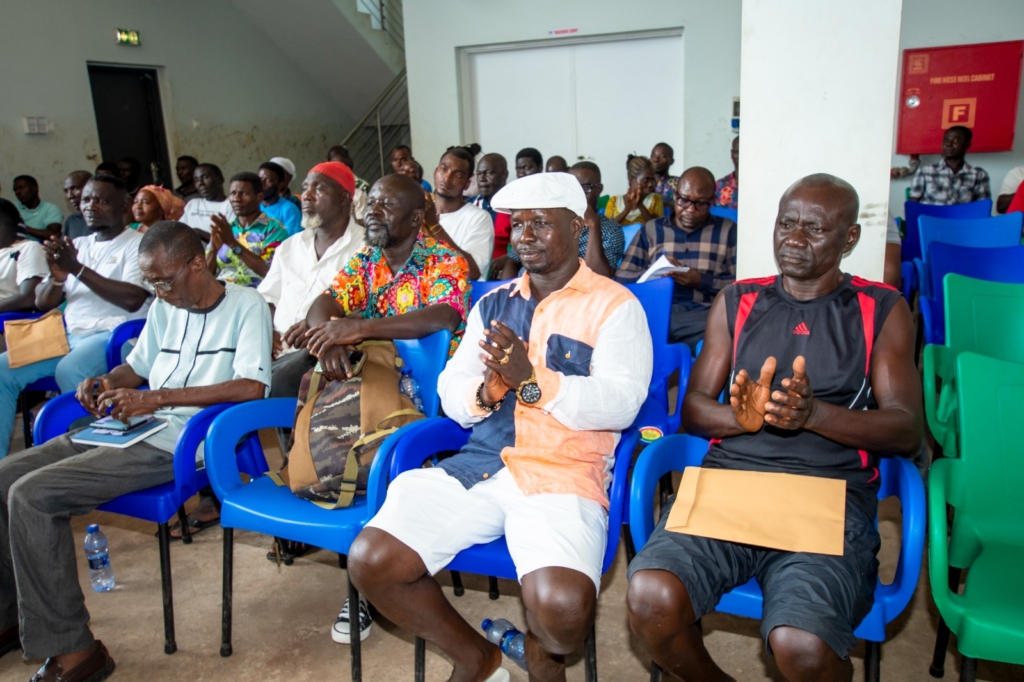
“The committees indicated the consignments they received, the sales they made, and the amount that accrued to the community development fund. This is exactly how the system is supposed to work,” he said.
Under L.I. 2233, 53 per cent of premix fuel margins must be reserved for community development and paid into a designated bank account controlled through agreed signatory arrangements.
Mr Mensah stressed that the fund is intended to support projects that benefit the entire fishing community, including sanitation, safety infrastructure, and livelihood-related initiatives.
“These are funds that belong to the community,” he said. “When communities can see the figures and verify the bank balances, trust improves and conflict reduces.”
He added that the Secretariat intends to encourage quarterly public accounting at landing beaches so that fisherfolk can decide, through consultation, how their community funds should be used.
For many fisherfolk, this was the first time they had seen figures, bank statements, and explanations laid out openly before the community.
“I have been fishing here for more than 20 years, but this is the first time I am seeing them show us the books like this,” said Kwame Essel, a canoe owner at the Sekondi landing beach.
“When they mentioned the amounts and showed where the money is kept, it gave us some confidence.”
Under L.I. 2233, 53 percent of premix fuel margins is reserved for community development. Yet in many communities, fisherfolk say they only hear about the fund in passing, without knowing how much has accrued or what it has been used for.
At New Takoradi, fishmonger Esi Armah said the accounting session answered long-standing questions.
“Before now, when we asked about the premix money, people would say, ‘It has been used.’ Used for what? We didn’t know,” she said. “This time, they told us how much came in and where the money is. That is what we want.”
Some fisherfolk said the transparency reduced tension almost immediately.
“When people don’t know, they suspect everything,” said Yaw Mensah, a crew member at Abuesi. “Today, when they showed the bank statement, the shouting reduced. Even those who were angry became calm.”
The figures also surprised many. At Sekondi, the committee disclosed that about GH¢126,000 had been raised for community development over the past 10 months.
“I didn’t know the money could reach that level,” said Mary Koomson, who sells smoked fish near the landing beach. “If we manage it well, we can do something meaningful for the whole place.”
For others, the exercise raised new expectations. Fisherfolk said rendering accounts should not end with figures on paper but lead to visible projects.
“We have seen the money now,” said canoe owner Kofi Blay. “The next thing is to sit down as a community and agree on what to use it for. If we see toilets, lights, or repairs at the beach, everyone will support the system.”
There was also a strong call for consistency.
“If they do this only once, it will not help,” said Abdul Rahman, a fisherman at New Takoradi. “They should come every quarter or every year and tell us the same thing. That is how trust will stay.”
Officials from the National Premix Fuel Secretariat said the reactions from fisherfolk reinforced the purpose of the Premix Accountability Series.
Administrator Ebow Mensah noted that transparency changes attitudes on the ground.
“When communities can see the figures and ask questions, the system becomes stronger,” he said. “That is how premix moves from suspicion to shared responsibility.”
As the sun set over the landing beaches, fisherfolk lingered in small groups, still discussing the figures, the bank accounts, and what projects might come next.
For many, the numbers mattered. But what mattered more was the feeling that, for once, the premix story was being told in the open.
“As long as they keep doing this,” Kwame Essel said quietly, “we will also protect the system. Because now, it feels like it truly belongs to us.”
Latest Stories
-
Rule of law must be protected – GBA condemns EOCO action against Baffour Awuah
36 minutes -
950,000 barrels of Sankofa crude head to TOR as GNPC deepens domestic refining
48 minutes -
Scales of deception removed – Annoh-Dompreh attacks new cocoa price
1 hour -
Young Positivist Writes : My Experience with GCLP
2 hours -
Strong Day 1 turnout sets tone for Day 2 of Republic Bank-JoyNews Habitat Fair Clinic
3 hours -
Ghana Army warns new soldiers against social media misuse, uniform abuse
3 hours -
AMA calls for science-led action to tackle environmental health risks in Accra
3 hours -
NPP Canada Organizer BigMo urges Diaspora to support Kodua Frimpong
4 hours -
He entered at eight. He is now 16: Ghana’s children growing up in prayer camps
7 hours -
‘Development must not always begin from Accra’ — Anwelle Foundation launched in Jirapa
7 hours -
PKO trio eye victories at Odwira Festival
10 hours -
346 Ghana Navy recruits pass out after 26 weeks of intensive training
10 hours -
Livestream: Newsfile to discusses EOCO-MP arrest, drug trafficking, speech arrests and $235m water debt
10 hours -
JoyNews gets results as listeners raise GH¢40,000 to help 17-year-old student with cerebral palsy attend SHS
11 hours -
Vice President calls for stronger local pharmaceutical production to reduce medicine imports
11 hours