

Audio By Carbonatix
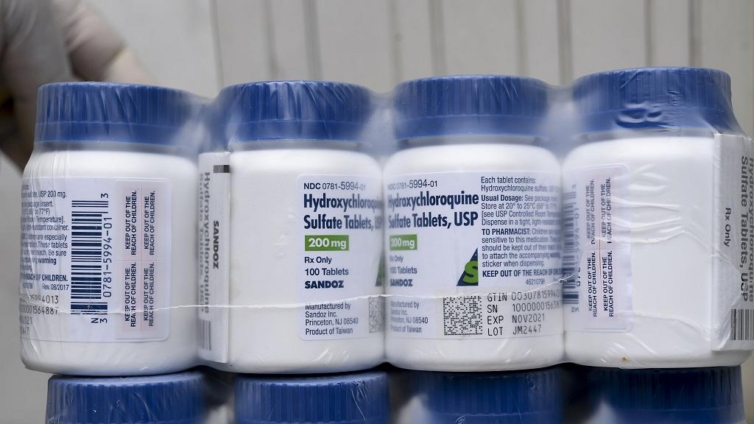
Senegal will continue treating COVID-19 patients with hydroxychloroquine, a senior health official said on Wednesday, despite a recent study indicating that the anti-malarial drug is ineffective and potentially harmful.
Authorities in the West African state opted to provide consenting patients with the drug early on during its coronavirus outbreak, citing promising clinical results.
Chloroquine and its derivative hydroxychloroquine have been used for decades against malaria and are considered cheap and safe when used correctly.
US President Donald Trump promoted its use and stunned his own administration earlier this month by revealing he was taking it as a preventive measure against the virus.
But even as countries around the world rushed to use the anti-malarials to fight COVID-19, experts urged caution and warned that the drugs can have potentially serious side effects.
A study of nearly 100,000 COVID-19 patients, released on Friday, appeared to confirm some of those concerns.
Published in the medical journal The Lancet, the study found that chloroquine and hydroxychloroquine do not benefit hospitalised patients — and even increase the risk of death and heart arrhythmia.
It recommended against using either drug outside of clinical trials.
Abdoulaye Bousso, who heads Senegal’s Centre for Health Emergency Operations, told AFP on Wednesday that the country’s hydroxychloroquine treatment programme would nonetheless continue, without offering further details.
The infectious-diseases doctor who is spearheading Senegal’s treatment of COVID-19 patients, Moussa Seydi, did not respond to requests for comment. Nor did the health ministry.
The World Health Organization said on Monday it had temporarily suspended clinical trials of hydroxychloroquine as a potential treatment for coronavirus following the Lancet study.
Scientific community divided
But medical authorities worldwide still appear divided on the use and potential harmfulness of the drugs.
France decided to ban it as a COVID-19 treatment on Wednesday, for example, while Brazilian authorities indicated that they would continue using the drug.
Seydi, the Senegalese infectious-diseases doctor, had previously said that hydroxychloroquine is offered only to consenting patients, and after medical staff perform a cardiogram.
Senegal has so far been spared a coronavirus outbreak on a par with Europe and the United States.
Authorities have recorded 3,235 cases to date, with 38 fatalities.
Latest Stories
-
John Boadu can appeal across Ghana’s social groups – Prof Mike Oquaye
5 minutes -
‘Electing Kojo Bamba is backward politics’ – Mustapha Gbande
19 minutes -
Government must order payment of promoted teachers’ salaries – GNAT
28 minutes -
Meet Sethina Edem Sunu, the healthcare professional eyeing the NDC UK & Ireland deputy organiser role
32 minutes -
The myth of ‘sophisticated customer experience’ in the digital age
36 minutes -
What happened to lands reserved for sanitary sites? -WasteCare CEO calls for audit
37 minutes -
Manasseh Writes: The shift in the NPP
53 minutes -
The price of a seat: Financial barriers and the structural quality of Ghana’s Parliament
58 minutes -
Government targets October 16 for first tranche of teacher arrears – Haruna Iddrisu
1 hour -
Daily Insight for CEOs: The CEO’s role in driving innovation
1 hour -
Audit existing sanitary sites to address waste management land shortages – WasteCare CEO urges assemblies
1 hour -
Two-bin household waste system could support waste-to-energy in Ghana – Waste Care Associates CEO
1 hour -
Dealing with political and social media insults
1 hour -
Essi Donkor urges stronger support for girls’ education, announces GH¢2,000 BECE reward
1 hour -
Ghana still needs landfills but Accra should prioritise waste-to-energy – Waste Care Associates CEO
1 hour