

Audio By Carbonatix
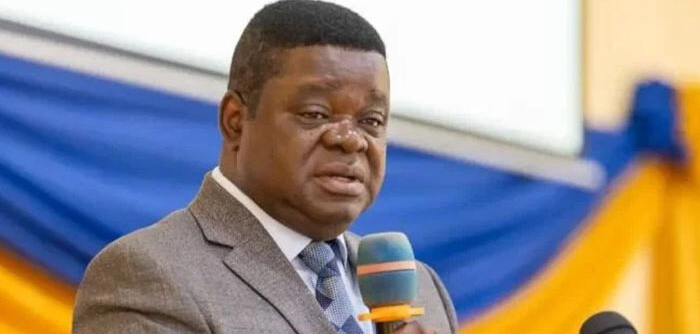
Economist Professor Peter Quartey has attributed Ghana’s high domestic airfares to a combination of a small aviation market, low incomes, taxes, fuel prices and the cost of capital.
His comments come amid growing concerns over the high cost of domestic air travel and the wider cost of doing business in Ghana.
Speaking on Joy News’ PM Express Business Edition on Thursday, Prof Quartey said the high cost of travel was not unique to the aviation sector.
“Well, we are not just It’s not just limited to the airline industry. If you look at our hotels, you'll see they're expensive. If you look at other things, rent, etc., we tend to be quite expensive,” he said.
He said Ghana’s domestic aviation market is smaller than that of countries such as Nigeria.
“Our market is not as huge as you would find in Nigeria. Nigeria, there’s a lot of heavy traffic. The population is larger, and therefore, if you operate within that space, and you have more aircraft, you have competition; you are likely to charge lower,” Prof Quartey said.
“In our case, we are paying more because our market is a bit smaller than all these other countries.”
He also pointed to income levels as another factor limiting demand for domestic flights.
“Then, secondly, you would also notice that we are in an economy where income levels are not as high as you find in, let’s say, South Africa,” he said.
“Most people will use road transport, trotro or buses, rather than to fly.”
Prof Quartey also cited the length of time some major African airlines have operated as another factor.
“You find Ethiopian Airlines, for instance, has been in this business for a very long time; Kenya Airways has been in business for a very long time,” he said.
He further criticised Ghana’s tax burden on the aviation industry.
“So we are taxing, overtaxing the industry,” Prof Quartey said.
“And certainly, as a business person, they will pass it on to the consumer, pass it on to us to pay.”
He said aviation fuel was another major cost pressure.
“Even, let’s talk about aviation fuel. Fuel accounts for about 30% of their cost,” he said.
“So if our fuel cost is higher compared to other countries, then certainly the cost will be higher, higher.”
Prof Quartey also cited the cost of borrowing, saying some airlines have loans they must service while covering their operational expenses.
He believes the long-term solution is to expand Ghana’s aviation market and create conditions that attract more players.
“What we should be doing going forward is to develop the industry,” he said.
“You can’t force, you know. Once there is the market, once the environment is good, once it’s profitable, every investor, businessman would like to invest in a profitable business.”
“But if the market is not as huge, if we haven’t developed the market and it’s so small, then the very few who ply that route will be charging enough to cover their cost of operations.”
Latest Stories
-
PwC Ghana appoints George Arhin as Country Senior Partner
4 minutes -
New Economy will turn imports into opportunities for Ghanaian production – Ato Forson
4 minutes -
Two Ada SHS students convicted, placed on 12-month good behaviour bond
8 minutes -
Samson’s Take: Verify the badge – and verify the story
9 minutes -
Treasury bill demand rebounds as investors submit GH¢3.66bn in bids
12 minutes -
Mahama announces 1,200MW state-owned gas power plant deal by end of 2026
17 minutes -
COCOBOD sets up Cocoa Capital PLC to raise GH¢16.3bn for cocoa sector
17 minutes -
Former NPP MMDCEs from Akufo-Addo era demand terminal benefits
21 minutes -
NPP to simulate national elections at Baba Yara Stadium ahead of October 3 polls
26 minutes -
NDC Akatsi South suspends campaign activities following organiser’s death
27 minutes -
Afoakwa reports alleged EOCO assault to police after High Court incident
30 minutes -
He lived his life in preparation for the hereafter – Dr Bawumia pays touching tribute to late Dagomba Chief of Accra
31 minutes -
Gov’t, PUWU meet today over proposed private-sector role in ECG, NEDCo
31 minutes -
Spreading drug abuse could rob Ghana of future leaders – NPC
36 minutes -
Configure SHS tablets to stop student misuse, government urged
41 minutes