

Audio By Carbonatix
Parents in Adidome in the Central Tongu District of the Volta Region have urged the government to configure the digital tablets being distributed to Senior High School (SHS) students to block access to inappropriate websites.
The concerned parents noted that some students have been using the devices to access adult content, warning that this exposure encouraged negative behaviors and severely distracted students from their academic responsibilities.
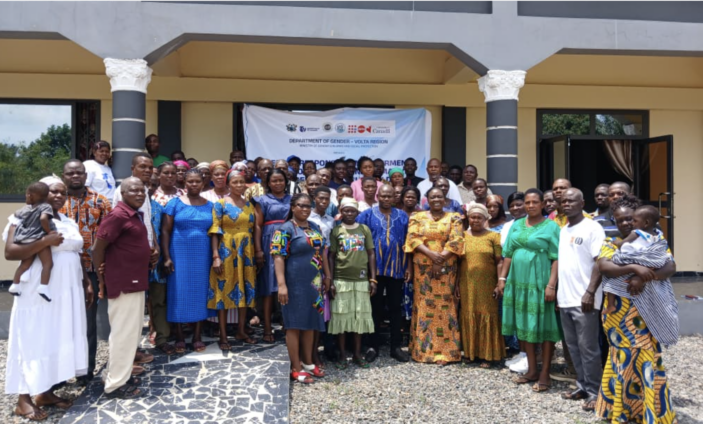
The parents raised concerns during a community engagement session aimed at training parents and caregivers as Gender Responsive Empowerment and Adolescent Transformative (GREAT) Model Households.
The event was organised by the Volta Regional Directorate of the Department of Gender, in partnership with the Volta Regional Coordinating Council (VRCC) with support from the United Nations Population Fund (UNFPA) and Global Affairs Canada.
It brought together a total of 30 selected parents and caregivers from 18 communities in the District.
The GREAT Model Household initiative is designed to strengthen families, transforming homes into safe, supportive, and empowering environments were adolescents, particularly girls can be nurtured to achieve their full potential.
The forum provided a platform for participants to discuss and learn about gender socialisation, domestic gender relations, and the concepts of positive and negative masculinities.
The discussions covered Adolescent Sexual and Reproductive Health and Rights (SRHR), prevention of and response to Sexual and Gender-Based Violence (SGBV), adolescent rights and responsibilities, gender-transformative parenting, and effective parent-child communication.
Mr Addison Mornyuie, the District Chief Executive (DCE) for Central Tongu, urged parents and caregivers to remain steadfast in their duty to properly care for their children.
He commended the Department of Gender for the initiative, noting that active commitment from parents and caregivers was vital to fostering safe, and nurturing environments for holistic development of children.
Mr Mornyuie emphasised that the training was strategically designed to equip them with the essential knowledge and practical skills required to better support the younger generation.
Mrs Thywill Eyra Kpe, the Volta Regional Director of the Department of Gender, said the GREAT Model Household initiative aimed to empower the participants to promote development of children not only within individual households but across the entire district.
She reaffirmed her outfit’s commitment to advancing gender equality, adolescent well-being, and gender-transformative programming throughout the Volta Region.
She noted that the initiative recognised parents and caregivers as primary role models who profoundly shape children’s understanding of gender relations, rights, responsibilities, and positive behaviors.
Madam Ernestine Amehoe, a Senior Midwifery Officer at the Adaklu-Ahunda Health Centre, advised parents to build friendlier relationships with their children to encourage open communication about their challenges.
She highlighted that children remained highly vulnerable, making it imperative for parents and caregivers to provide for their basic needs in a timely manner.
The Senior Midwifery Officer warned that neglect often pushed young people into unacceptable behaviors.
She commended the Department of Gender for the initiative, noting that it successfully empowered participants to serve as excellent exemplars for their children and neighboring households.
Togbe Dordoe IV, the Chief of Mafi-Zortikpo, also expressed his gratitude to the Department of Gender for the workshop, stating that the knowledge gained would greatly assist him in his leadership responsibilities.
He urged parents and caregivers to treat children with utmost care and provide them with the best possible upbringing.
As part of the programme, participants developed household and community action plans that will guide them in applying their newly acquired knowledge and skills within their own homes and wider localities.
The trained participants are expected to serve as role models and advocates, championing gender equality, positive masculinities, adolescent development, and the eradication of SGBV.
Latest Stories
-
COCOBOD asks investors to fund cocoa purchases, but proceeds may also repay old debt
12 minutes -
Gov’t hands over site for construction of 160-bed Savannah Regional Hospital
19 minutes -
NCPTA clarifies GH¢200 cap on PTA dues and levies per parent
23 minutes -
Asante Kotoko part ways with coach Eric Tinkler
25 minutes -
GTA calls for ultra-modern Cocoa Museum in Western North
28 minutes -
NPP says concerns over delegates’ register addressed ahead of October 3 polls
28 minutes -
PwC Ghana appoints George Arhin as Country Senior Partner
33 minutes -
New Economy will turn imports into opportunities for Ghanaian production – Ato Forson
33 minutes -
Two Ada SHS students convicted, placed on 12-month good behaviour bond
37 minutes -
Samson’s Take: Verify the badge – and verify the story
38 minutes -
Treasury bill demand rebounds as investors submit GH¢3.66bn in bids
41 minutes -
Listing 10 SOEs will strengthen governance, limit political interference – Mahama
45 minutes -
Mahama announces 1,200MW state-owned gas power plant deal by end of 2026
46 minutes -
COCOBOD sets up Cocoa Capital PLC to raise GH¢16.3bn for cocoa sector
46 minutes -
Former NPP MMDCEs from Akufo-Addo era demand terminal benefits
50 minutes